Endangered
Junin Crake
Laterallus tuerosi
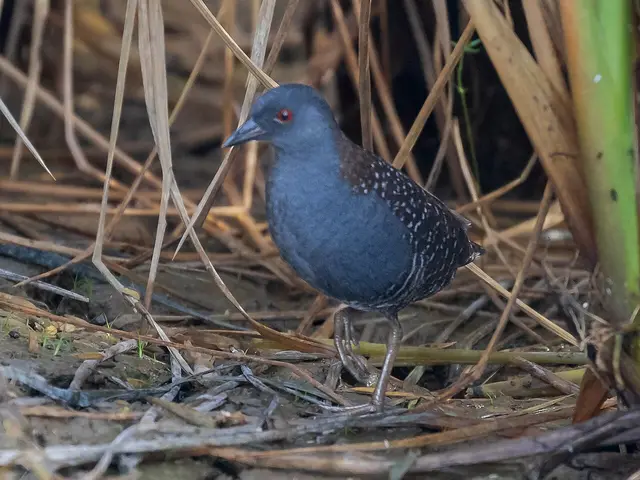
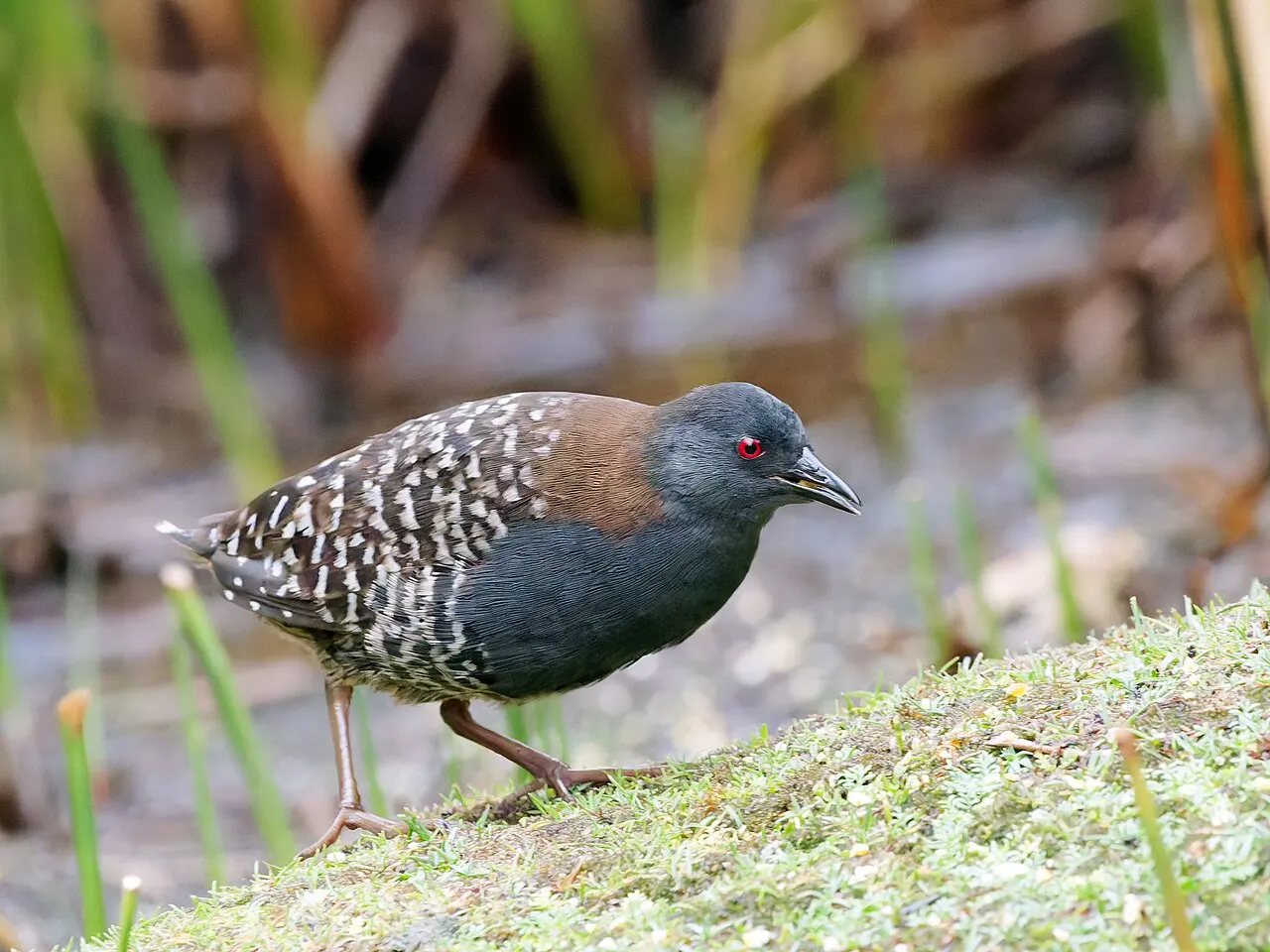
The Junín crake, also called the Junín rail (Laterallus tuerosi), is a secretive marsh bird found only around Lake Junín, high in the Andes of central Peru. The IUCN Red List treats it as an Endangered species (2021 assessment), with about 4,100 mature individuals. Its whole world is one shrinking lakeside marsh.
A species or a subspecies
The bird was found in October 1977 in marshes beside Lake Junín and was described by the Danish ornithologist Jon Fjeldså in 1983, as a subspecies of the black rail. Since then some authorities have kept it that way and others treat it as its own species. Its plumage is highly distinct from other black rail forms, while its voice is fairly close to those of two South American black rail subspecies. The IUCN Red List treats it as a full species. A proposal to raise its rank had not been accepted by the South American Classification Committee when a 2017 distribution study was published.
Where it lives
Lake Junín sits at about 4,085 m above sea level, inside the Junín National Reserve, a Ramsar wetland since 1996. A belt of marsh 1 to 6 km wide surrounds the open water. The Red List treats the rail as a single-location species, recorded at roughly 4,088 to 4,091 m. No records exist away from the lake.
A February 2014 field survey found birds in marsh all around the lake, mainly in two kinds of vegetation: tussocks of a tall grass (Festuca dolichophylla), often moderately grazed, and stands of Juncus balticus rush about 1.5 m tall, with small open spaces and low herbs.
Pins are Wikidata “endemic to” fields. Orange dots, when present, are GBIF occurrence tiles — survey bias included.
How it lives
Every record in that survey was in vegetation at least 0.5 m tall, and none was in water deeper than 20 cm. About 85 percent were in places with under 5 cm of standing water. The researchers suggested the birds may like mosaics of open ground and cover, where they can feed in the open and dash for shelter. Shallow, waterlogged areas and creeks held plenty of small invertebrates such as water bugs, snails and fly larvae, and the diet is known to include invertebrates, larvae and seeds.
The rail is extremely hard to see. In 2014 no bird called during five minutes of silent listening at any survey point, so researchers used playback of recordings to draw them out. Birds have been seen running or quietly sneaking through cover, and flight calls were heard from two birds at night.
Why it is in trouble
Population estimates have changed a lot. BirdLife gave 600 to 1,700 mature individuals in 2014, and a 2010 estimate was about 2,000 birds. The 2017 study estimated roughly 6,200 birds on at least 100 km2 of suitable habitat, which it called conservative, and linked the higher figure to better knowledge of what habitat the rail needs. The 2021 Red List figure is about 4,100 mature individuals.
The main pressures are grazing by sheep and cattle, and water levels. The rail was not recorded in intensively grazed areas. Hydroelectric regulation through the Upamayo Dam has caused serious drying of the marsh in some years and can flood it suddenly, which may hurt breeding. Dead birds, presumably young ones that drowned, have been reported each February and March. Farmers have also burned marsh to expand pasture and destroyed nests, though burning has fallen and is now quite rare. Mining pollution from the Cerro de Pasco area affects the lake's water quality, but its effect on the rail is unknown.
What is being done
The whole known range lies inside the protected reserve, but protection on paper hasn't stopped grazing, dam operation or pollution. The Red List records no species recovery plan or systematic monitoring scheme, and calls for site management, including less pollution and regulated water levels. Awareness work and training with farmers by the Peruvian group ECOAN is credited with the drop in burning.
Sources
Written for this catalog in our own words from the sources below, checked against them on 12 November 2026. Population figures are estimates and carry the year they were made. Status and assessment year: IUCN. 2026. The IUCN Red List of Threatened Species. Version 2026-1. iucnredlist.org.