Critically Endangered
Jamaican Petrel
Pterodroma caribbaea
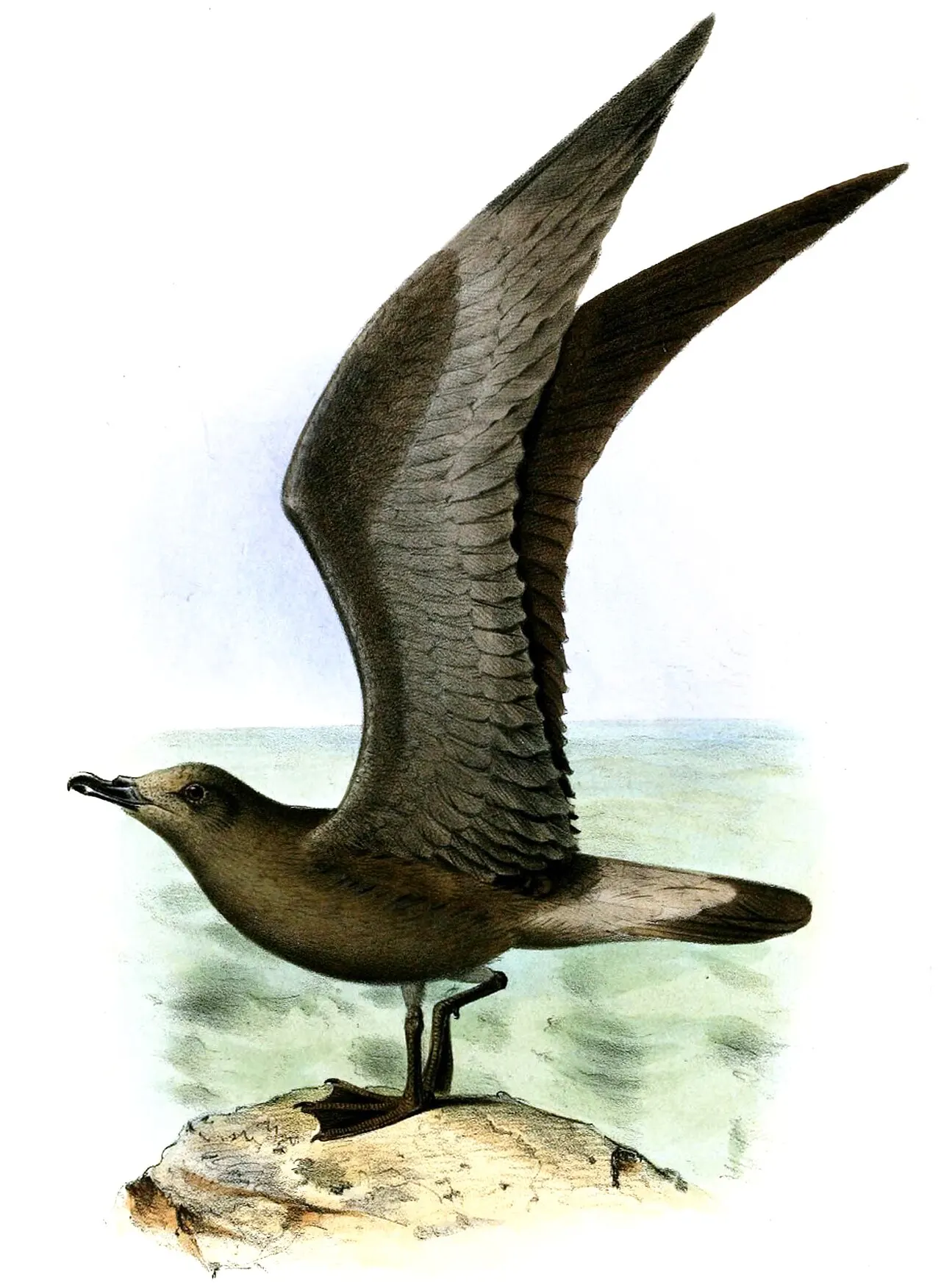
The Jamaican petrel is a dark seabird that once nested in the Blue Mountains of Jamaica. No one has confirmed one since specimens were collected in 1879. The IUCN Red List rated it Critically Endangered, possibly extinct, in 2018, and searches continue in case a few survive.
How to recognise it
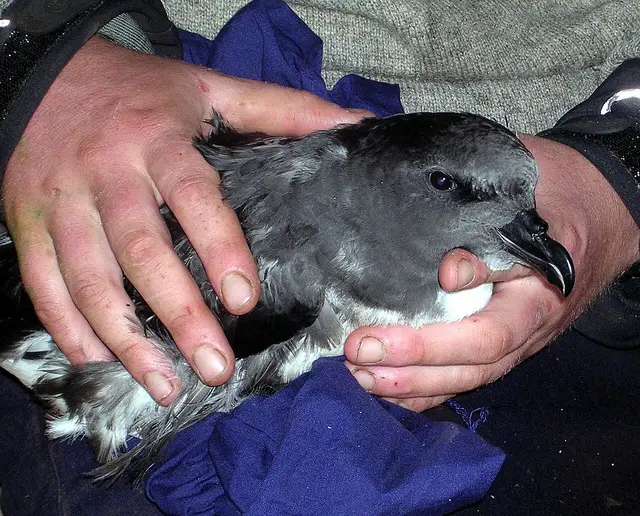
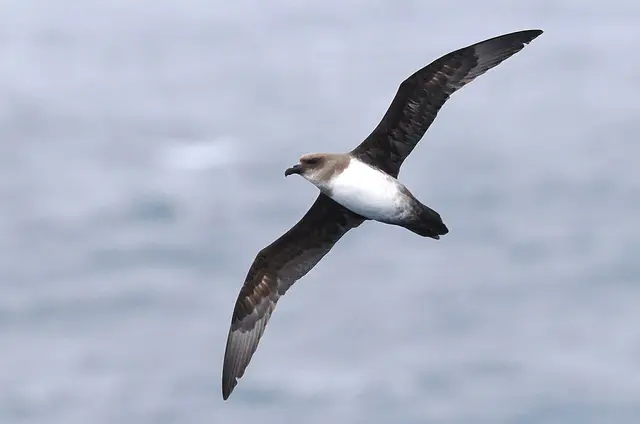
It is a gadfly petrel in the genus Pterodroma, and an all-dark bird. Alexander Carte described it in 1866 from Jamaican specimens. Islanders knew it as the Blue Mountain Duck before that.
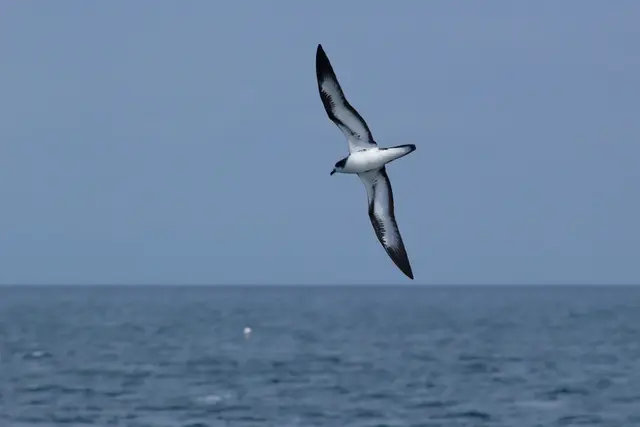
Its closest relative is the black-capped petrel, which still survives, and the two can be hard to tell apart at sea. That makes any sighting difficult to call.
Where it lived
All the known specimens came from the Blue Mountains of eastern Jamaica, though the bird was believed to be widespread on the island. The higher John Crow Mountains were also thought suitable for breeding.
Petrels generally nest in burrows, and a 2020 Birds Caribbean account places such colonies at around 1,500 to 1,800 metres, with burrows about a metre deep. Birds probably left the mountains for the sea at dusk and returned before dawn along gullies and river valleys, feeding far offshore on crustaceans and shrimp.
The IUCN lists the Bahamas, Dominica and Guadeloupe within its range as well. Petrels may once have bred on Dominica and Guadeloupe, but this has never been proven.
Pins are Wikidata “endemic to” fields. Orange dots, when present, are GBIF occurrence tiles — survey bias included.
Why it is in trouble
The last specimens were collected in November and December 1879. Petrel sightings on Jamaica and Dominica reportedly stopped around the time mongooses were introduced to Jamaica in 1872. The IUCN lists past harvesting of the birds, and ongoing predation by rats, mongooses, dogs and pigs, among the threats. It also expects future habitat alteration.
Because petrels fly to their colonies only after dark, they are easy to miss. That is why the species has never been formally declared extinct.
The search for survivors
Land-based searches in the 1990s found nothing. A pelagic expedition in November and December 2009, led by Hadoram Shirihai, found no Jamaican petrel off Jamaica but recorded 46 black-capped petrels, some displaying in pairs. The team thought these might be Jamaican breeders, most likely nesting in the John Crow Mountains.
On 22 March 2016, researcher Adam Brown used radar near Cinchona and picked up six petrel-like targets. It was not clear which species they were.
The Blue and John Crow Mountains National Park, a World Heritage Site, covers much of the likely habitat. The IUCN puts the population, if any remains, at 1 to 49 mature birds in one location. The assessment records no recovery plan and no systematic monitoring scheme.
Sources
Written for this catalog in our own words from the sources below, checked against them on 12 November 2026. Population figures are estimates and carry the year they were made. Status and assessment year: IUCN. 2026. The IUCN Red List of Threatened Species. Version 2026-1. iucnredlist.org.