Endangered
Red-billed curassow
Crax blumenbachii
The red-billed curassow, also called the red-knobbed curassow (Crax blumenbachii), is a large, mostly black ground bird of the Atlantic Forest in southeastern Brazil. The IUCN Red List rated it Endangered in 2023, with about 480 mature individuals estimated. Captive-bred birds have been released to rebuild wild groups.
How to recognise it
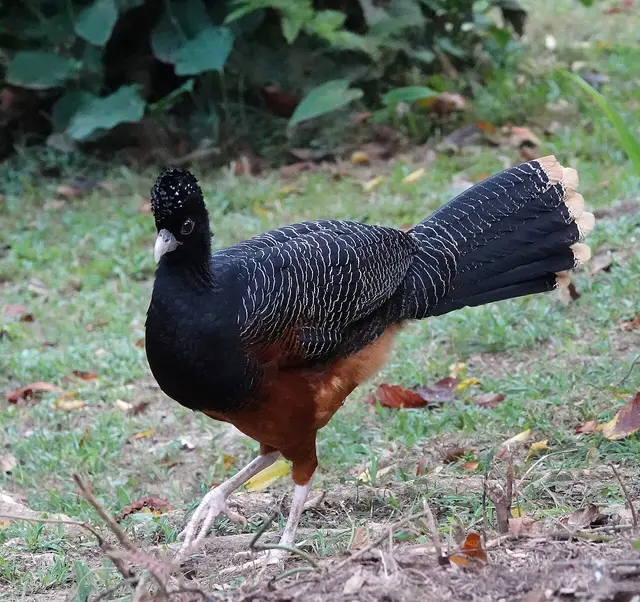
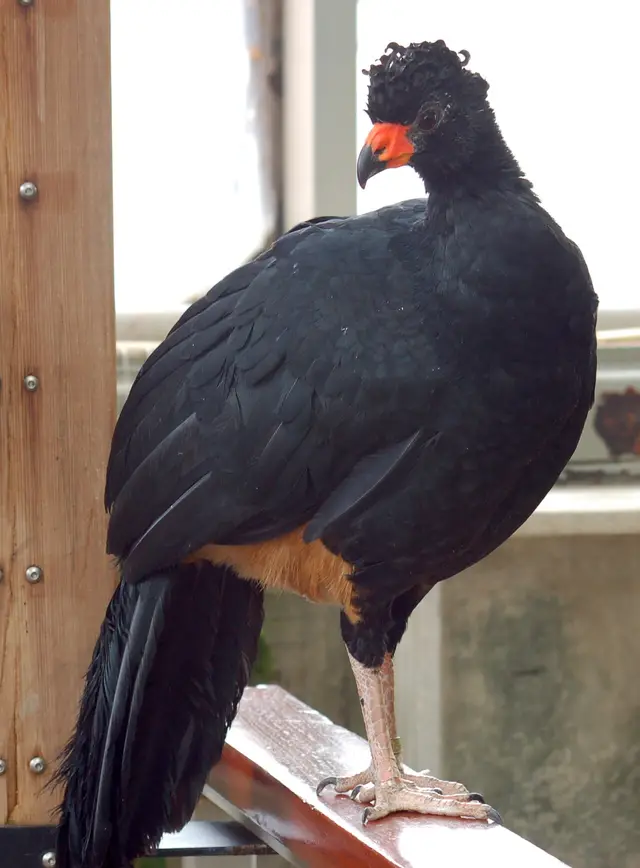
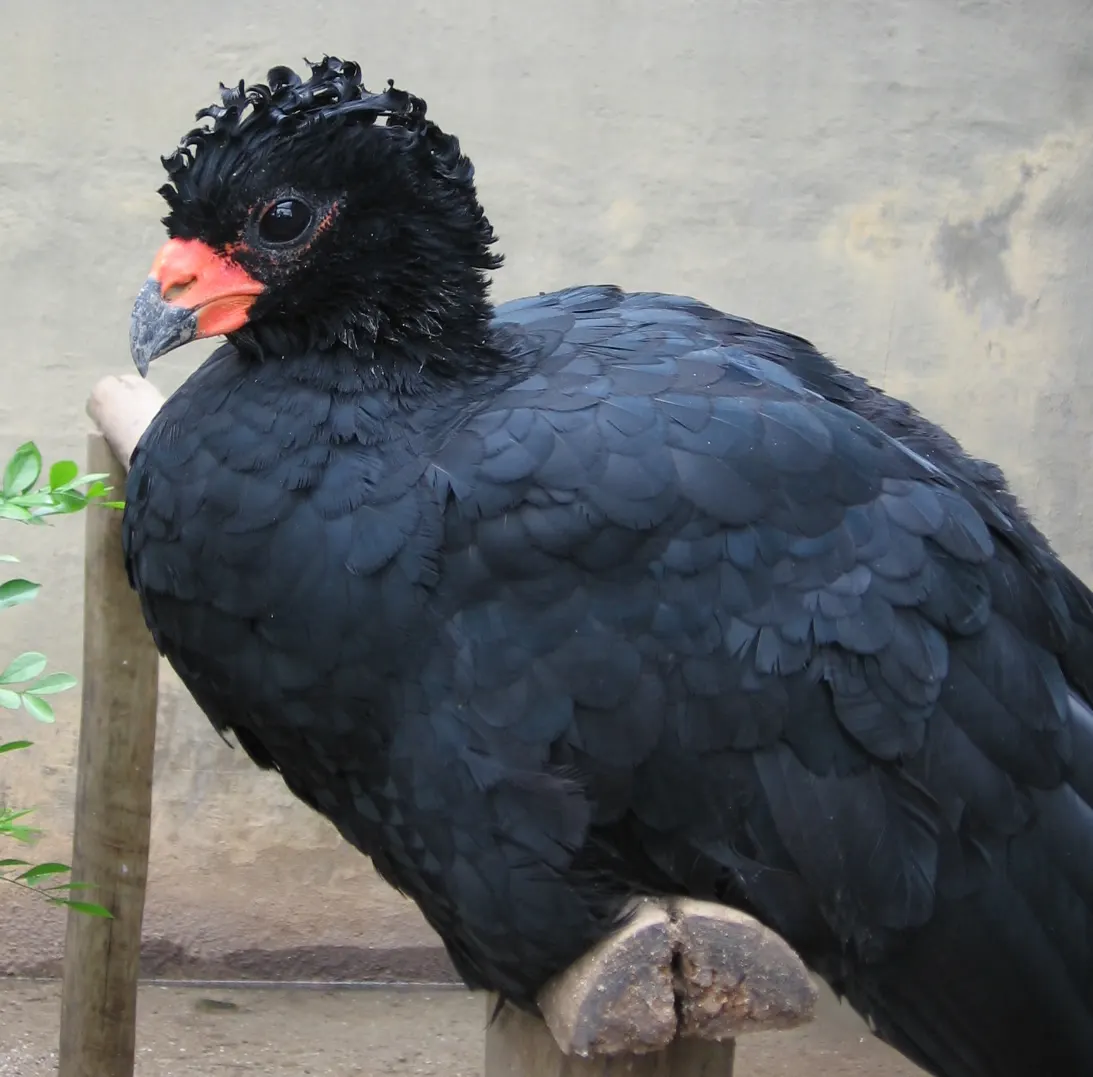
It is a big cracid, about 84 cm long according to the IUCN. The male is glossy black with white under the tail and a crown of long, curly feathers, and has a reddish-orange knob and wattle at the base of the bill. The female has no wattles, a shorter crest barred with white, and deep cinnamon-rufous under the tail, with fine rufous markings on the flight feathers. Females have pinkish legs and males have black ones.
It is mostly seen on the ground, usually in pairs, though groups of four, probably families, have been recorded. A low woop is given while foraging, and a two-part eeee-oooo when it is disturbed.
Where it lives
The species is endemic to lowland Atlantic Forest in southeastern Brazil, in Espirito Santo, Bahia and Minas Gerais. It once ranged from near Rio de Janeiro north to southern Bahia, and it is reportedly gone from parts of Minas Gerais. The IUCN gives its elevation as sea level to 500 m and its extent of occurrence as about 134,000 square kilometres. The area it actually occupies is far smaller, at roughly 3,440 square kilometres.
It uses moist lowland forest, swamp forest and heavily degraded former forest. A 2010 article on the reintroduction project said only eight wild localities were known, all protected by government or private bodies.
Pins are Wikidata “endemic to” fields. Orange dots, when present, are GBIF occurrence tiles — survey bias included.
How it lives
Curassows eat seeds, fruits, buds and small invertebrates. Males boom in September and October, and females lay one to four eggs. In the reintroduction project at Guapiaçu, released birds stayed close to streams and rivers, and young birds formed loose groups before pairing. Birds took about 30 months to reach adulthood, and some turned up in crops on neighbouring farms.
When alarmed they fly straight up to a perch 3 to 4 m high and look around, a habit that makes them easy for hunters to shoot.
Why it is in trouble
Brazil's Atlantic Forest had shrunk to about 7.3 percent of its original area by 2005. The IUCN lists farming, ranching and plantations, both large and small, as ongoing threats that cause slow but significant declines. It also lists hunting for food as ongoing, rating it as causing rapid declines in part of the population.
The 2023 assessment estimates about 480 mature individuals, spread over 8 to 100 subpopulations. The largest subpopulation holds about 215. It estimates a past decline of 30 to 49 percent and says the population is still falling. The species has been Endangered since 2000. It was rated Critically Endangered in 1994 and 1996.
What is being done
The IUCN lists a recovery plan, systematic monitoring, captive breeding and successful reintroductions as in place. A joint project between the Guapiaçu Ecological Reserve in Rio de Janeiro state and the CRAX Brasil breeding centre released captive-bred birds there from August 2006. A later report counts 53 sub-adult birds released between 2006 and 2008, while the 2010 article gave about 48, so figures vary slightly by source.
Not all of them survived. Hunters were believed to have killed four, five died in release pens, and pumas and domestic dogs killed others. Monitoring from 2009 to 2014 recorded six observations of probable breeding. The species is on Appendix I of CITES, which controls international trade.
Sources
Written for this catalog in our own words from the sources below, checked against them on 12 November 2026. Population figures are estimates and carry the year they were made. Status and assessment year: IUCN. 2026. The IUCN Red List of Threatened Species. Version 2026-1. iucnredlist.org.