Endangered
Javan hawk-eagle
Nisaetus bartelsi
The Javan hawk-eagle is a crested, dark brown raptor of Indonesia's forests, and the country's national bird. The IUCN lists it as Endangered (2025 assessment), with an estimated 300 to 1,200 mature individuals. Capture of young birds for the pet trade is now the biggest threat, on top of long-term forest loss.
How to recognise it
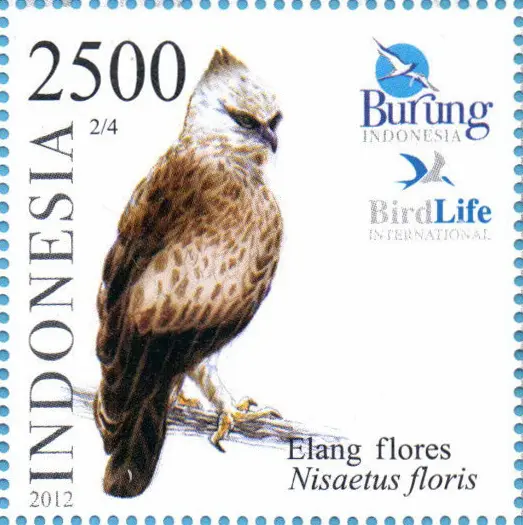
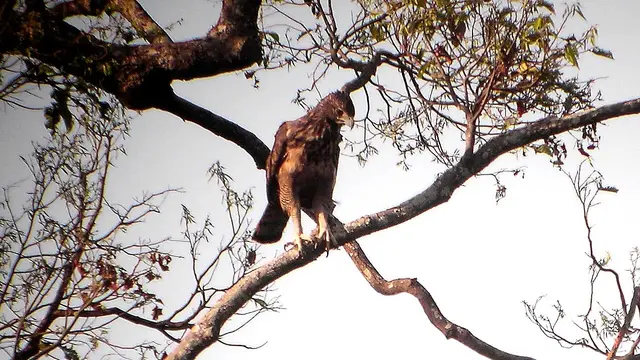
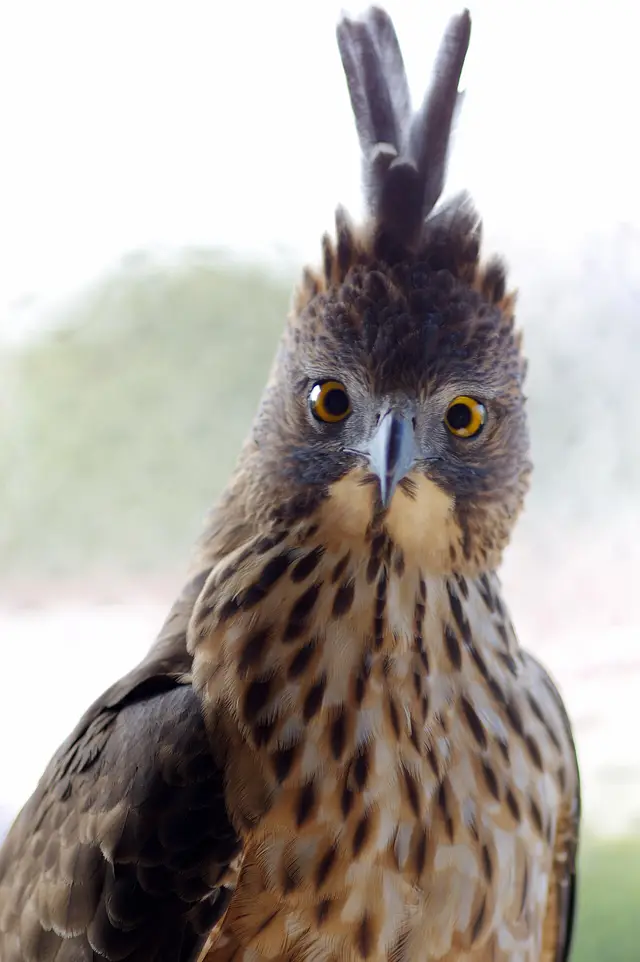
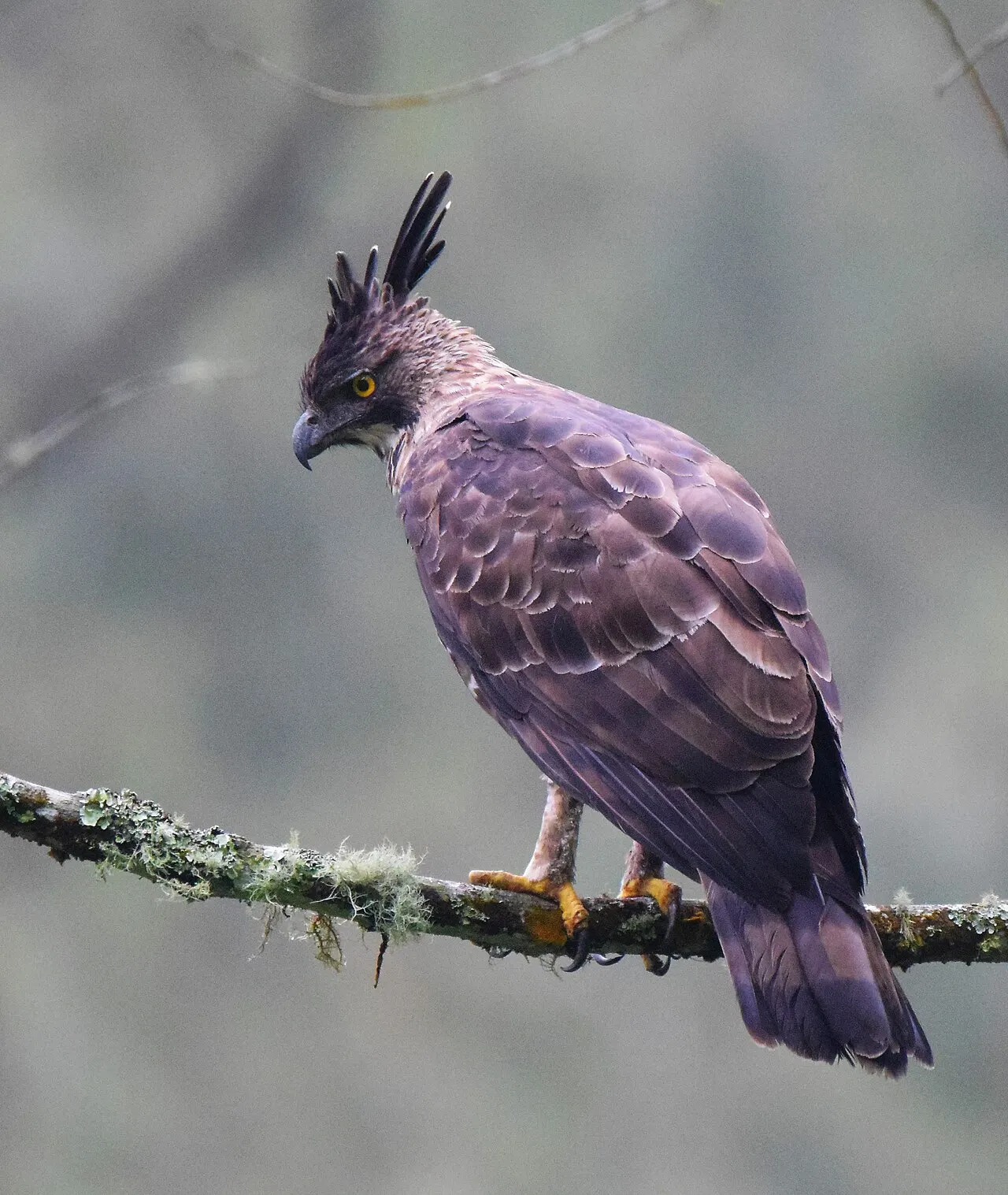
It is a medium-sized eagle, 56 to 60 cm long with a wingspan of 110 to 130 cm. A long blackish crest rises from the back of the head. The upperparts are dark, the throat is white with a dark stripe down the middle, and the whitish underparts are streaked on the upper breast and heavily barred on the belly, flanks and thighs. The head and neck are a deep rufous. Adults have yellow eyes and yellow feet.
Young birds look different, with a rufous-buff head and plain, unmarked underparts, and their eyes are bluish grey.
Where it lives
The Red List treats the species as endemic to Java and Bali, in Indonesia, restricted to remaining patches of forest. Some sources describe it as a Java bird only. Recent records on Bali suggest its range is either larger than once thought or has grown. It occurs mostly between 200 and 1,200 m, with records from sea level to 3,000 m, and the assessment estimates its extent of occurrence at about 147,000 square km.
It uses humid tropical forest, both primary and secondary, but lowland forest has largely been cleared, so it is now mostly found on steep slopes, ridges and mountains. Home ranges can include farmland and plantations where these border good forest. A 2025 estimate from IPB University in Indonesia counted 74 habitat patches covering about 10,804 square km, roughly 8.4 per cent of Java. In East Java the bird occurs in national parks including Bromo Tengger Semeru, Meru Betiri and Alas Purwo.
Pins are Wikidata “endemic to” fields. Orange dots, when present, are GBIF occurrence tiles — survey bias included.
How it lives
It hunts from a perch and takes birds, reptiles and mammals, including fruit bats according to some accounts. It is believed to be monogamous, and the female usually lays a single egg in a nest high in a forest tree. A 2025 IPB University report says it needs tall trees in natural forest to nest in, and breeding adults stay close to remnant forest. The Red List puts its generation length at about 8.7 years and describes it as non-migratory.
Why it is in trouble
The Red List calls trapping and trade the biggest current threat. Indonesia named the eagle a national rare animal in 1993, and the IUCN and the wildlife trade monitor TRAFFIC both link that move to a rise in demand from collectors and zoos. TRAFFIC recorded about 70 in trade over roughly 20 years in a 2009 report. Online trade has since grown, with more than 100 birds recorded for sale in Indonesian Facebook groups in 2015, mostly young ones taken from nests.
Forest loss was historically the main problem. Satellite data show forest cover on Java steady for about 20 years, but clearing for farming, logging and fires caused by drought or charcoal production still degrades natural forest, and new logging roads make birds easier to reach. The Red List also expects climate change to shrink suitable habitat.
Estimates of how many remain have changed a great deal. Fewer than 60 pairs were thought to survive in 1993, and a 2012 estimate gave about 325 pairs. Later modelling puts it at 511 pairs, a figure IPB University repeated in 2025, and a 2004 study gave 270 to 600 pairs. The 2025 assessment gives 300 to 1,200 mature individuals in one population and records the trend as decreasing.
What is being done
The Red List records a recovery plan, a monitoring scheme, awareness programmes and international trade controls, and says the bird occurs in protected areas. All birds of prey are protected in Indonesia, and the species is on CITES Appendix II. Indonesian forestry authorities named it a national priority species in 2015.
Confiscated and surrendered birds are rehabilitated and released. Between 2001 and 2021, 40 were released and 27 survived, according to Raptor Indonesia, and in December 2025 a male named Raja Dirgantara was released in Gunung Gede Pangrango National Park. The eagle's presence helped justify protection of the forests of Mount Muria in central Java. The Red List also calls for better-managed and new reserves, stronger trade enforcement and continued research.
Sources
Written for this catalog in our own words from the sources below, checked against them on 12 November 2026. Population figures are estimates and carry the year they were made. Status and assessment year: IUCN. 2026. The IUCN Red List of Threatened Species. Version 2026-1. iucnredlist.org.