Critically Endangered
New Caledonian Rail
Gallirallus lafresnayanus
The New Caledonian rail is a large, drab, flightless bird from the Pacific island of New Caledonia. The IUCN Red List lists it as Critically Endangered (2025), with 1 to 49 mature individuals if any survive. It has not been confirmed alive since 1890, and almost nothing is known of its life.
How to recognise it
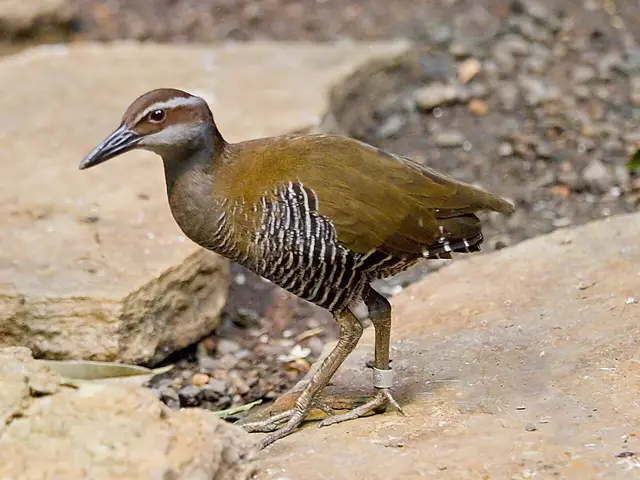
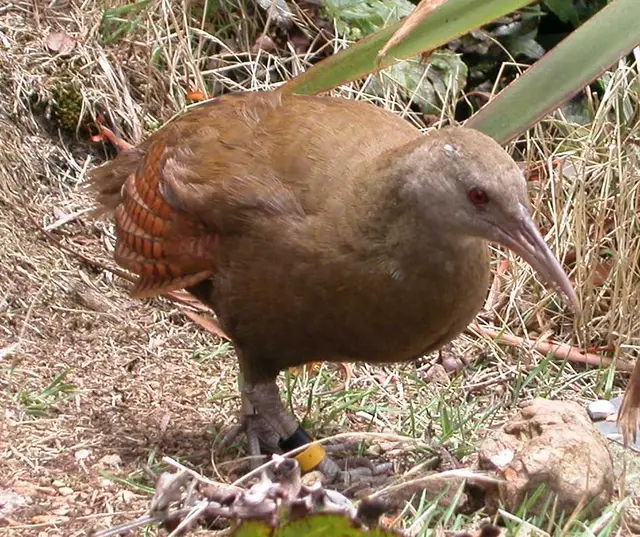
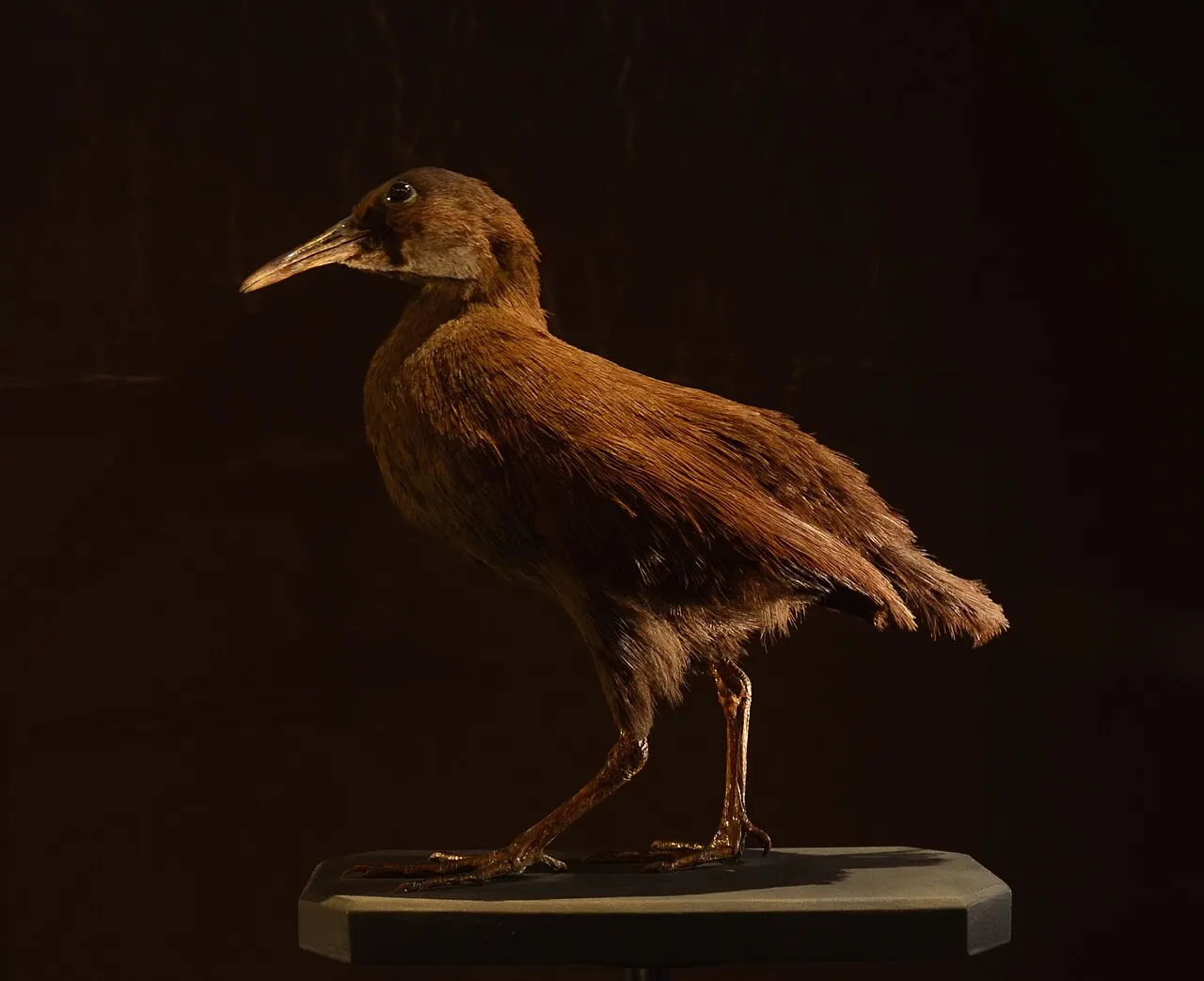
It is a big rail, about 45 cm long, with dull brown upperparts, greyer underparts and a long, yellowish bill that curves downward. The feathers are fluffy and silky, and the wings are reduced, so the bird cannot fly.
Its voice has never been described, so nobody can identify it by call. All 17 known specimens were collected before 1890.
Where it lived
The species is endemic to New Caledonia. It was described to science in 1860, and at least 17 specimens were taken between 1860 and 1890, apparently including some from the Ile des Pins. The last confirmed record was a bird collected in June 1890 at the southern end of the main island, Grande Terre. That specimen is held at the Macleay Museum, University of Sydney.
Single birds were collected in 1871, 1876 and 1877, which suggests it was not rare at the time. Historical records run from near sea level to about 1,000 m, and the Red List gives a range of 0 to 1,500 m. Recent reports have come from hard-to-reach mountain forest, probably because introduced predators are fewer there. The Red List gives an extent of occurrence of up to 11,400 square km, but that is an estimate for a bird nobody has confirmed.
Pins are Wikidata “endemic to” fields. Orange dots, when present, are GBIF occurrence tiles — survey bias included.
How it lives
Nobody has watched a living New Caledonian rail in detail. It is presumed to live in evergreen forest, with needs similar to the kagu, another flightless bird of the island, and it probably eats invertebrates such as earthworms. It is thought to be shy and may be active at dusk or at night. The Red List does not treat it as a migrant, and gives a generation length of about 4.7 years.
One odd detail is a feather louse, Rallicola piageti, which is reportedly not known from any other bird. If the rail is gone, the louse may be gone too.
Why it is in trouble
The main threat is introduced animals. The Red List says the rail is probably flightless and ground-nesting, so it is exposed to dogs, cats and rats. Many of the historical records are of birds caught by hunting dogs, and the bird crouches when chased, which leaves it open to attack. Pigs and deer also graze the forest understorey and reduce regeneration.
No sighting has been confirmed since 1890, but there were reports between 1947 and 1984, including some near Mt Panie and the headwaters of the Riviere Blanche, and calls that sounded like a rail were heard on Mt Aopinie in 1996. Repeated surveys have found nothing. A recent report from the north of Grande Terre, noted by BirdLife in 2023, has led to a new search.
BirdLife estimated the chance that the species is already extinct at 0.48 based on records and surveys, and 0.76 based on threats, with wide uncertainty ranges.
What is being done
There is no recovery plan, no monitoring scheme and no captive population, and no education or awareness programme is recorded. Conservation sites have been identified across its whole possible range, and some invasive species control is in place. The bird may benefit from predator control aimed at the kagu.
BirdLife recommends more survey work in remote forest, including areas where kagu are common, and publicising the search among forest workers and villagers.
Sources
Written for this catalog in our own words from the sources below, checked against them on 12 November 2026. Population figures are estimates and carry the year they were made. Status and assessment year: IUCN. 2026. The IUCN Red List of Threatened Species. Version 2026-1. iucnredlist.org.