Endangered
Lesser Sand Plover
Charadrius mongolus
The Siberian sand plover (Charadrius mongolus, formerly part of the lesser sand plover) is a small shorebird that breeds in Siberia and winters on tidal flats and beaches from East Asia to Australia. The 2023 Red List assessment covers this Siberian species alone, rates it Endangered, and puts its declining population at 18,000 to 50,000 mature birds.
A name that changed
Until recently the birds of Siberia and those of the Tibetan Plateau were treated as one species, the lesser sand plover. In 2023 the International Ornithologists' Union split them, following a 2022 genome-wide study, and the Siberian bird took the new English name. The Tibetan birds became a separate species, the Tibetan sand plover.
The IUCN's 2023 assessment is for the Siberian sand plover only, listed under the scientific name Charadrius mongolus (some checklists now use Anarhynchus mongolus). It does not cover the Tibetan sand plover, so the older name lesser sand plover now mixes two birds.
How to recognise it
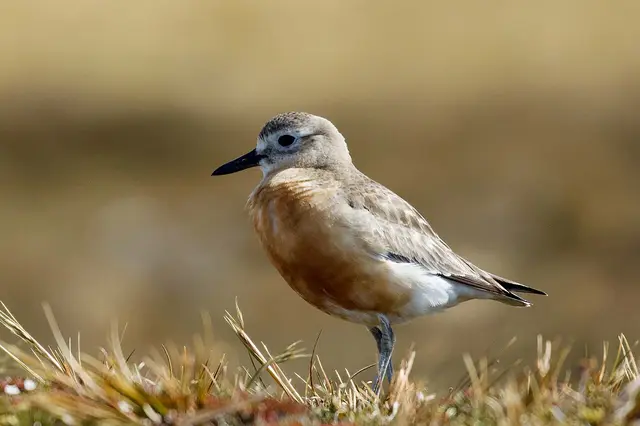
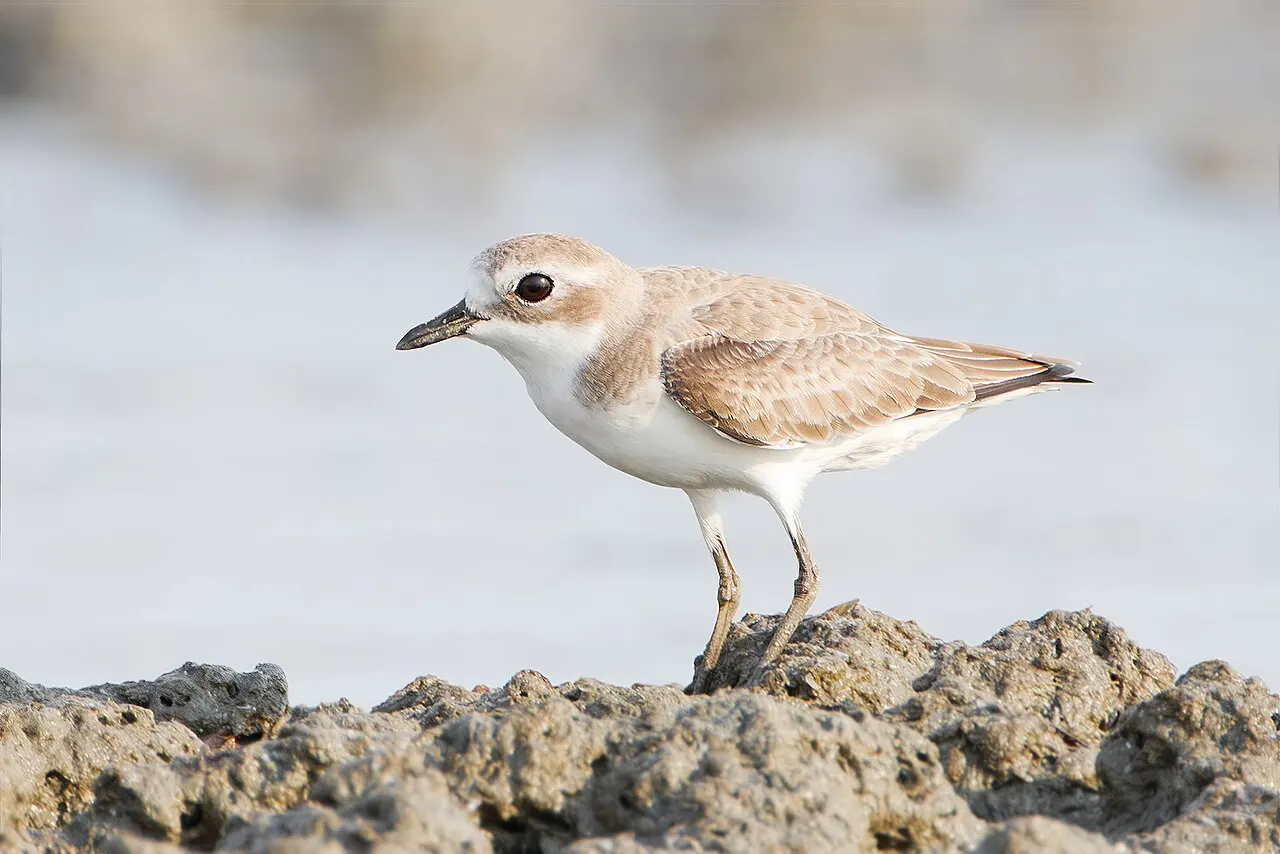
This is a compact wader about 18 to 21 cm long. In breeding plumage a male has a broad cinnamon wash across the breast, a largely white forehead and dark, cold grey-brown upperparts. Females are duller, with a narrower, more broken breast band. Out of breeding dress the cinnamon is gone and the bird looks brown and white, with grey to olive legs.
It looks a lot like the greater sand plover, which has a deeper-based bill and longer legs, and the flight call of both is a trill. Telling them apart takes experience, and bill shape, leg length and feeding style all help.
Where it lives
It breeds in scattered areas of eastern and southeastern Siberia, from southern Chukotka and Kamchatka south to the Amur floodplain, nesting in a scrape on bare ground and usually laying three eggs. It is a full migrant. The Red List's range countries include Russia, China, both Koreas, Japan, Taiwan, the Philippines, Malaysia, Indonesia, Papua New Guinea and Australia, along with many Pacific islands.
It feeds on worms and other invertebrates, moving across the mudflat in a steady stop-start way rather than waiting and then dashing. Away from the nest it relies on intertidal mudflats and sandy shores, among other coastal habitats.
Pins are Wikidata “endemic to” fields. Orange dots, when present, are GBIF occurrence tiles — survey bias included.
Why it is in trouble
The assessment estimates a decline of 50 to 62 percent and records continuing habitat loss across the range. Hong Kong's bird society links the steep fall to loss of mudflat through land reclamation and to invasive Spartina cordgrass. The Red List also rates intentional use, meaning birds taken as targets, as a medium impact, without saying where.
Hong Kong's Deep Bay shows the pattern at a small scale. Spring counts there peaked at 500 birds on 14 April 1991, but the highest this century is 281, in April 2020. Winter flocks of up to 150 in the 1990s have given way to far fewer, with 30 the highest since, in December 2020.
What is being done
The Red List says the species is monitored systematically, occurs in at least one protected area, and has conservation sites identified across its range. Its recommended actions include halting further land reclamation, protecting the remaining mudflats, controlling toxic discharge into coastal wetlands, and carrying out China's plan to remove more than 90 percent of its Spartina.
Sources
Written for this catalog in our own words from the sources below, checked against them on 12 November 2026. Population figures are estimates and carry the year they were made. Status and assessment year: IUCN. 2026. The IUCN Red List of Threatened Species. Version 2026-1. iucnredlist.org.