Critically Endangered
New Zealand Plover
Charadrius obscurus
The New Zealand plover, or dotterel (tūturiwhatu), is a stocky shorebird found only in New Zealand. The southern population, which breeds on Stewart Island/Rakiura, was rated Critically Endangered by the IUCN in 2018, with 60 to 80 mature birds. Feral cats are the leading cause of its decline.
How to recognise it
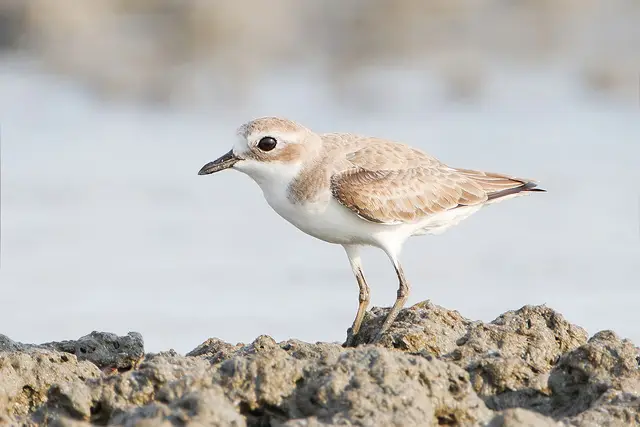
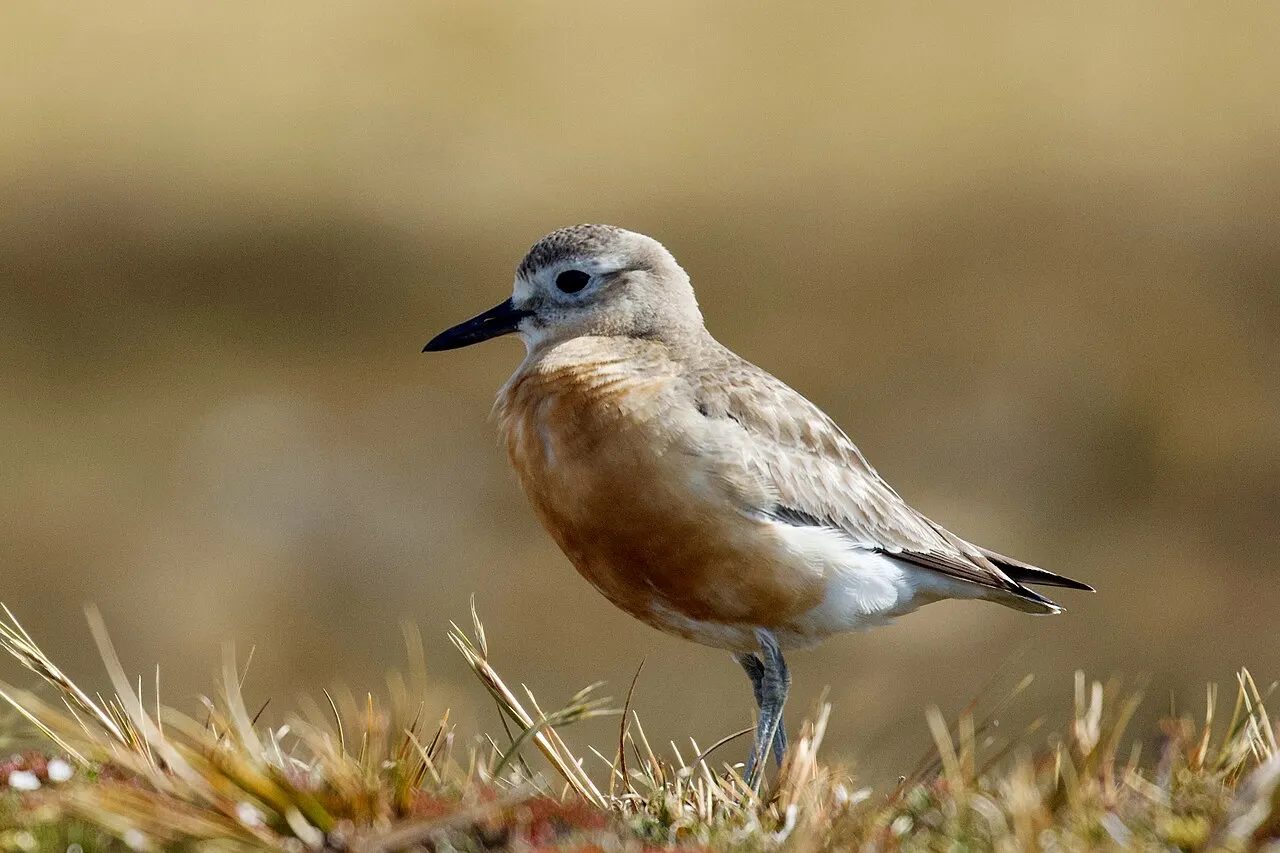
It's a heavily built plover, roughly 25 to 28 cm long, with brown upperparts, a thick black bill and pale to mid-grey legs. In autumn and early winter the underparts are off-white. From about May they turn orange-red, which is where the old name red-breasted plover comes from. Males tend to be darker than females.
Southern birds are a little heavier than northern ones, about 160 g against roughly 146 g, and they are darker as well.
Where it lives
Two separate populations exist. The northern one lives mostly on the North Island. It is rated Least Concern, at about 1,700 birds by 2004, but only after intensive management. The southern one is the Critically Endangered bird. The IUCN's species assessment covers just these southern birds, and treats them as Charadrius obscurus in their own right. Others treat the two populations as subspecies of one species, so both views turn up.
Southern dotterels were once widespread across the South Island, but they had largely vanished from the mainland by about 1900, after stoats and other mustelids were introduced. Today they breed on Stewart Island/Rakiura. For most of the year about a third of them gather at Awarua Bay in Southland, the only reliable place to see them on the South Island mainland.
The IUCN lists habitats ranging from sandy and shingle beaches, mudflats and dunes to inland bogs and temperate grassland.
Pins are Wikidata “endemic to” fields. Orange dots, when present, are GBIF occurrence tiles — survey bias included.
How it lives
Pairs are monogamous and lay two or three eggs. Southern birds nest in shallow depressions among cushion plants, lined with dried tussock, and start later than northern birds, from late September. Northern birds scrape nests in sand or soil, and their incubation averages 28 to 30 days. Southern incubation hasn't been measured but is probably similar.
Chicks can walk on the day they hatch and feed themselves, so the parents' job is guarding them. Adults lead intruders away from nests and chicks with injury-feigning displays.
Food is mostly small invertebrates such as sandhoppers, small crabs, worms, crickets and beetles, with the odd small fish.
Why it is in trouble
Introduced predators did most of the damage. Stoats ended the South Island population. Then, from the 1950s, cats began killing adults on Stewart Island, and by 1992 only 62 birds were left, in 18 pairs.
Cat and rat control began that year, and numbers recovered to roughly 240 to 290 birds between 2005 and 2013. They then fell sharply. A flock count in 2024 found about 101 birds, 19% fewer than the 126 counted the year before. The Department of Conservation says at least 41 adults died in the 2023 breeding season, and that surviving chicks only partly made up the loss, leaving a net drop of about 25 birds. It calls feral cats the number one cause of decline. White-tailed deer have been filmed eating eggs on nest cameras, and spur-winged plovers, harriers and black-backed gulls are also believed to be a threat.
What is being done
Staff killed 32 feral cats at breeding sites in the season covered by the 2024 announcement, but predator control reaches only part of the patchy breeding habitat, which runs the length of Rakiura. The Department said it would review its methods under an adaptive management programme. Long-term hopes rest on Predator Free Rakiura, which aims to clear the island of possums, rats, feral cats and hedgehogs. Private donors have also given more than NZ$82,000 in six months through the New Zealand Nature Fund.
Sources
Written for this catalog in our own words from the sources below, checked against them on 12 November 2026. Population figures are estimates and carry the year they were made. Status and assessment year: IUCN. 2026. The IUCN Red List of Threatened Species. Version 2026-1. iucnredlist.org.