Endangered
Pitcairn Reed Warbler
Acrocephalus vaughani
The Pitcairn reed warbler (Acrocephalus vaughani) is a plain olive-brown songbird found on one small island in the South Pacific and nowhere else. The IUCN Red List rated it Endangered in 2020. A 2024 field survey found more birds than older estimates, and the survey team argues the status may be too severe.
How to recognise it
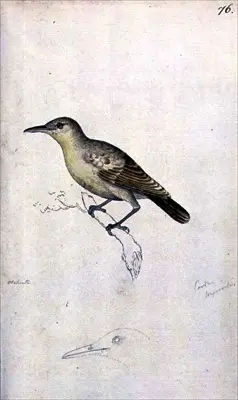
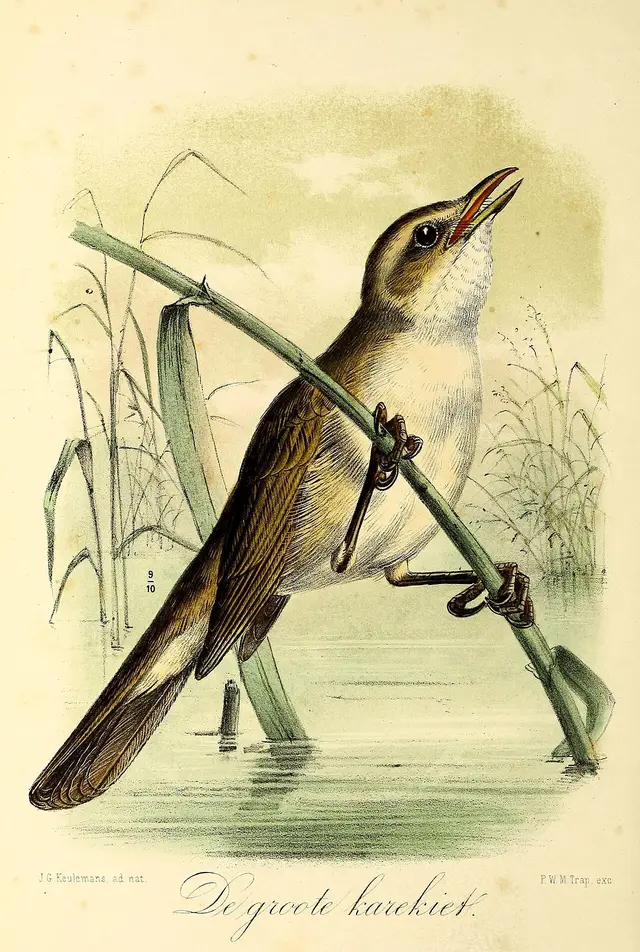
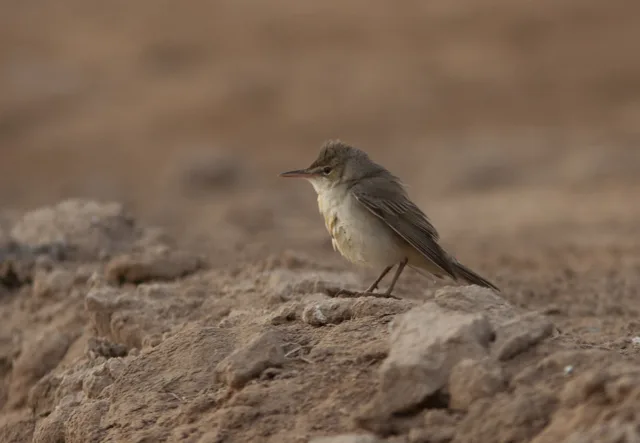
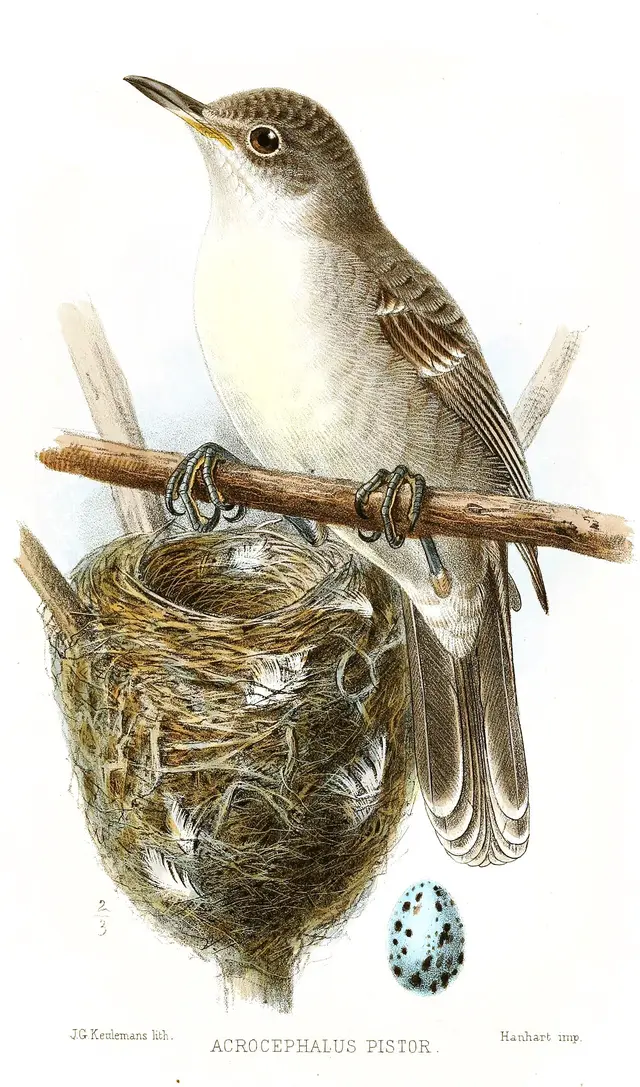
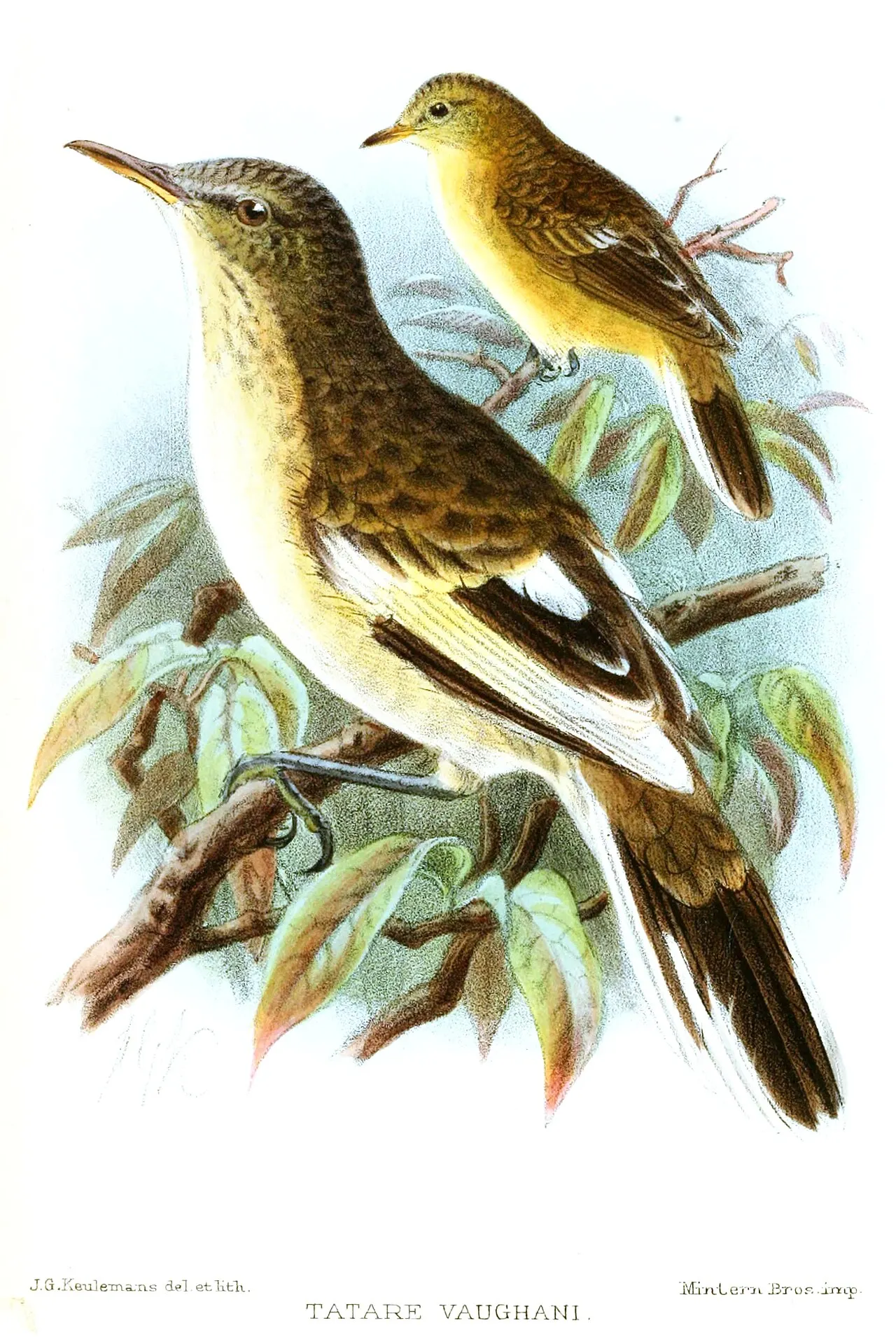
It is a fairly large warbler, about 17 cm long, with a short bill. Adults are olive-brown above and yellowish-white below, with a dark streak through the eye and a pale stripe above it.
The odd feature is the scattering of white feathers among the darker ones, often uneven from one side of the bird to the other. Young birds lack them and are browner above with a rich tawny underside. Differences in this white plumage were one reason a 1992 study split the Pitcairn bird from its relatives on Henderson, Rimatara and the Cook Islands, which had been lumped together as one species.
Where it lives
Pitcairn Island, a small volcanic island, is its whole range. Islanders call the bird the sparrow, although true sparrows don't occur there. It is the only land bird breeding on the island. A 2011 DNA study reportedly placed it in a group of eastern Polynesian reed warblers, with the Henderson reed warbler as its closest relative.
The IUCN lists lowland moist forest as its main habitat, with moist shrubland and rural gardens also used. In the 2022 to 2023 survey it was most abundant in stands of rose apple, a tree brought to the island by people. It avoids screw pine monocultures, grass and fern fields, and bare ground.
Pins are Wikidata “endemic to” fields. Orange dots, when present, are GBIF occurrence tiles — survey bias included.
How many are left
Until recently nobody had counted them. The IUCN's 2020 assessment gave a range of 250 to 2,000 mature individuals in one population, judged to be declining.
Then Steffen Oppel, Robert Eisler and Nik Aspey surveyed 54 transects of 100 m each in the 2022 to 2023 austral summer, covering about 13 percent of the island's vegetated area. They estimated roughly 1,568 birds (95 percent confidence interval 812 to 3,237) and 442 to 2,774 mature adults. They also followed 49 nests, and only four failed to fledge any young. Productivity averaged about one fledgling per nest, which, assuming adult survival similar to other island reed warblers, looked enough to hold the population steady. They found no sign of a significant decline over three generations. Their paper, published in Bird Conservation International in 2024, recommends moving the species from Endangered to Vulnerable.
Why it is in trouble
A tiny range is the basic problem. All the birds live on one small volcanic island, so a single arrival of a new predator or disease could affect the entire species.
The IUCN names several introduced animals and plants as threats, among them Pacific rats, feral cats, goats and rose apple, though the impact on the warbler is rated unknown for most of them. Small-holder farming and commercial and industrial development also clear habitat. The species was rated Vulnerable in 2004 and raised to Endangered in 2008, once it proved rarer than first thought.
What is being done
The 2020 assessment calls for setting aside a block of forest, involving islanders in monitoring, and, if the community accepts it, trying again to remove rats and cats from the island. It also stresses keeping further invasive species out. Invasive species control was recorded as in place, but no recovery plan or systematic monitoring scheme was.
Sources
Written for this catalog in our own words from the sources below, checked against them on 12 November 2026. Population figures are estimates and carry the year they were made. Status and assessment year: IUCN. 2026. The IUCN Red List of Threatened Species. Version 2026-1. iucnredlist.org.