Endangered
Grey Parrot
Psittacus erithacus
The grey parrot, also known as the Congo grey parrot, is an African parrot in the family Psittacidae.
Appearance
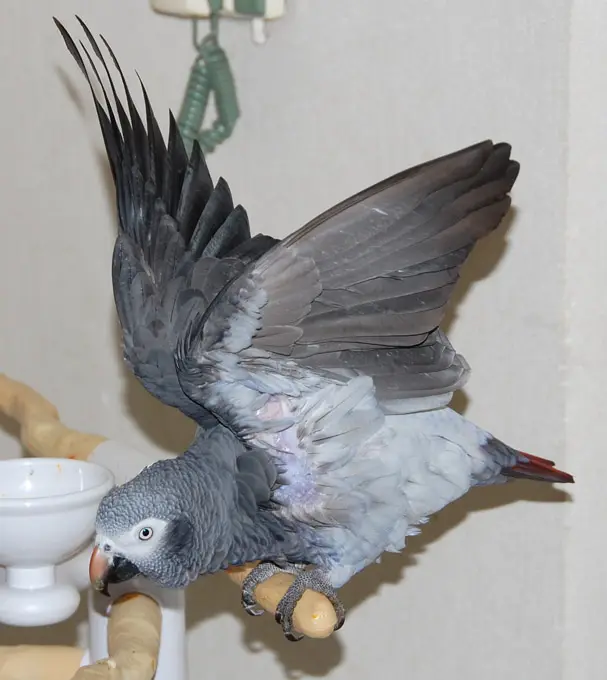
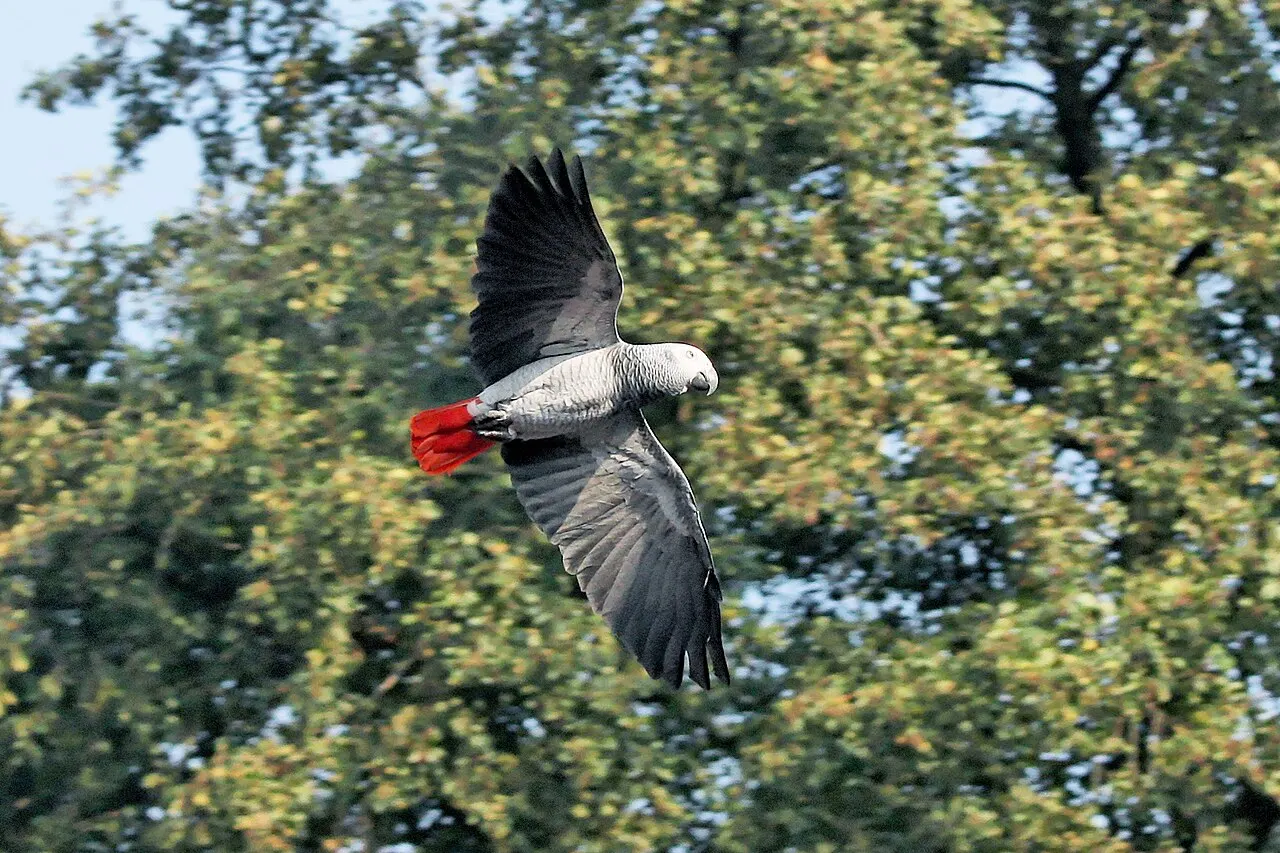
The grey parrot is medium to large sized, predominantly grey and black-billed. The head and body feathers have slight white edges. The tail feathers are red with occasional black touches. Juvenile colouration is similar to that of adults, but typically their eyes are dark grey to black, compared to the adults' yellow irises around dark pupils, and their undertail coverts are tinged with grey.
Its typical weight is 400 g (14 oz), with an approximate length of 33 cm (13 in), and a wingspan of 46–52 cm (18–20+1⁄2 in).
Published measurements include mass about 18.7.
Range and habitat
The grey parrot is native to equatorial Africa, among them Angola, Cameroon, the Congo, Gabon, Ivory Coast, Ghana, Kenya, and Uganda. The species is found inside a range from Kenya to the eastern part of Ivory Coast. Current estimates for the global population are uncertain and range from 630,000 to 13 million birds.
Pins are Wikidata “endemic to” fields. Orange dots, when present, are GBIF occurrence tiles — survey bias included.
Diet and breeding
In addition to a lack of research funding, it can be particularly difficult to study these birds in wild situations due to their status as prey animals, that leads them to have rather secretive personalities. Grey parrots are mainly frugivorous, with most of their diet consisting of fruit, nuts, and seeds, among them oil palm fruit.
Grey parrots are monogamous breeders who nest in tree cavities. Each mated pair of parrots needs their own tree for their nest.
In crisis
Natural predators for this species include palm-nut vultures and several raptors. Humans are by far the largest threat to wild grey populations. Approximately 21% of the wild population was being harvested every year.
As a result of the extensive harvest of wild birds, in addition to habitat loss, this species is believed to be undergoing a rapid decline in the wild and therefore, has been rated as endangered by the International Union for Conservation of Nature. In October 2016, the Convention on the International Trade of Endangered Fauna and Flora (CITES) extended the highest level of protection to grey parrots by listing the species under Appendix 1, that regulates international trade in the species.
Grey Parrot is Endangered on the IUCN Red List (assessed 2021, criteria A2bcd+3bcd+4bcd). Confirm the official criteria and any later count on the assessment page.
Sources
Adapted from the English Wikipedia article on Grey parrot (CC BY-SA 4.0; authors are listed in the article history; changes were made), Wikidata item Q220328. Family and order context is original field-guide writing about the group, not a copied assessment of this one species. Not an IUCN assessment. Counts, when quoted, can change — confirm them on the recovery programme and on iucnredlist.org. Status and assessment year: IUCN. 2026. The IUCN Red List of Threatened Species. Version 2026-1. iucnredlist.org.