Critically Endangered
Javan Lapwing
Vanellus macropterus
The Javan lapwing (Vanellus macropterus) is a large, long-legged wader with yellow wattles that lived in the coastal marshes of Java, Indonesia. It has not been confirmed alive since the late 1920s or 1930s. The IUCN Red List rates it Critically Endangered, and in 2019 it was flagged as possibly extinct.
How to recognise it
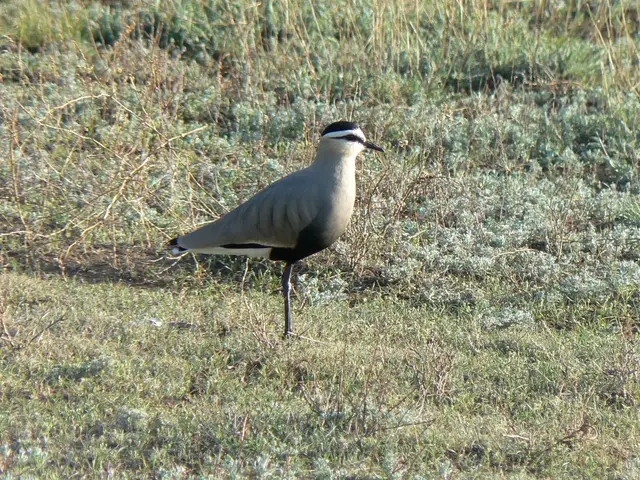
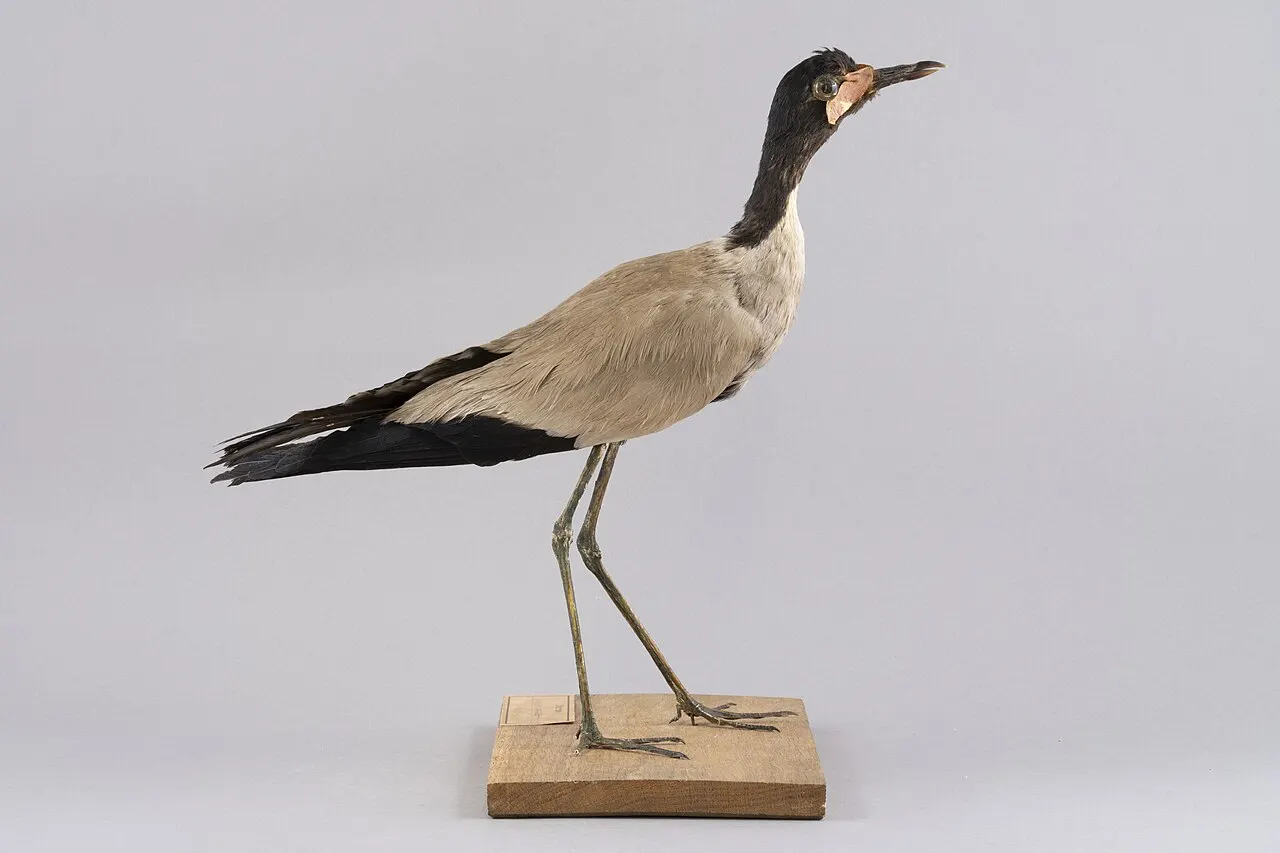
It was a lapwing of 27 to 29 cm, mostly dark, with a black head, black belly patch and black flight feathers, dark brown upperparts, and white under the tail. The legs were orange to bright yellow, and large yellow wattles hung from the face. Museum skins often show paler, creamier wattles, which is thought to be colour fading after death. Curved black spurs, 1.5 to 2 cm long, sat on the wings.
The voice is its best-known feature. August Spennemann, a German amateur ornithologist who watched the birds in 1927 and 1928, described rattling calls like a toy trumpet, usually in the evening. Local Sundanese names such as errek-errek imitate the sound.
Where it lived
Records come from two areas about 750 km apart: the north coast of West Java, and the south coast of East Java. The birds used wide, steppe-like wet grassland in river deltas and behind coastal dunes, but also freshwater ponds, reedy swamps, wet cattle pasture, and abandoned paddy fields with fishponds beside mangroves.
Spennemann's 1927 and 1928 sightings at Poponcol and Tegallurung were about 75 km east of the previous northern limit, and there he found the lapwings common and watched them almost daily. Birds were seen alone, in pairs, and in groups of up to six.
Pins are Wikidata “endemic to” fields. Orange dots, when present, are GBIF occurrence tiles — survey bias included.
How it lived
It ate insect larvae, water bugs, beetles, snails and seeds of water plants, and captive birds also took small fish. Nesting was recorded in May and June in West Java. Eight clutches are known, and the last nest found, in May 1925, held four eggs. Adults chased off Brahminy kites and crows.
Spennemann also described a gathering on 26 January 1928: two birds crouched low and horizontal while two others stood upright and called, and four days later six birds crowded onto about a square metre and called together.
Why it is in trouble
Nearly all the coastal marshes of Java have been turned into paddy fields and shrimp ponds, and Java now holds about 124 million people (2006 figure). Hunting for food and sport is also blamed. The IUCN assessment lists farming and intentional use (hunting) among the threats.
The date of the last record is disputed. A June 1940 nest in East Java was long taken as final, but later information points to that claim being fraudulent. The last widely accepted records are from the late 1920s on the north coast and from November 1938 and April 1939 on the south coast.
What is being done
Searches between 2001 and 2012, including surveys at Muara Gembong near Jakarta, produced no confirmed sightings, though local people described sightings from the mid-1950s through 2010 that no ornithologist confirmed. The IUCN's 2019 assessment gives a population of 0 to 49 birds, a decreasing trend, and no recovery plan, monitoring scheme or protected-area presence. Priority places for more survey work include the Muara Gembong, Tanjung Sedari, Muara Bobos and Muara Cimanuk estuaries, the area south of Lumajang, and Belitung Island.
Sources
Written for this catalog in our own words from the sources below, checked against them on 12 November 2026. Population figures are estimates and carry the year they were made. Status and assessment year: IUCN. 2026. The IUCN Red List of Threatened Species. Version 2026-1. iucnredlist.org.