Endangered
Vinaceous-breasted amazon
Amazona vinacea
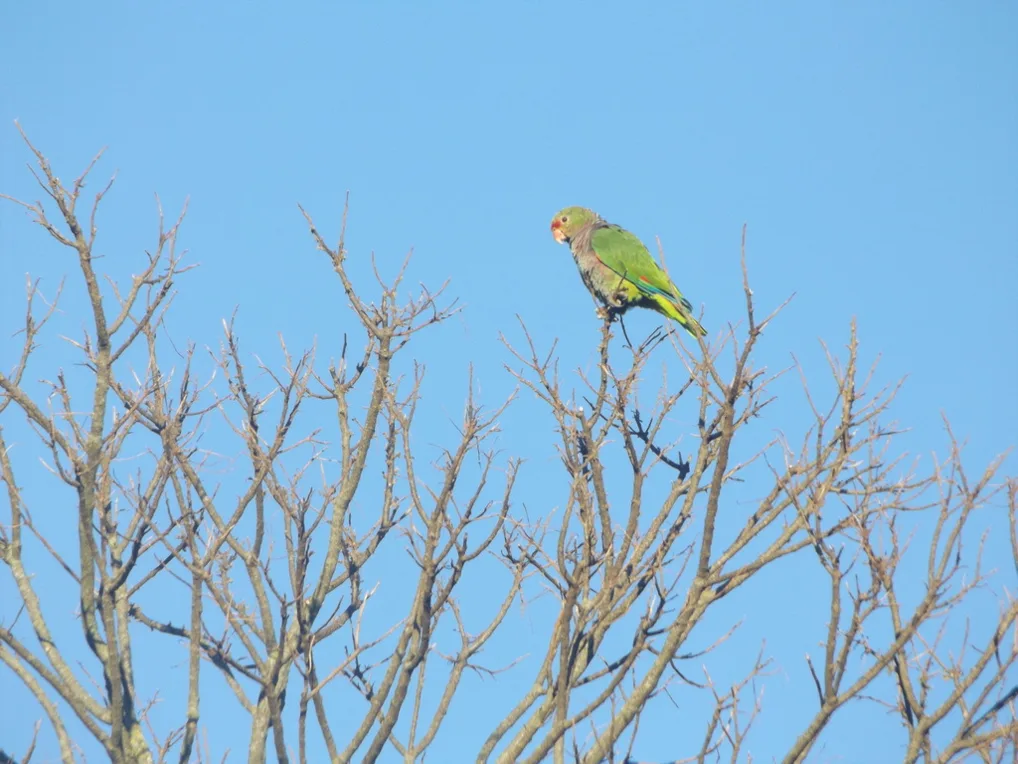
The vinaceous-breasted amazon (Amazona vinacea) is a mostly green parrot, 30 to 36 cm long, with a lilac breast and red forehead. It lives in the Atlantic Forest of southern Brazil, eastern Paraguay and north-eastern Argentina. The Red List has rated it Endangered since 2009, most recently in 2017.
How to recognise it
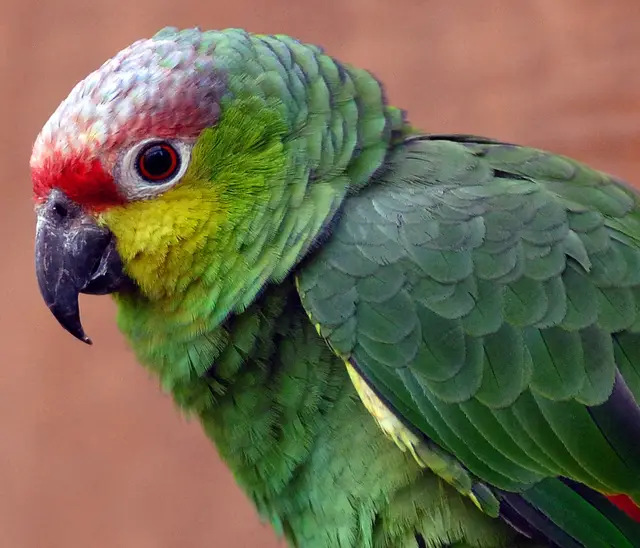
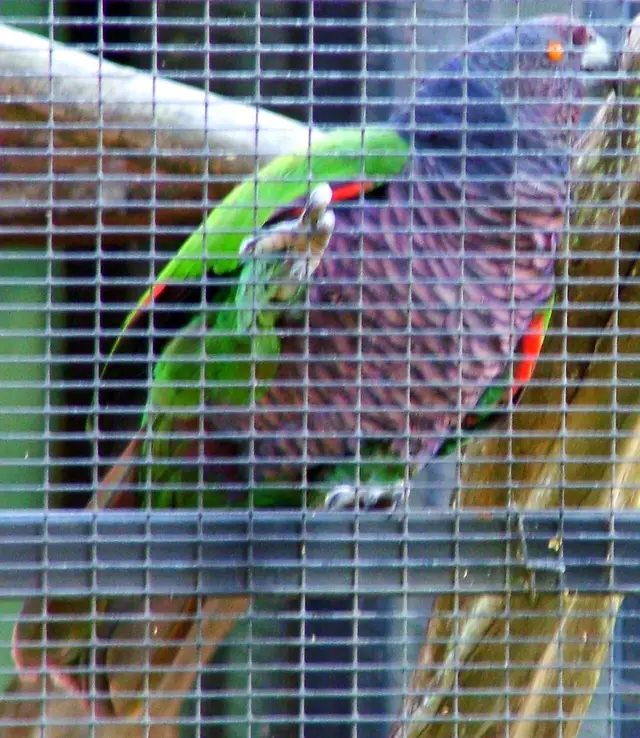
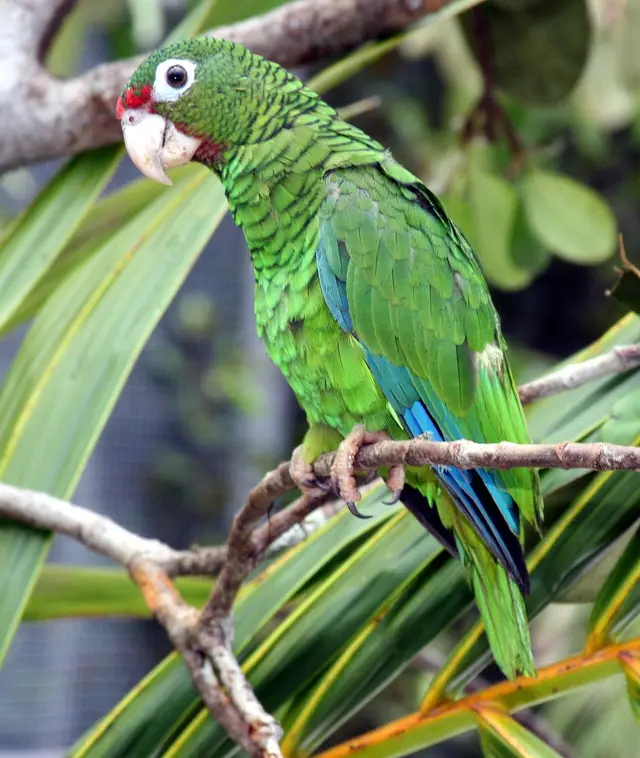
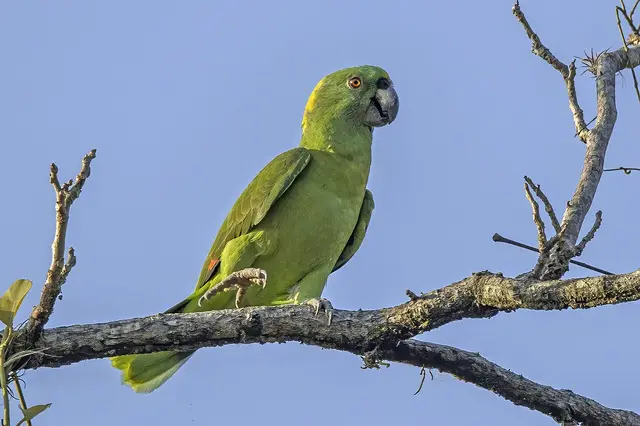
Mostly green, with red lores and forehead, a turquoise nape and a lilac breast that gives the species its name. There is red on the bend of the wing and at the base of the outer tail feathers, and the flight feathers end in blue to black tips. The bill is rosy pink to red at the base with a horn-coloured tip, and the iris is red-orange to chestnut inside pale grey skin.
It is usually quiet at the nest and while feeding, but noisy in flight and when perched away from the nest.
Where it lives
The range is broken into patches. Birds occur from southern São Paulo state in Brazil south to Rio Grande do Sul, in eastern Paraguay, and in Misiones in far north-eastern Argentina. It once reached north to Bahia and south to Corrientes in Argentina. A 2020 study in Biological Conservation described the Red List range map as about 145,700 square kilometres, made up of five large patches and eleven small ones, and noted that the true range is poorly known.
It favours mixed forest with many paraná pines (Araucaria angustifolia), but also uses forest fragments, young secondary forest, pastures with scattered trees, pine and eucalyptus plantations and the edges of towns. The Red List assessment gives an upper elevation of 2,000 m.
Pins are Wikidata “endemic to” fields. Orange dots, when present, are GBIF occurrence tiles — survey bias included.
How it lives
Flocks feed mostly in the treetops. Paraná pine seeds are a key winter food, and the parrots eat seeds, fruit, buds and flowers from more than 30 plant species. Some areas see them only in the breeding season, and the Red List describes the species as nomadic. Seasonal movements have been reported to coincide with the fruiting of trees such as Ocotea puberula, Podocarpus lambertii and juçara palms.
Breeding runs mainly from August to December, sometimes later, in tree cavities, some of them old woodpecker holes. The female lays two to four eggs and does nearly all the incubation, which takes about a month. Both parents feed the young. After breeding, birds gather in communal roosts, which researchers use to count them.
Why it is in trouble
The 2017 assessment gives 1,000 to 2,499 mature individuals and a decreasing trend. The 2020 Biological Conservation study used roost counts across the whole range and estimated about 7,800 birds in 2016 and 8,500 in 2017, with no statistical evidence of change. Those figures cover all ages, not only breeders. The researchers suggested keeping the species as Endangered until trends are better known.
The Atlantic Forest has been cleared for timber, farming and settlement, and the assessment rates large-scale farming and intentional capture as the threats causing the fastest declines. The species is a popular cage bird, and illegal capture continues. Farmers reportedly destroy paraná pine seedlings and take seed illegally, which hits its main winter food. Large nesting trees are scarce in some places, and Africanized honey bees take over cavities.
What is being done
The species is on CITES Appendix I, and Brazil lists it as Vulnerable nationally. The Brazilian group SPVS searches for nests, monitors them with local residents to prevent chick theft, runs education work, and tracks movements through Araucaria forest between São Paulo and Paraná.
The Red List assessment records a recovery plan, protected-area occurrence, trade controls, education work and captive breeding as actions in place, with no systematic monitoring scheme.
Sources
Written for this catalog in our own words from the sources below, checked against them on 12 November 2026. Population figures are estimates and carry the year they were made. Status and assessment year: IUCN. 2026. The IUCN Red List of Threatened Species. Version 2026-1. iucnredlist.org.