Endangered
Javan leafbird
Chloropsis cochinchinensis cochinchinensis
The Javan leafbird (Chloropsis cochinchinensis) is a small green forest songbird found only on the island of Java, Indonesia. The IUCN Red List moved it from Near Threatened to Endangered in 2019 and confirmed that in 2021. Trapping for the cage-bird trade is driving a steep decline.
How to recognise it
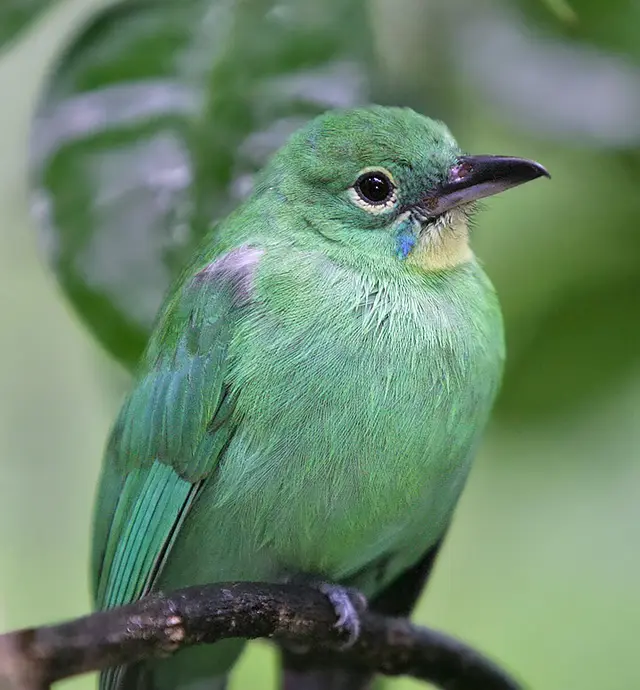
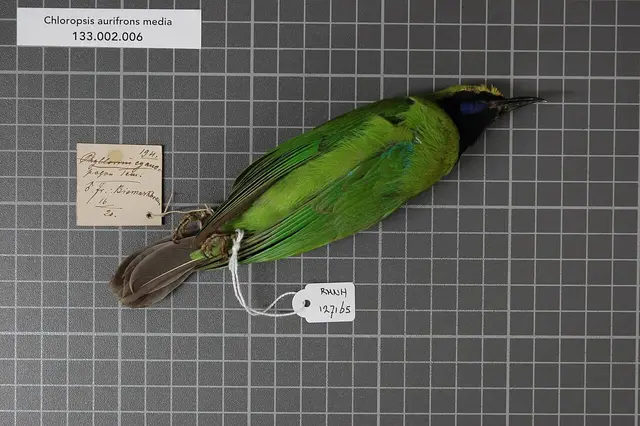
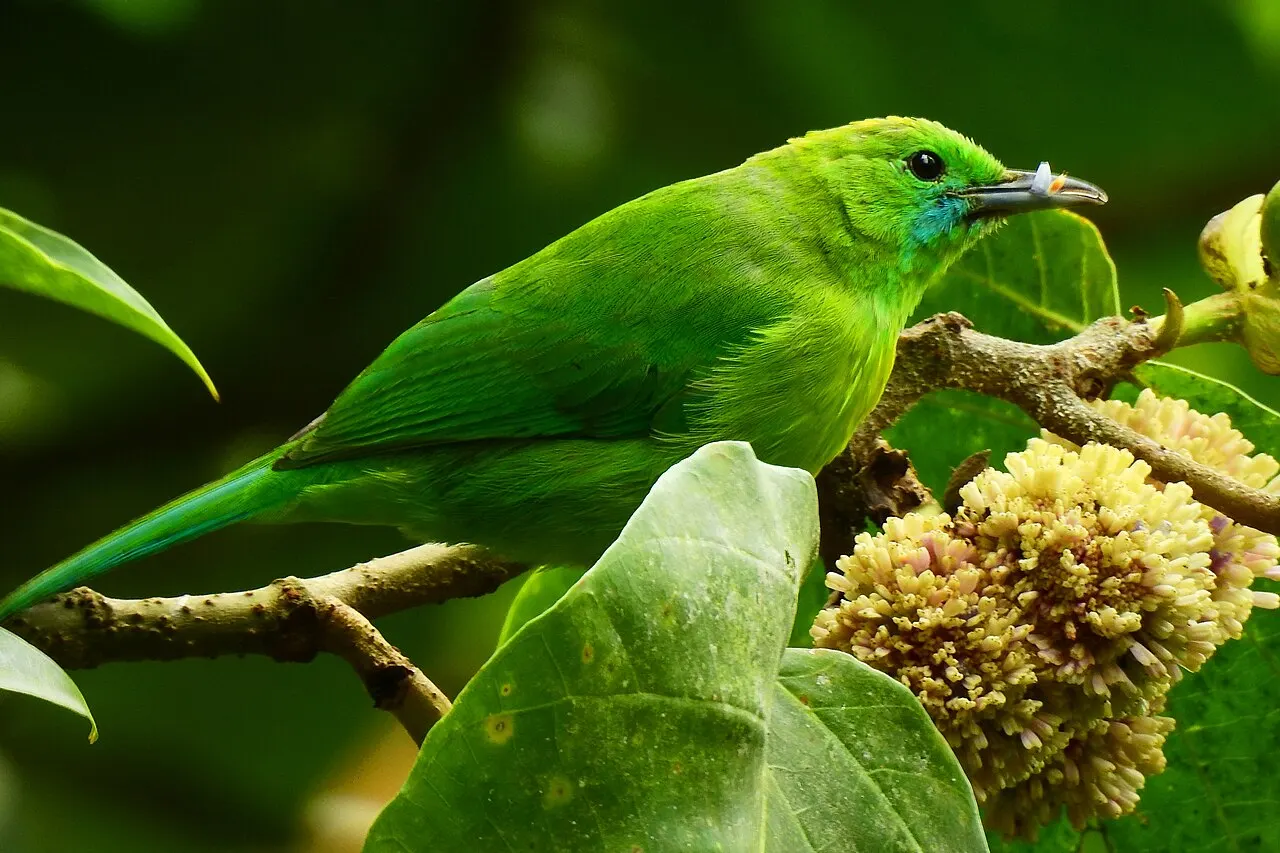
It is a medium-sized leafbird, around 17 cm long, mostly green with blue on the wings and tail and some yellow on the head and breast. The male has a black mask that runs down to the throat, with a flash of deep blue along the jawline. The female lacks the mask, and her yellow tinge is confined to the underparts.
The species was formerly treated as the same species as the blue-winged leafbird (Chloropsis moluccensis), so older field guides and trade lists may use the one name for both.
Where it lives
This leafbird is endemic to Java. The Red List puts its extent of occurrence at about 142,000 square kilometres and counts it from roughly 100 to 1,800 m above sea level. It uses moist forest in the lowlands and uplands, and it also turns up in plantations and rural gardens.
Birds favour the canopy and forest edges, secondary growth and well-wooded country. The assessment lists between one and six locations, records at least one protected area holding the species, and notes a continuing decline in the number of locations.
Pins are Wikidata “endemic to” fields. Orange dots, when present, are GBIF occurrence tiles — survey bias included.
How it lives
Javan leafbirds feed on a wide range of fruit and nectar and pick insects and other arthropods off foliage, gleaning them acrobatically. They are usually seen in pairs at fruiting or flowering trees and often join mixed flocks of forest birds in the middle and upper layers.
Generation length is put at about 3.4 years. The species is not a migrant.
Why it is in trouble
The main threat is capture for the songbird trade. Leafbirds were a moderately popular cage bird for years, and demand has risen sharply more recently. The species moved from Near Threatened in 2016 to Endangered in 2019. The assessment infers a past and ongoing population reduction of 50 to 79 percent, based on levels of exploitation, though no total population count exists.
The whole range is within reach of trappers, and the bird has reportedly disappeared from some sites where the habitat is unchanged. Keeping songbirds is popular in Indonesia and is seen as a sign of wealth and status, which keeps demand high. A TRAFFIC report on a 2017 expert summit notes that Indonesia has a zero quota for harvesting wild songbirds, so trade in them is technically against national law and policy. A 2016 TRAFFIC survey of markets in eastern and central Java still found that most birds on sale appeared to have been taken illegally from the wild.
What is being done
The Red List assessment records no recovery plan, no systematic monitoring scheme and no captive breeding for this species. Actions it calls for include looking at whether any sustainable trade is possible, managing trapping inside protected areas, enforcing protected-species rules and quotas, and a petition to list the species in CITES Appendix II. It also suggests bird-singing competitions restrict entry to captive-bred birds.
The assessment names population trends, trade trends and habitat trends as research needs. More widely, conservation groups working on Southeast Asia's songbird trade have called for market closures, tougher enforcement and captive breeding of the most threatened species.
Sources
Written for this catalog in our own words from the sources below, checked against them on 12 November 2026. Population figures are estimates and carry the year they were made. Status and assessment year: IUCN. 2026. The IUCN Red List of Threatened Species. Version 2026-1. iucnredlist.org.