Endangered
Baudó guan
Penelope ortoni
The Baudo guan (Penelope ortoni) is a large, dark brown forest bird of the Choco region in western Colombia and north-western Ecuador. The IUCN Red List assessed it as Endangered in 2019. Its lowland and foothill forest is being cleared, and it is hunted for food.
How to recognise it
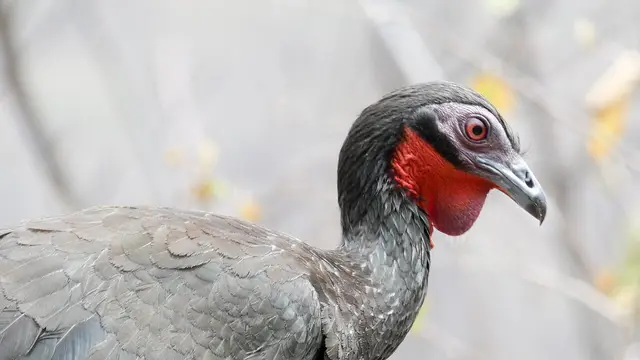
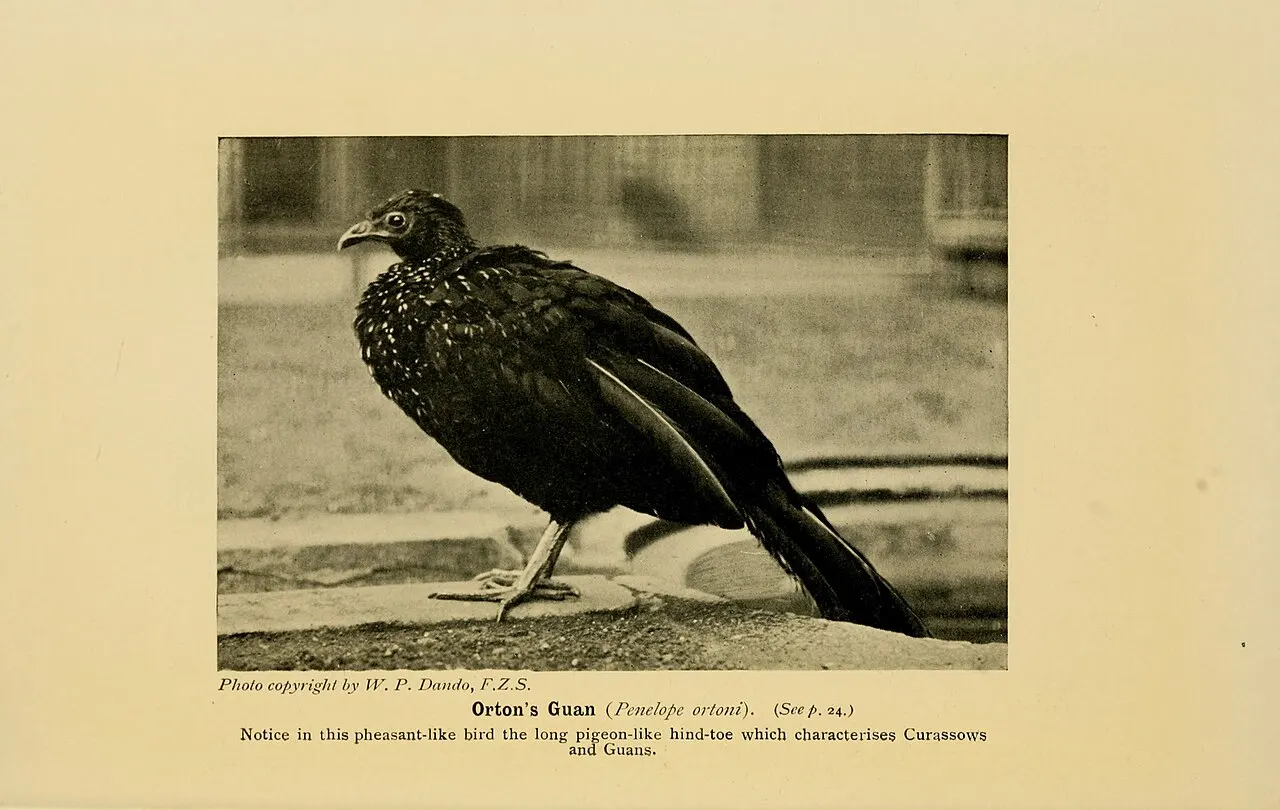
It is a medium-sized, long-tailed bird in the guan family, about 56 to 66 cm long depending on the source. The plumage is deep brown with greyish tones, with whitish streaking on the front of the neck and upper belly or breast. It has bare bluish or greyish skin around the eye, a prominent red dewlap and dull red legs. The sexes look alike, and its plain head helps set it apart from other guans in the region.
Males give a loud, guttural call at dawn, though the bird is often silent. Pairs and family members communicate with soft, rising whistles, and birds warn each other of an approaching person with them.
Where it lives
The Baudo guan is restricted to the humid forests of the Choco biogeographic region, on the lowlands and western foothills of the Andes. In Colombia it has been recorded in Choco, Antioquia, Valle del Cauca, Cauca and Narino. In Ecuador there are no confirmed recent records south of Pichincha province, and most modern records are from Esmeraldas. Records run from about 70 m to 1,500 m above sea level.
It tends to live in mature forest that is hard to reach. The IUCN estimates 7,000 to 21,000 mature individuals, spread over 6 to 10 locations, extrapolated from transect surveys in Esmeraldas in 1997 to 2006. An earlier estimate for Ecuador, made in 2002, put the number there at 2,500 to 7,500 adults.
Pins are Wikidata “endemic to” fields. Orange dots, when present, are GBIF occurrence tiles — survey bias included.
How it lives
It spends most of its time in the trees, from mid-levels to the canopy, though it uses every forest layer and is seldom seen on the ground. It eats fruit and seeds. In Colombian parks it has been seen eating palm fruits, and people interviewed for a 2023 study also reported it taking small stream snails and crickets.
Accounts of group size differ, from two to four birds in one description to groups of 4 to 10 in a 2023 Colombian study. Breeding is poorly known. The species is thought to nest between July and September and to lay two eggs, and chicks were seen at one Narino reserve in early August 2021. The bird is shy, yet less wary of people than other guans, which makes it easy to hunt.
Why it is in trouble
The IUCN lists farming, cattle ranching, shifting agriculture, mining, roads, housing and industry as ongoing pressures on its forest, and hunting for food as a direct threat to the birds. It judges the population to be decreasing. New roads open remote forest to hunters, and the guan is often among the first large birds to vanish afterwards. Colombia ranks it as Vulnerable nationally, one step below the global Endangered listing.
A 2023 study in Conservacion Colombiana, based on surveys of researchers and residents, found habitat loss and hunting to be the main problems across its Colombian range. At the Rio Nambi reserve in Narino, respondents reported illegal clearing for coca and hunting by communities who use the bird as a source of protein. Around Bahia Malaga, residents said hunting had dropped sharply since tourism and restoration projects began, and only one of twelve people interviewed had hunted it between January 2020 and October 2021.
What is being done
The IUCN notes that important conservation sites have been identified across its whole range, that it occurs in at least one protected area, and that a recovery plan exists. There is no systematic monitoring scheme. Reserves such as ProAves' El Pangan in Narino, where hunting and clearing are banned and the bird is seen regularly, and Rio Canande in Ecuador, protect some of its habitat.
The 2023 Colombian study proposes monitoring and research projects, environmental education and planning with the communities that live alongside the bird, and stronger management of the protected areas where it occurs.
Sources
Written for this catalog in our own words from the sources below, checked against them on 12 November 2026. Population figures are estimates and carry the year they were made. Status and assessment year: IUCN. 2026. The IUCN Red List of Threatened Species. Version 2026-1. iucnredlist.org.