Endangered
Santa Marta Bush Tyrant
Myiotheretes pernix
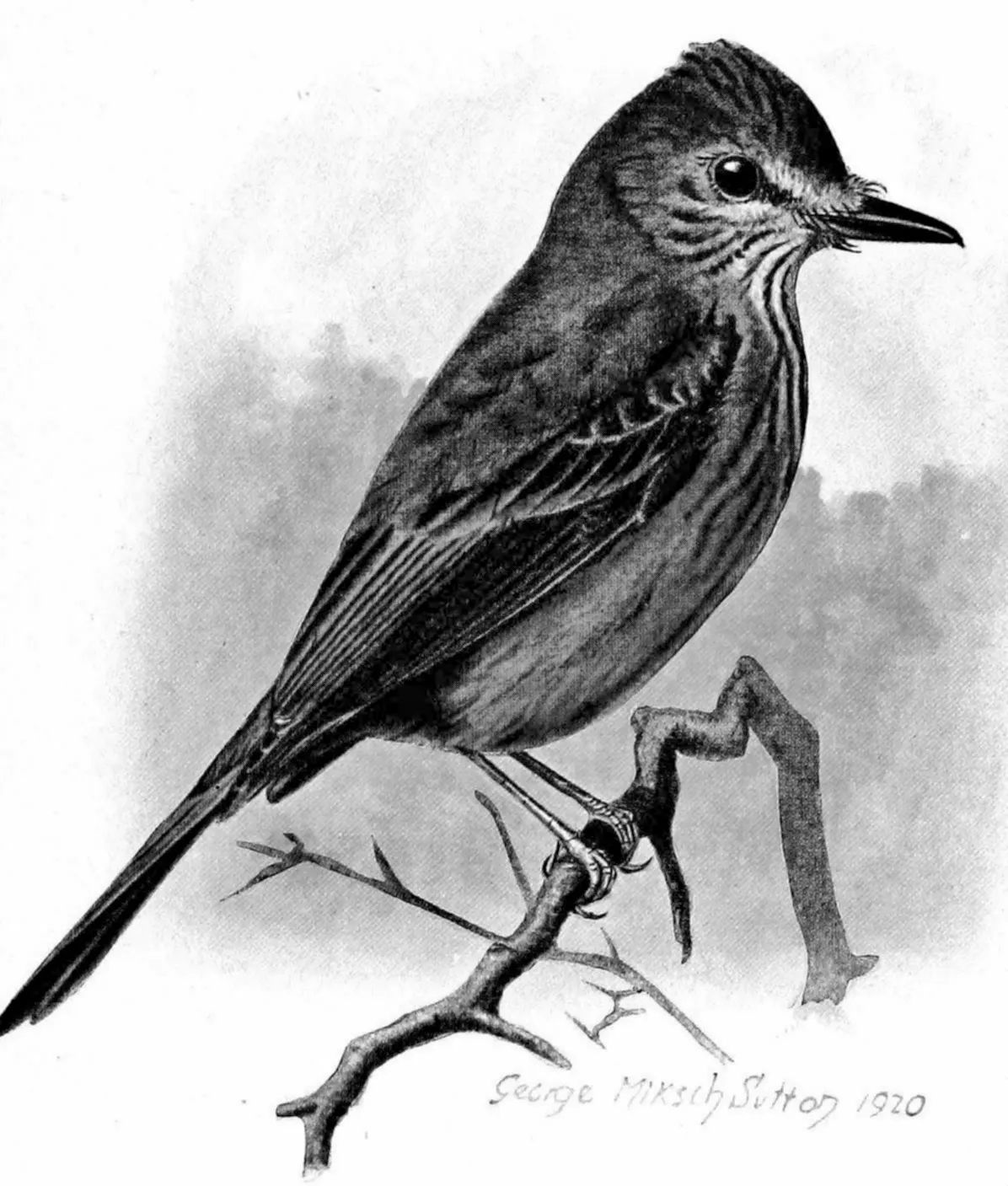
The Santa Marta bush tyrant (Myiotheretes pernix) is a large flycatcher found only in the Sierra Nevada de Santa Marta, a mountain range on Colombia's Caribbean coast. The Red List classed it as Endangered in 2018. It lives in cool, humid highland forest and edges, and its range is small.
Where it lives
The bird is endemic to the Sierra Nevada de Santa Marta, an isolated coastal mountain range in northern Colombia. It was described by Outram Bangs in 1899 and belongs to the tyrant flycatchers. It is a large, rufous-and-brown bird about 21 centimetres long, with a dull brown back and a white throat streaked with black.
A 2015 study in The Condor, based on records from across the range, found it between about 2,035 and 3,583 metres, with most records between 2,100 and 3,300 metres. The Red List gives a narrower band of about 2,100 to 2,900 metres. Modelling in the study suggested the bird is most likely present between 2,500 and 3,000 metres, in cold, humid areas where temperature and rainfall don't swing widely.
Pins are Wikidata “endemic to” fields. Orange dots, when present, are GBIF occurrence tiles — survey bias included.
How it lives
The same study watched 35 foraging records on one ridge. Of these, 57 percent were in mature forest and 29 percent in secondary vegetation, and none were in coffee plantations. Nearly all records, 27 of 30 in forest and secondary growth, were along edges where vegetation meets open ground.
Prey is caught in the air by short flights from a perch, and insects are presumed to be the food. The birds favoured exposed perches with good light, typically 4.5 to 6.5 metres above the ground. Breeding biology was unknown when the study was published.
Why it is in trouble
The 2018 assessment estimates 600 to 1,700 birds, decreasing, in a single location. The Red List names housing and urban development, farming and ranching, small-holder agriculture and small-scale harvesting of forest products. The Condor study added afforestation with non-native trees.
The 2015 study also modelled the occupied area at about 352 square kilometres, well below earlier figures of 570 and 856 square kilometres. It concluded this still fits Endangered status. It raised climate change as a concern, since the bird seems tied to cold, stable, humid conditions.
What is being done
The Red List lists site management as a conservation action, records that the bird occurs in at least one protected area, and notes that important sites have been identified across its whole range. It also records no recovery plan and no systematic monitoring scheme.
The Condor study recommended slowing forest loss while keeping edges and open, well-lit perches. It suggested small-scale logging and local exotic plantations may not be a major problem, since they can create the edge habitat the bird uses, though pine plantations and open ground with scattered trees were used less.
Sources
Written for this catalog in our own words from the sources below, checked against them on 12 November 2026. Population figures are estimates and carry the year they were made. Status and assessment year: IUCN. 2026. The IUCN Red List of Threatened Species. Version 2026-1. iucnredlist.org.




