Endangered
Saipan Reed Warbler
Acrocephalus hiwae
The Saipan reed warbler (Acrocephalus hiwae) is a large, skulking songbird that survives on just two Pacific islands, Saipan and Alamagan in the Northern Mariana Islands. The IUCN Red List rates it Endangered (assessed 2024), with a declining population estimated in the low thousands.
How to recognise it
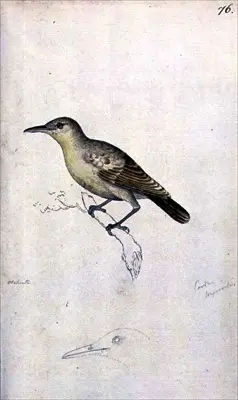
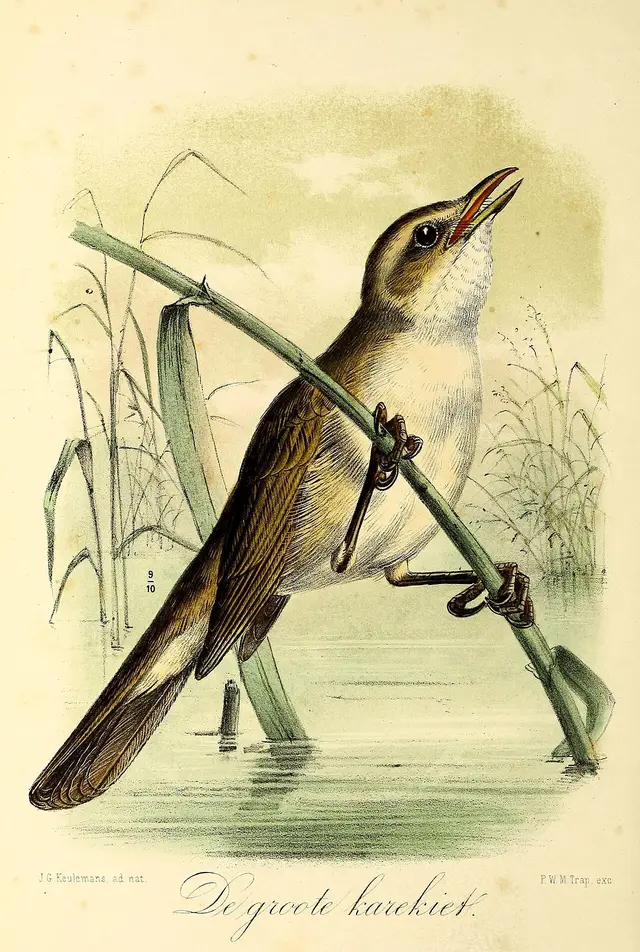
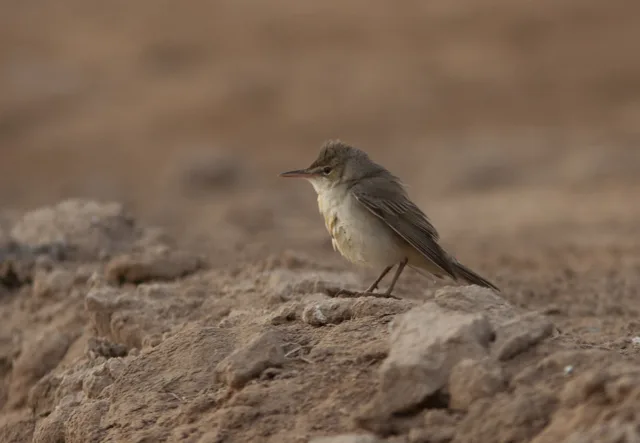
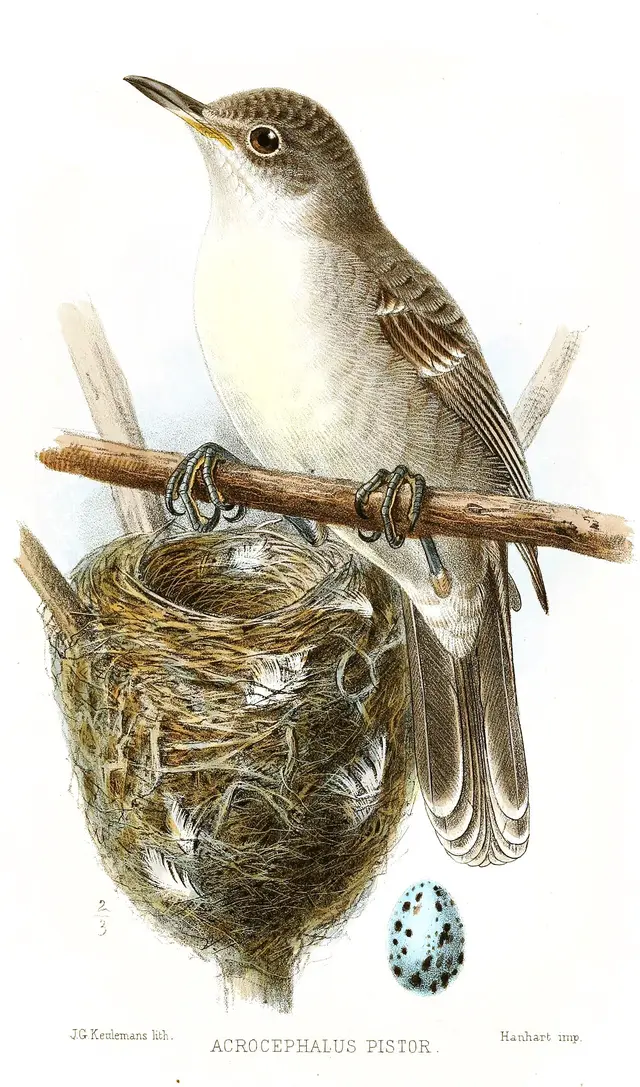
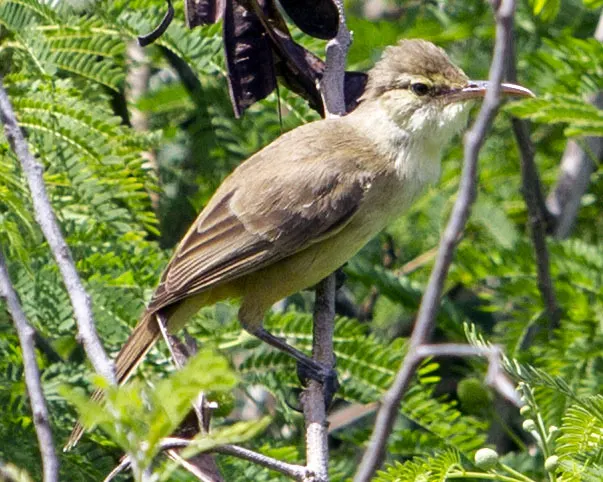
It is a big, mostly plain brown reed warbler, about 18 centimetres long, with a pale throat, a yellowish face and a darker cap and tail. The bill is long and curves slightly downward. The birds skulk in thick cover and are far easier to hear than see, though males sometimes sing from exposed perches.
The song is a slow, repeating series of loud whistles mixed with warbles, trills and harsh chacking notes. Its name in Chamorro is gå'ga' karisu.
Where it lives
The species is found nowhere else. On Saipan it uses scrubby meadows, forest edges and clearings, and reedswamp. On Alamagan, the other island, it lives in open woodland and in woodland along ravine edges. The Red List counts two locations, an area of occupancy of about 200 square kilometres and a range of roughly 2,550 square kilometres, from sea level to about 400 metres.
Yoshimaro Yamashina first described it in 1942 as a subspecies of the nightingale reed warbler. A 2012 taxonomic revision recognised four Mariana reed warblers as separate species. Surveys between 2008 and 2010 found the Aguiguan bird extinct and the Pagan bird probably gone, leaving the Saipan and Alamagan birds as the only ones that remain.
Pins are Wikidata “endemic to” fields. Orange dots, when present, are GBIF occurrence tiles — survey bias included.
How many are left
Counts on Saipan fell steadily. Island-wide surveys found 58 birds per square kilometre in 1982, 40 in 1997 and 22 in 2007, a drop of more than half.
Surveys on Alamagan between 2008 and 2010 estimated 946 birds (95 percent range 428 to 1,762), about a quarter of the total. A 2021 paper in Bird Conservation International used the same surveys to put the whole species at 1,019 to 6,356 birds, with a mean of 3,688, roughly 24 percent fewer than in 1982. The Red List records the population as decreasing.
Why it is in trouble
On Saipan the main pressure is loss of habitat to development, farming and tourism facilities. A 2009 study in Bird Conservation International found that residential areas, where the birds were once common, held almost none by 2007, and golf courses also lost birds. Introduced rats prey on adults and nests, and the invasive scarlet gourd vine has smothered native and non-native vegetation.
The brown tree snake has been sighted many times on Saipan, and the same study warned that if it became established, most land birds would disappear. Volcanic eruptions are also reportedly a threat to the species.
What is being done
About 419 hectares in northern Saipan were set aside in 2002 as the Saipan Upland Mitigation Bank, mainly to protect this species. The Red List says a recovery plan exists, invasive species control is in place and awareness programmes have run, though it records no systematic monitoring scheme and no protected area covering the bird.
A 2021 paper recommended restoring and protecting tall native and secondary forest on Alamagan and conserving Saipan's habitat, including wetlands. It also suggested that birds from the two islands could eventually found new populations elsewhere once habitat there is restored.
Sources
Written for this catalog in our own words from the sources below, checked against them on 12 November 2026. Population figures are estimates and carry the year they were made. Status and assessment year: IUCN. 2026. The IUCN Red List of Threatened Species. Version 2026-1. iucnredlist.org.