Endangered
Superb Pitta
Pitta superba
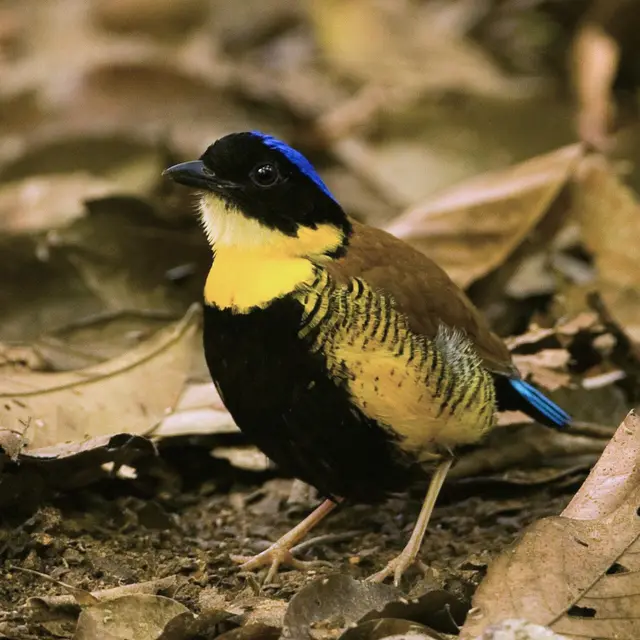
The superb pitta (Pitta superba) is a large, black and turquoise ground bird found only on Manus Island, Papua New Guinea. Little known and secretive, it lives in lowland forest. The Red List classed it as Endangered in 2022, with an estimated 250 to 999 mature birds and a falling population.
How to recognise it
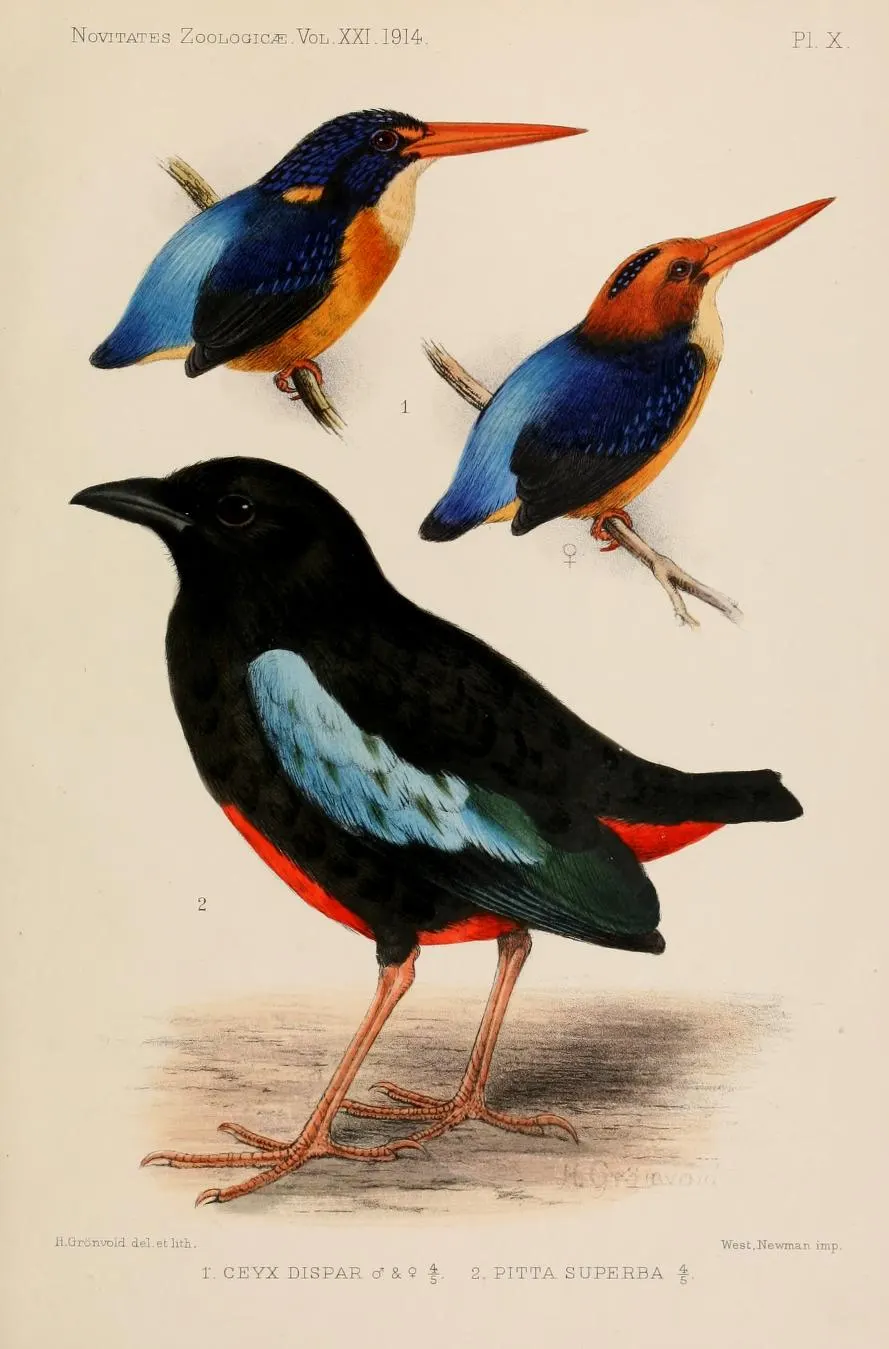
It is one of the bigger pittas, about 22 cm long. The plumage is mostly black, with turquoise-blue wings, a scarlet belly and green-tipped secondary feathers. The female looks very like the male but is slightly smaller and duller.
Rothschild and Hartert named it in 1914. A 1990 field study described the call as a rising, then falling whistle given twice.
Where it lives
Manus is the largest of the Admiralty Islands, north of mainland New Guinea, and the pitta lives nowhere else. The Red List gives its habitat as moist lowland forest and moist shrubland, from sea level to 200 m, and estimates its extent of occurrence at 2,400 square kilometres. It uses both primary and secondary forest.
The assessment treats all the birds as one subpopulation and notes that it isn't a migrant.
Pins are Wikidata “endemic to” fields. Orange dots, when present, are GBIF occurrence tiles — survey bias included.
How it lives
This is a ground-dwelling bird that feeds mainly on snails. The 1990 study, by Dutson and Newman, found it at low densities. They suggested it may be restricted to hillier ground, where stones could help it break open snail shells.
Why it is in trouble
The Red List judges the population to be declining, with a continuing fall in the area it occupies. It estimates a reduction of 1 to 9 percent in each of the past, present and future periods it assessed, based on habitat decline. Small-scale subsistence harvest is listed as a threat affecting the majority of the population, causing slow but significant declines.
The 1990 study also raised the possibility that the introduced brown tree snake, Boiga irregularis, affects the pitta and another Manus endemic. The impact is not established.
What is being done
No recovery plan or monitoring scheme is in place, and the bird isn't known from a protected area, though conservation sites have been identified over part of its range. It is not covered by international legislation or trade controls.
The Red List recommends awareness work, habitat protection and alternative livelihoods for local people.
Sources
Written for this catalog in our own words from the sources below, checked against them on 12 November 2026. Population figures are estimates and carry the year they were made. Status and assessment year: IUCN. 2026. The IUCN Red List of Threatened Species. Version 2026-1. iucnredlist.org.