Endangered
Marsh Seedeater
Sporophila palustris
The marsh seedeater (Sporophila palustris) is a tiny seed-eating songbird that breeds in wet grasslands around the Argentina, Uruguay and Brazil borders and winters far north in Brazil. The IUCN Red List classed it as Endangered in 2025, estimating 2,000 to 3,000 birds and a continuing decline.
How to recognise it
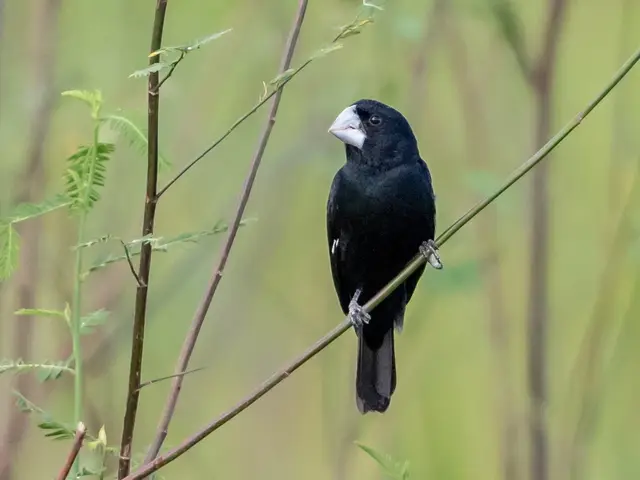
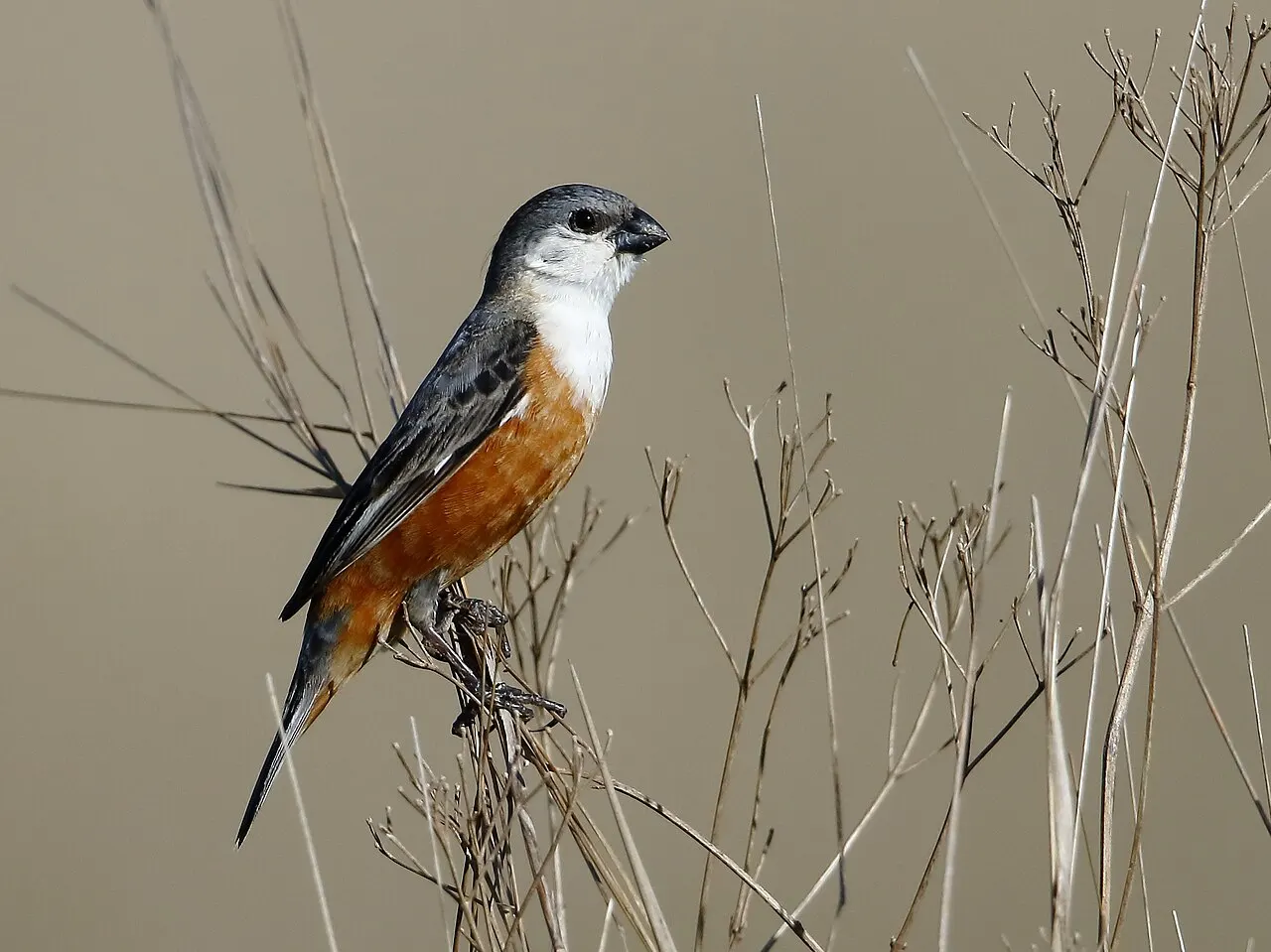
It measures only about 10 to 11.5 cm, and the few birds weighed came in at 7.5 to 9 g, making it one of the smallest seedeaters. The male is easy to pick out: white throat, cheeks and upper breast, a grey crown and back, and a rufous-chestnut belly and rump, with a white patch at the base of the flight feathers. The female is plain brown and almost impossible to tell from the females of other seedeaters.
The song is a series of sweet, high whistles that mostly descend, with one note that rises before it falls. It often feeds alongside other grassland seedeaters.
Where it lives
It breeds in tall, moist grassland and marsh edges in northeastern Argentina, eastern Uruguay and far southern Brazil, and it is recorded from Paraguay too. Almost the whole population is migratory. After breeding, most birds move north, more than 1,000 km, to the tropical grasslands of the Cerrado in central Brazil. The IUCN puts its overall range at around 344,000 square km, from sea level up to 1,100 m.
Pins are Wikidata “endemic to” fields. Orange dots, when present, are GBIF occurrence tiles — survey bias included.
How it lives
Marsh seedeaters eat grass seeds, often clinging to a stem as it bends. Nesting runs from November to February, peaking in December and January. In a 2013 study in Bird Conservation International, the nests were small cups of dry grass and spider silk about 40 cm off the ground on average, and every clutch with a known size held two eggs. Only the female incubated, though both parents fed the young. Generation length is under two years, so the population can turn over quickly.
Why it is in trouble
Grassland is the problem. Overgrazing, fire, farming, mining, and conversion to rice fields, exotic pastures and pine and eucalyptus plantations have eaten into the wet meadows it breeds in.
The second threat is trapping. Males are caught for the cage-bird trade, though the effect on the whole population is unknown. In Entre Rios, Argentina, 15 seedeaters of this group, including marsh seedeaters, were confiscated between October 2004 and March 2005, and heavy trapping has reportedly wiped the species out of parts of Argentina.
What is being done
Most breeding sites lie in Important Bird Areas, but a 2013 study found only one site in Brazil and one in Argentina with any formal protection. The IUCN reports that a recovery plan exists, that key sites have been identified across the range, and that the bird occurs in at least one protected area. Its action list includes trade management, site protection and management, and policies and regulations. There is no systematic monitoring scheme.
Sources
Written for this catalog in our own words from the sources below, checked against them on 12 November 2026. Population figures are estimates and carry the year they were made. Status and assessment year: IUCN. 2026. The IUCN Red List of Threatened Species. Version 2026-1. iucnredlist.org.