Critically Endangered
Madagascar Fish Eagle
Haliaeetus vociferoides
The Madagascar fish eagle (Haliaeetus vociferoides) is a big, dark brown raptor with a white tail that lives only in the wetlands and coastal areas of western and northwestern Madagascar. The IUCN Red List rated it Critically Endangered in 2025, estimating about 240 mature birds with a decreasing trend.
How to recognise it
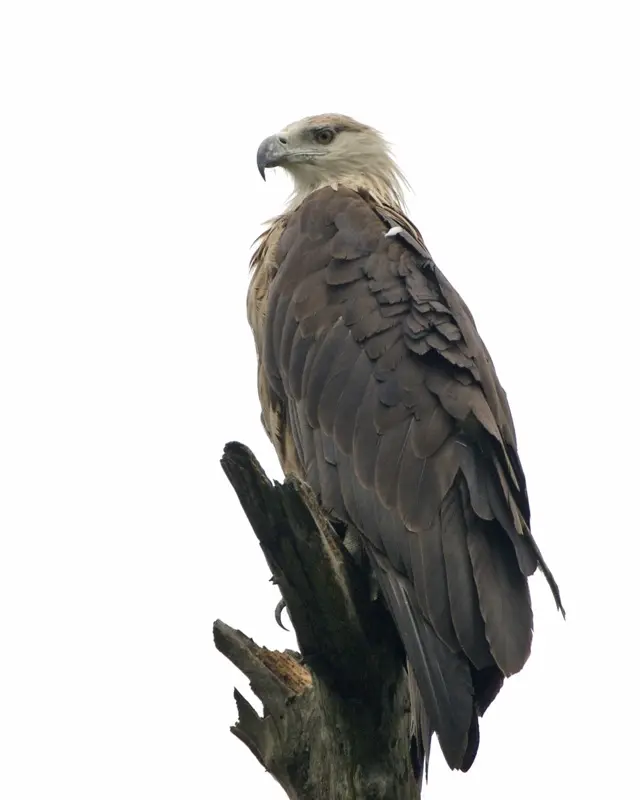
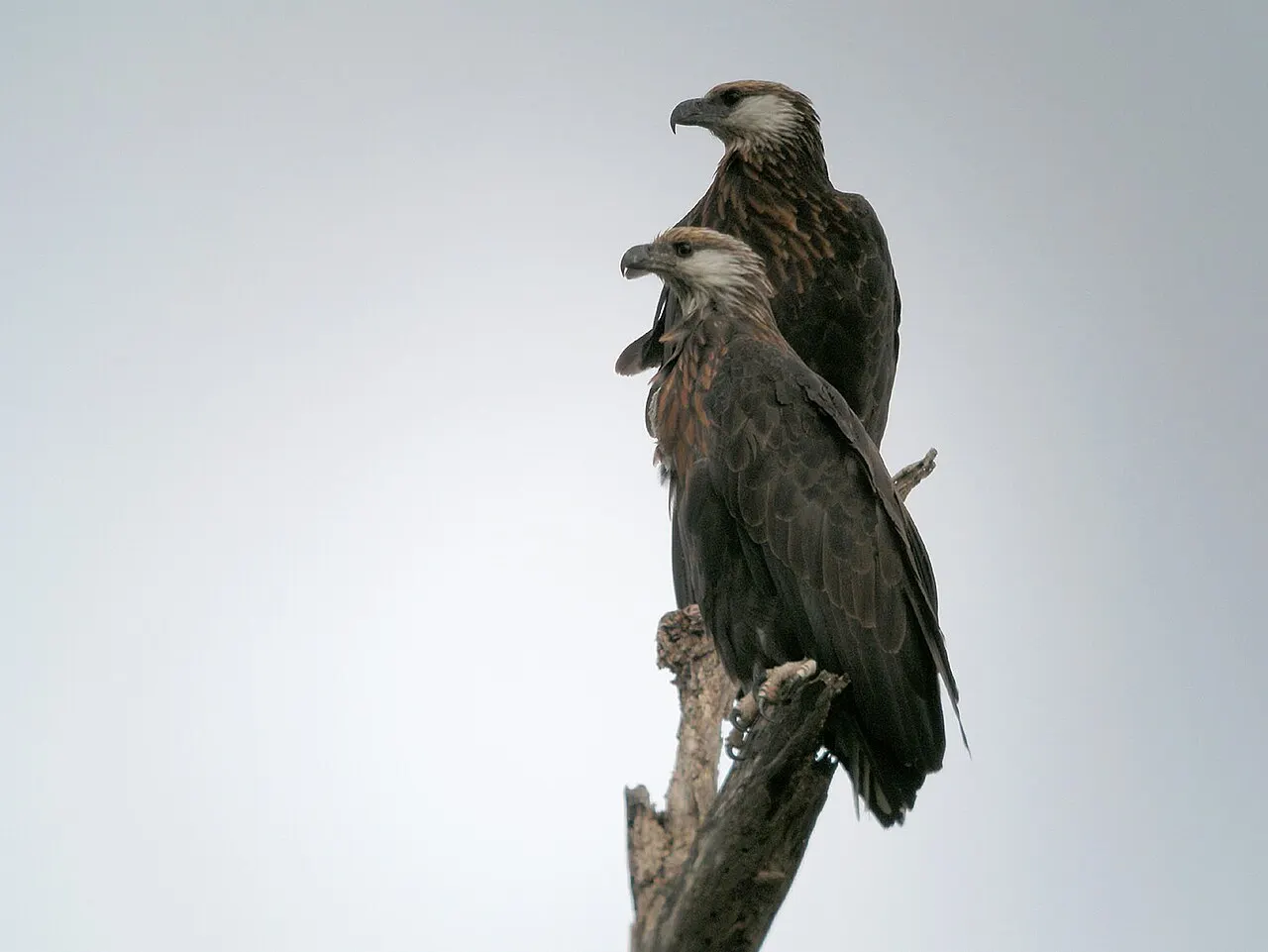
It's a large eagle, 60 to 66 cm long with a wingspan of about 165 to 180 cm. Females are heavier than males, at 2.8 to 3.5 kg against 2.2 to 2.6 kg. The body and wings are dark brown, the head is paler brown, and the tail is white. The bill is blackish and the legs are pale grey.
Where it lives
The species is found nowhere outside Madagascar, mostly in the west and northwest, north of Morondava. It lives near large bodies of water: lakes, rivers, estuaries, mangroves, coastal lagoons and rocky shores, from sea level up to about 1,200 m.
The Peregrine Fund puts the population at slightly fewer than 300 birds and describes it as stable. The IUCN assessment gives 240 mature individuals and a decreasing trend. The two figures count different things and disagree on direction, but both describe a very small population.
Pins are Wikidata “endemic to” fields. Orange dots, when present, are GBIF occurrence tiles — survey bias included.
How it lives
Fish make up most of the diet. The eagle watches from a perch, makes a shallow dive and plucks fish from the water. It also eats crabs, turtles and occasionally birds, and it often steals food from other birds and from fish stranded in fishermen's traps.
Breeding starts around May with courtship and nest building. Pairs build big stick nests in the forks of trees, or on cliffs and rocky islands. The female usually lays two eggs, several days apart, between late May and mid-July. She does most of the incubating, with help from the male, for roughly 37 to 43 days. Usually only one chick survives, because the older and stronger one outcompetes its sibling. The survivor flies at about 80 days.
Some territories hold a female with two males. A 2018 study in the Tsimembo-Manambolomaty protected area reportedly found that these groups raised young more successfully than ordinary pairs.
Why it is in trouble
The IUCN lists farming, persecution and accidental or targeted harvest among the threats. Deforestation, erosion, conversion of wetlands to rice paddies and water pollution degrade the places it hunts and nests, and the Peregrine Fund also names overfishing. Eagles compete with people for fish.
Some people trap the birds and cut off a leg, believing the foot has healing powers. Most injured birds die from stress, infection or starvation.
What is being done
The Peregrine Fund began working in western Madagascar in 1990. In 1996 it started a project with local residents to protect one of the last intact wetlands, which holds about 10 percent of the world's fish eagles. The project monitors territorial pairs, and the group now also works to protect habitat in two other regions. It has helped set up four protected areas and works with communities on managing resources sustainably.
The IUCN assessment also records species recovery, captive breeding, awareness work and site management as conservation actions.
Sources
Written for this catalog in our own words from the sources below, checked against them on 12 November 2026. Population figures are estimates and carry the year they were made. Status and assessment year: IUCN. 2026. The IUCN Red List of Threatened Species. Version 2026-1. iucnredlist.org.