Endangered
Antipodean Albatross
Diomedea antipodensis
The Antipodean albatross (Diomedea antipodensis) is a big, pink-billed seabird that nests on a few remote islands south of New Zealand and spends the rest of its life over the South Pacific. The IUCN Red List classed it as Endangered in 2018 because numbers are falling, with adults, especially females, dying on fishing lines.
How to recognise it
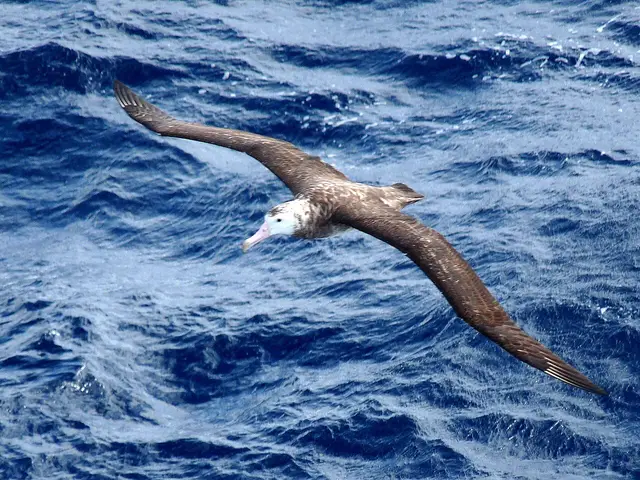
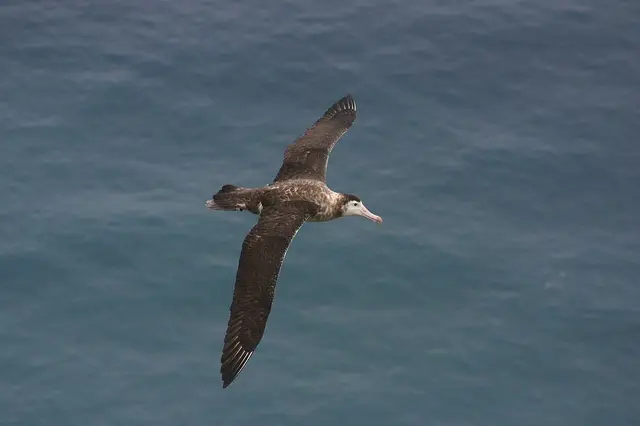
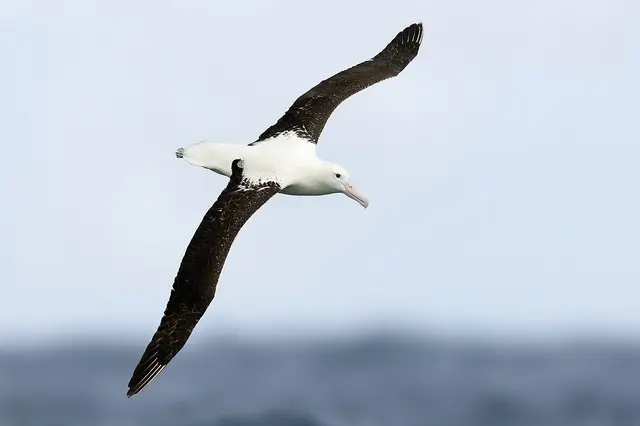
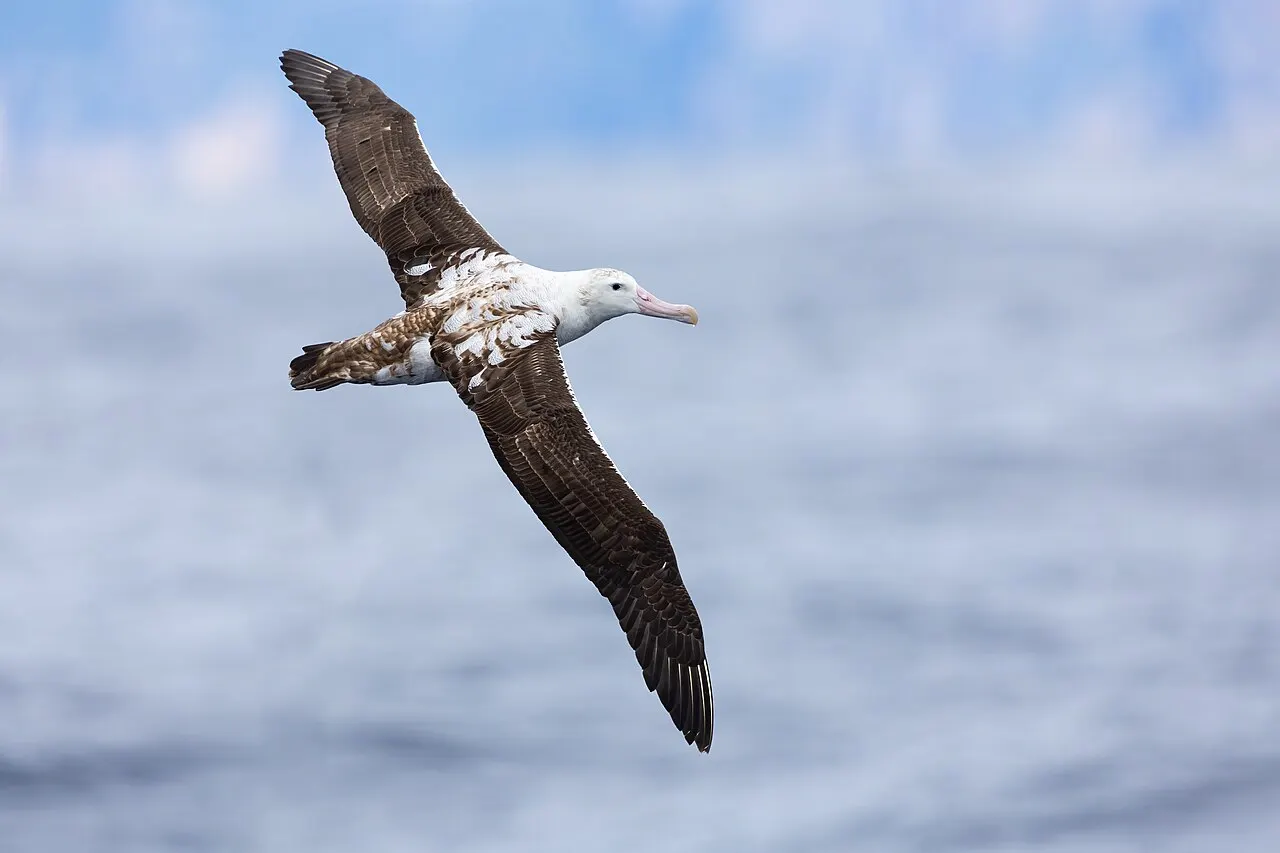
It's about 110 cm long and weighs roughly 4.5 to 8.5 kg, with a pink bill. Adult plumage runs from dark brown with black upper wings to mostly white, and birds lighten as they age. Males are paler than females. Females usually show brown upper parts finely marked with white and a brown breast band.
Young birds look much like young snowy albatrosses, but a snowy turns whiter with age while an Antipodean stays darker. Two forms are recognised: the nominate Antipodes Island birds and Gibson's albatross, which breeds on the Auckland Islands and is paler. The species was first described as a subspecies of the wandering albatross. BirdLife International accepts it as a full species, though not every authority does.
Where it lives
Breeding is limited to New Zealand's subantarctic islands. About 95 percent of the Auckland Islands birds, the Gibson's form, nest on Adams Island. The Antipodes Islands hold the other form, and a few pairs nest on Campbell Island. A few pairs have also nested in the Chatham Islands since the early 2000s.
At sea the birds range widely south of the Tropic of Capricorn, from Australian waters across to Chile. The Red List records them from Australia, Chile, New Zealand, French Polynesia, Norfolk Island and Antarctica.
Pins are Wikidata “endemic to” fields. Orange dots, when present, are GBIF occurrence tiles — survey bias included.
How it lives
Nests sit on ridges, slopes and plateaus, in the open or among patchy tussock. A pair lays a single egg between December and February. Incubation takes about 79 days and the chick needs around 290 days to fledge. Successful breeders nest only every second year, so roughly half the adults nest in any season.
Birds typically first breed at about 7 years old. They eat mostly squid and fish. Much of the food is scavenged from the surface, including boat discards, and birds follow boats and take bait from hooks, which is part of the problem.
Why it is in trouble
Numbers have fallen since about 2005, with fewer chicks raised and more adults lost. Long-running monitoring on Antipodes Island points to high female mortality as a main driver. A 2021 Department of Conservation report on satellite-tracked birds found that females overlap more with pelagic longline fishing than males do, mostly on the high seas of the western Pacific. A separate Department of Conservation study put breeding female survival on Antipodes Island at 74 percent in 2019, which it called unsustainable.
Counts show the scale. About 2,927 pairs nested on Antipodes Island in 2022, the second lowest on record there. Only 2.7 percent of that population is banded, and fishing deaths are probably underrecorded, so the true toll is likely higher than documented.
On land, pigs threaten birds on the main Auckland Island and mice are a worry on Antipodes Island. Warmer seas and changing prey may also play a part. New Zealand's own threat ranking moved the species to Nationally Critical in 2013.
What is being done
The breeding islands are nature reserves within a World Heritage property. Cattle and sheep were removed from Campbell Island, and researchers band and track birds to see where they die. Recommended steps include removing pigs and cats from Auckland Island and working with fisheries to reduce bycatch.
In 2020 the conservation group Forest and Bird called for more observers and cameras on fishing boats. Counts on Antipodes Island have been roughly steady for about three years, but with no sign of recovery.
Sources
Written for this catalog in our own words from the sources below, checked against them on 12 November 2026. Population figures are estimates and carry the year they were made. Status and assessment year: IUCN. 2026. The IUCN Red List of Threatened Species. Version 2026-1. iucnredlist.org.