Critically Endangered
Javan Blue Flycatcher
Cyornis banyumas
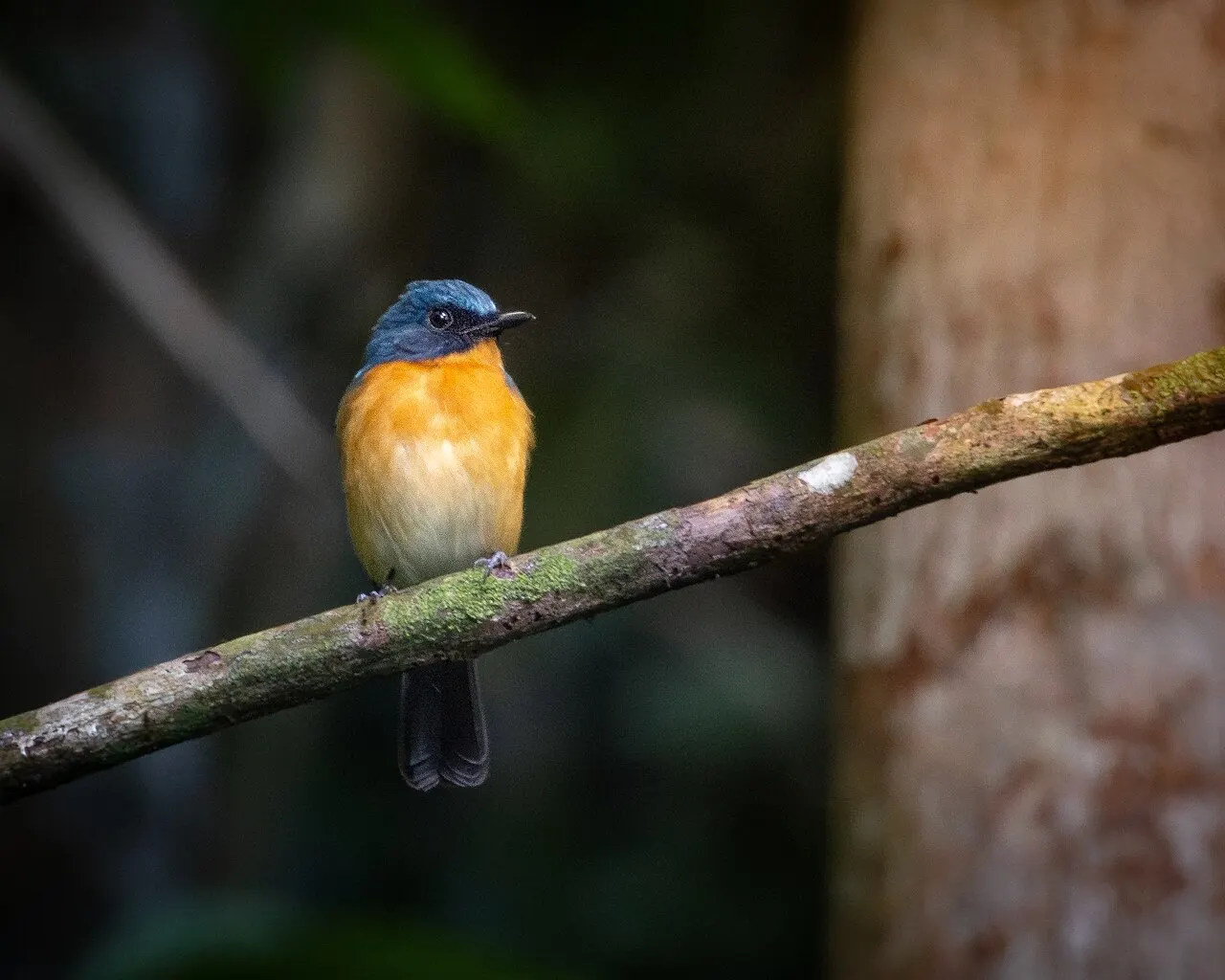
The Javan blue flycatcher (Cyornis banyumas) is a small songbird of the forests of Java, Indonesia, and reportedly the offshore island of Panaitan. Once a common sight in Java's hills, it was rated Critically Endangered in 2022 after trapping for the cage-bird trade cut its numbers sharply.
What it is
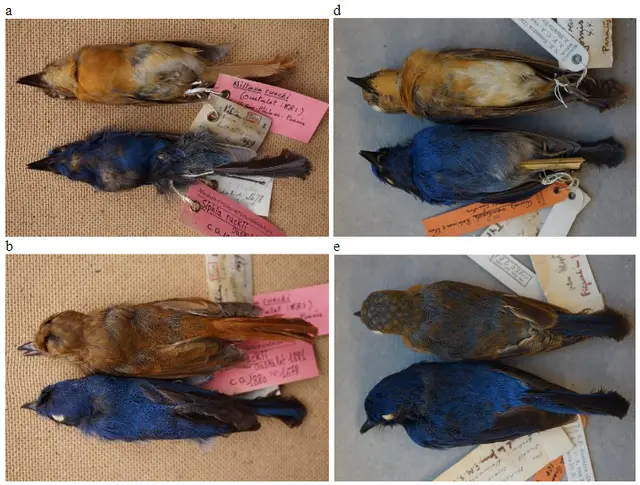
This is an Old World flycatcher described by Thomas Horsfield in 1821. It is usually seen alone, and sometimes in pairs.
The bird was long treated as the same species as a Bornean relative. In 2021 the International Ornithologists' Union recognised the Dayak blue flycatcher of Borneo (Cyornis montanus) as separate, so the Javan bird's range no longer includes Borneo.
Where it lives
The Red List shows it as resident on Java, and Panaitan is also reportedly part of its range. It uses moist forest from the lowlands up to about 1,300 metres, including montane forest. A commenter on a 2022 BirdLife forum thread says it can still be found in secondary growth and traditional plantations.
The 2022 assessment puts its extent of occurrence at about 59,000 square kilometres, but the area it actually occupies is an estimated 120 to 480 square kilometres, split among perhaps 2 to 15 subpopulations. Those figures show how patchy it has become.
Pins are Wikidata “endemic to” fields. Orange dots, when present, are GBIF occurrence tiles — survey bias included.
Why it is in trouble
Capture for the songbird trade is the main threat. The Red List scores it as high impact, ongoing, affecting more than 90 percent of the population, tied to international trade, and causing very rapid declines. In the trade the bird is called sulingan, according to forum commenter Jihad Udin.
Population figures are rough. The 2022 assessment suspects a fall of 60 to 90 percent over roughly a decade, and puts the surviving population at 100 to 1,000 mature individuals. Conversion and degradation of its forest are also listed among the stresses. In a 2022 forum comment, birder James Eaton said the bird had been easy to find in protected areas 10 to 15 years earlier but had since disappeared from them.
What is being done
The assessment recommends protecting the sites where the bird remains, making trade in it illegal in national legislation, and considering a reintroduction project. It records no recovery plan and no systematic monitoring scheme as yet.
On the ground, a 2026 Mongabay report from the Menoreh Hills in Central Java says Donorejo village banned songbird hunting about two years earlier, and testimony suggests sightings may have increased since. That evidence is anecdotal. The report says captive birds probably number in the tens of thousands, while wild birds are suspected to number fewer than 1,000.
Sources
Written for this catalog in our own words from the sources below, checked against them on 12 November 2026. Population figures are estimates and carry the year they were made. Status and assessment year: IUCN. 2026. The IUCN Red List of Threatened Species. Version 2026-1. iucnredlist.org.