Critically Endangered
Blue-eyed Ground Dove
Columbina cyanopis
The blue-eyed ground dove (Columbina cyanopis) is a small, rufous-brown dove of the Cerrado savanna in Brazil. It was unseen by scientists for about 75 years before a 2015 rediscovery. The IUCN Red List lists it as Critically Endangered (assessed 2019), and only one wild population is known.
How to recognise it
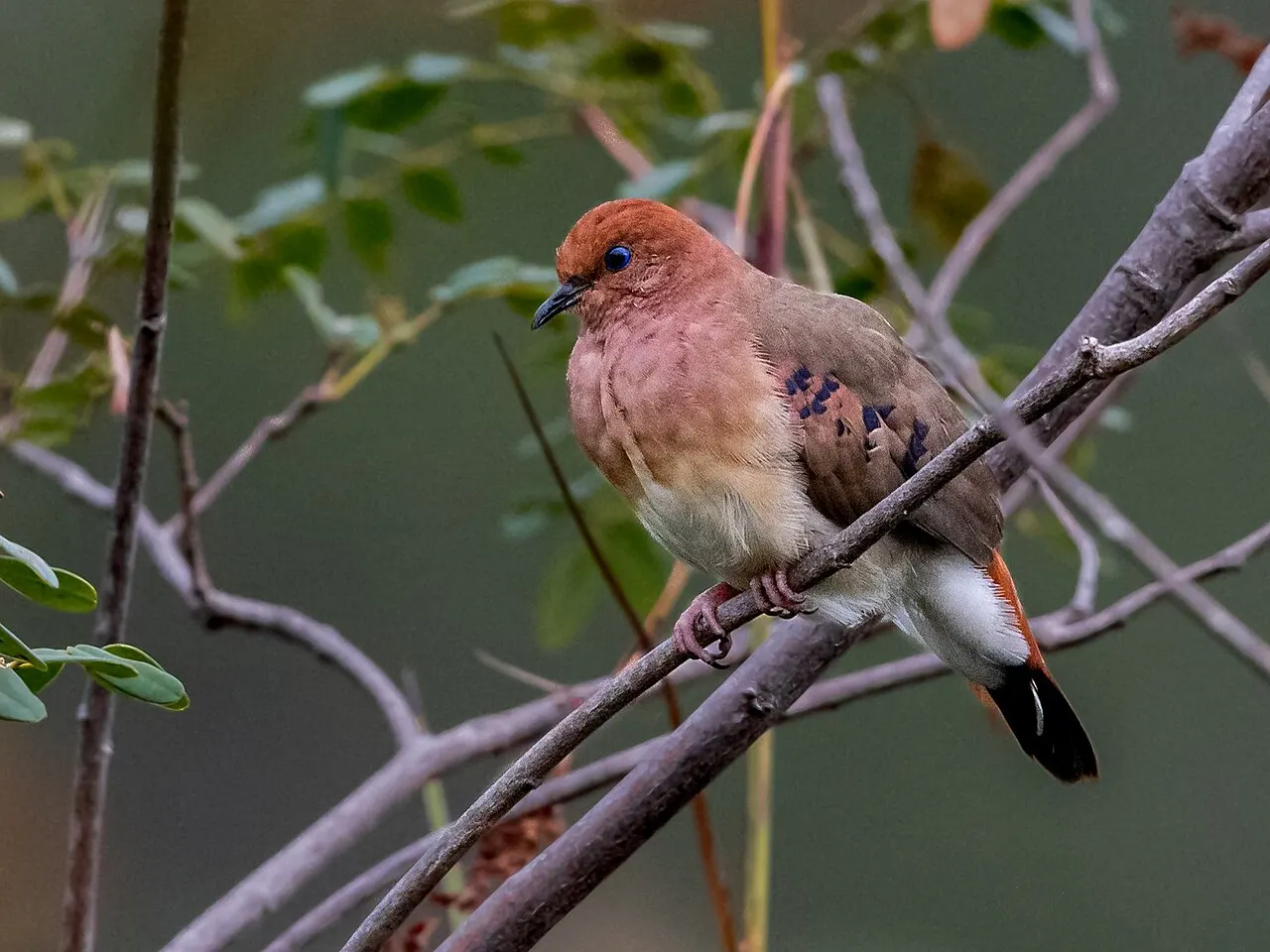
It's a small dove, about 15.5 cm long. The male has a reddish brown head, neck, breast and wings, a paler brown back and underparts, a white vent and dark blue spots on the wings. The eye is blue, set in bare grey skin, which gives the bird its name.
Females look similar but are paler, especially underneath. Young birds show rufous edges to their feathers and fainter wing spots.
Where it lives
The species is endemic to Brazil and lives in dry grassland and dry savanna in the Cerrado, at elevations up to about 800 m. Museum specimens reportedly come from Mato Grosso in the early 1800s, Sao Paulo in 1904 and Goias in the early 1940s. Reliable sightings since 1980 have come from Minas Gerais, Mato Grosso and Mato Grosso do Sul, and only Minas Gerais has produced records since 2007.
The IUCN puts its range at only two to five locations. The one known wild population is near Botumirim in Minas Gerais.
Pins are Wikidata “endemic to” fields. Orange dots, when present, are GBIF occurrence tiles — survey bias included.
A bird that went missing
After the last confirmed sighting in 1941, the dove was feared extinct. In 2015 the Brazilian ornithologist Rafael Bessa found it by chance. The news became public in May 2016 at a Brazilian birdwatching festival, with photographs and a recording of its song. Twelve birds had been documented at two sites in Minas Gerais, and the exact sites weren't disclosed.
Counts since then have stayed tiny. SAVE Brasil reported 31 known wild birds in April 2021, after new nests were found and four chicks fledged from two of them. The 2019 Red List assessment estimated 50 to 249 mature individuals and a continuing decline. A June 2025 report from Chester Zoo, which works with Brazilian partners on the species, says fewer than 11 adults remain in the wild. These figures come from different methods and years, so they don't line up neatly, but none suggests a comfortable number.
Why it is in trouble
The main cause is loss of Cerrado to farming and ranching, including pasture and timber plantations. Industrial agriculture, including cattle and soy, has heavily damaged the Cerrado, and its deforestation rate has exceeded that of the Amazon. Conversion to pasture reportedly makes it harder for the doves to reach resources on the ground.
Wild dogs are reportedly another factor in its decline, and conservation groups also point to human-set fires and climate change.
What is being done
A nature reserve of about 600 ha was created in 2018 on land where the dove was found, supported by Rainforest Trust. Botumirim State Park, covering roughly 36,000 ha of Cerrado, was created by the Minas Gerais government a few months later. A pair was found at a new location inside the park in 2020. SAVE Brasil, with support from the park, has since halted visits to the reserve to reduce stress on the birds.
A 2019 workshop with the IUCN Conservation Planning Specialist Group produced a long-term action plan. Chicks were hand-reared at Parque das Aves in Brazil in 2023 and 2024, and three more in 2025, doubling the captive group. Parque das Aves now holds six birds, with genetic analysis from the University of Sao Paulo guiding pairings and support from Chester Zoo and other zoos.
Sources
Written for this catalog in our own words from the sources below, checked against them on 12 November 2026. Population figures are estimates and carry the year they were made. Status and assessment year: IUCN. 2026. The IUCN Red List of Threatened Species. Version 2026-1. iucnredlist.org.




