Endangered
Gabela Akalat
Sheppardia gabela
The Gabela akalat (Sheppardia gabela) is a small, shy forest bird of the Old World flycatcher family, found only in the escarpment forests of western Angola. The IUCN Red List rated it Endangered in 2025, after an assessment made in 2024. Clearing of forest for farming is its main threat.
How to recognise it
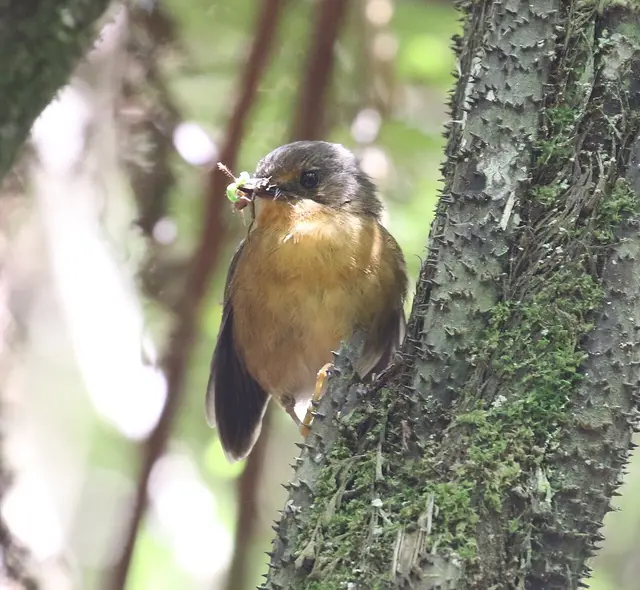
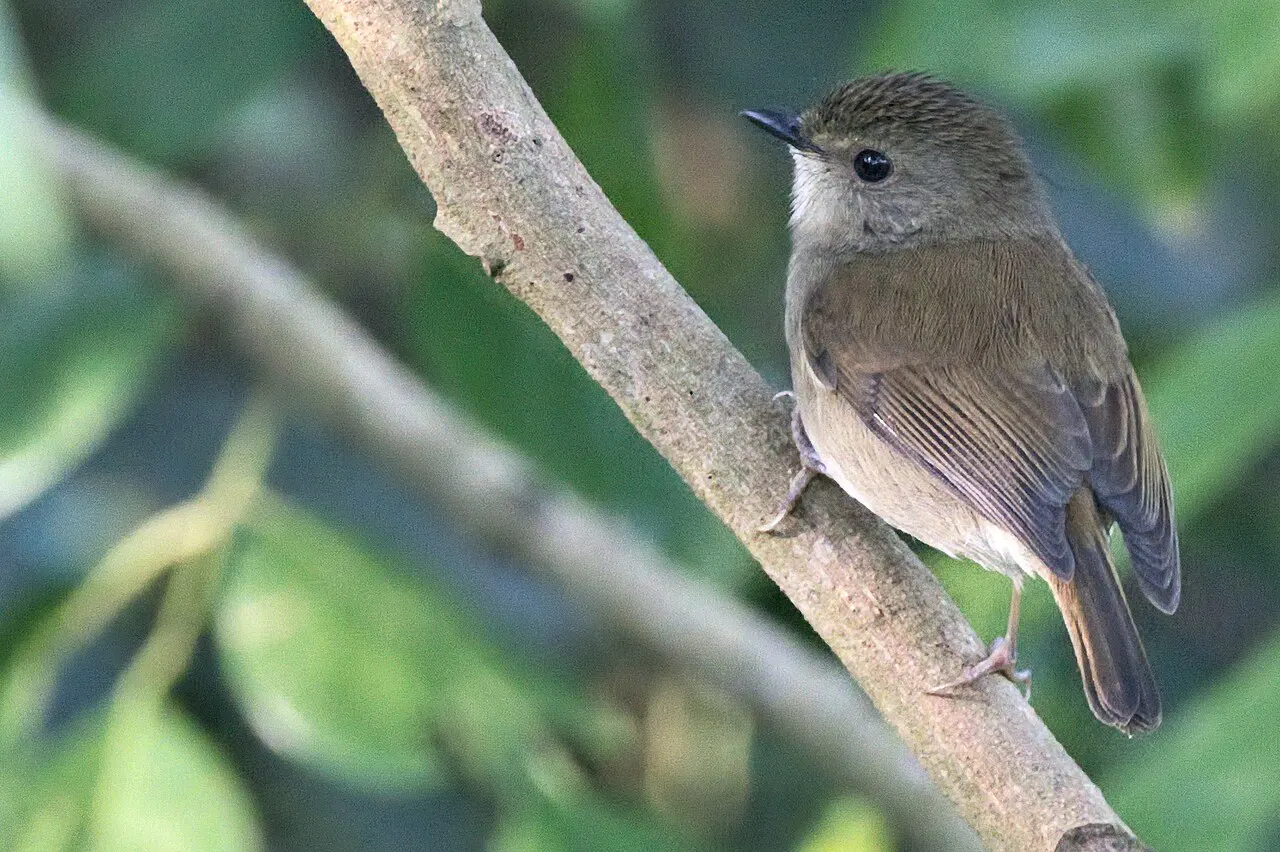
It's a plain little bird, about 13 cm long. The upperparts are dull brown and the underparts white to off-white, with a brown band across the breast and a white throat that stands out against it.
It is very shy and hard to see, so its voice is often the better clue. The call is a sad-sounding, repeated two-note whistle, and it also gives a higher, repeated weeh-weeh-weeh mixed with a scraping sound.
Where it lives
This akalat is endemic to Angola, known from forest patches on the escarpment near the town of Gabela, which reportedly gave the bird its name. The IUCN estimates its extent of occurrence at 1,100 to 8,674 square km and counts 5 to 25 locations. A survey reported in Bird Conservation International in 2004 described the first significant ornithological visits to the Gabela region since 1974, after years of civil war made fieldwork impossible.
The IUCN lists moist lowland forest as its main habitat, at roughly 810 to 1,280 m above sea level. Heavily degraded former forest is only marginal habitat for it.
Pins are Wikidata “endemic to” fields. Orange dots, when present, are GBIF occurrence tiles — survey bias included.
How it lives
The best field data come from a radio-tracking study published in the African Journal of Ecology in 2016. Researchers fitted transmitters to 18 birds at Kumbira Forest. The akalats avoided clearings and preferred forest, though they also used farmland and secondary growth to a lesser extent. Their home ranges were slightly larger than those of other akalats in the same genus.
It isn't a migrant, and the IUCN treats all birds as a single subpopulation.
How many are left
The 2024 assessment puts the population at 15,000 to 25,000 birds and still decreasing. That is an estimate, and a much higher figure than early surveys suggested. In the 2004 survey, observers recorded only three birds at Kumbira and one near Seles, and noted the species may have been overlooked.
The assessment estimates a population reduction of 10 to 19 percent, based on the shrinking area and quality of its habitat.
Why it is in trouble
The IUCN lists small-holder farming and shifting agriculture as ongoing threats, with large-scale agro-industry farming expected in future. Small-scale harvesting of forest products is also recorded. The Red List scores each of these as low impact, but together they mean steady forest loss, and the akalat depends on forest.
What is being done
The 2016 radio-tracking study called for Kumbira to be given official protection as a nature reserve, planned and enforced with local people, and for ways to meet the community's economic needs that keep the forest standing.
The IUCN says conservation sites have been identified across the whole range, but the species doesn't occur in a formal protected area and has no species recovery plan or monitoring scheme. Recommended actions are site protection, livelihood alternatives and awareness work. Research needs include an area-based management plan, habitat trends, and population size and trends.
Sources
Written for this catalog in our own words from the sources below, checked against them on 12 November 2026. Population figures are estimates and carry the year they were made. Status and assessment year: IUCN. 2026. The IUCN Red List of Threatened Species. Version 2026-1. iucnredlist.org.