Endangered
Humblot's Heron
Ardea humbloti
Humblot's Heron is a bird in the family Ardeidae (order Pelecaniformes) — Ardea humbloti, recorded as Endangered and tied to Madagascar.
Appearance
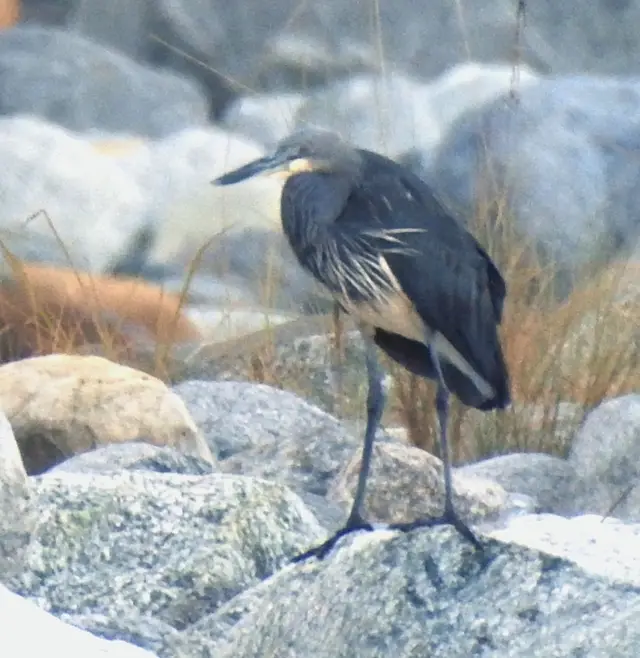
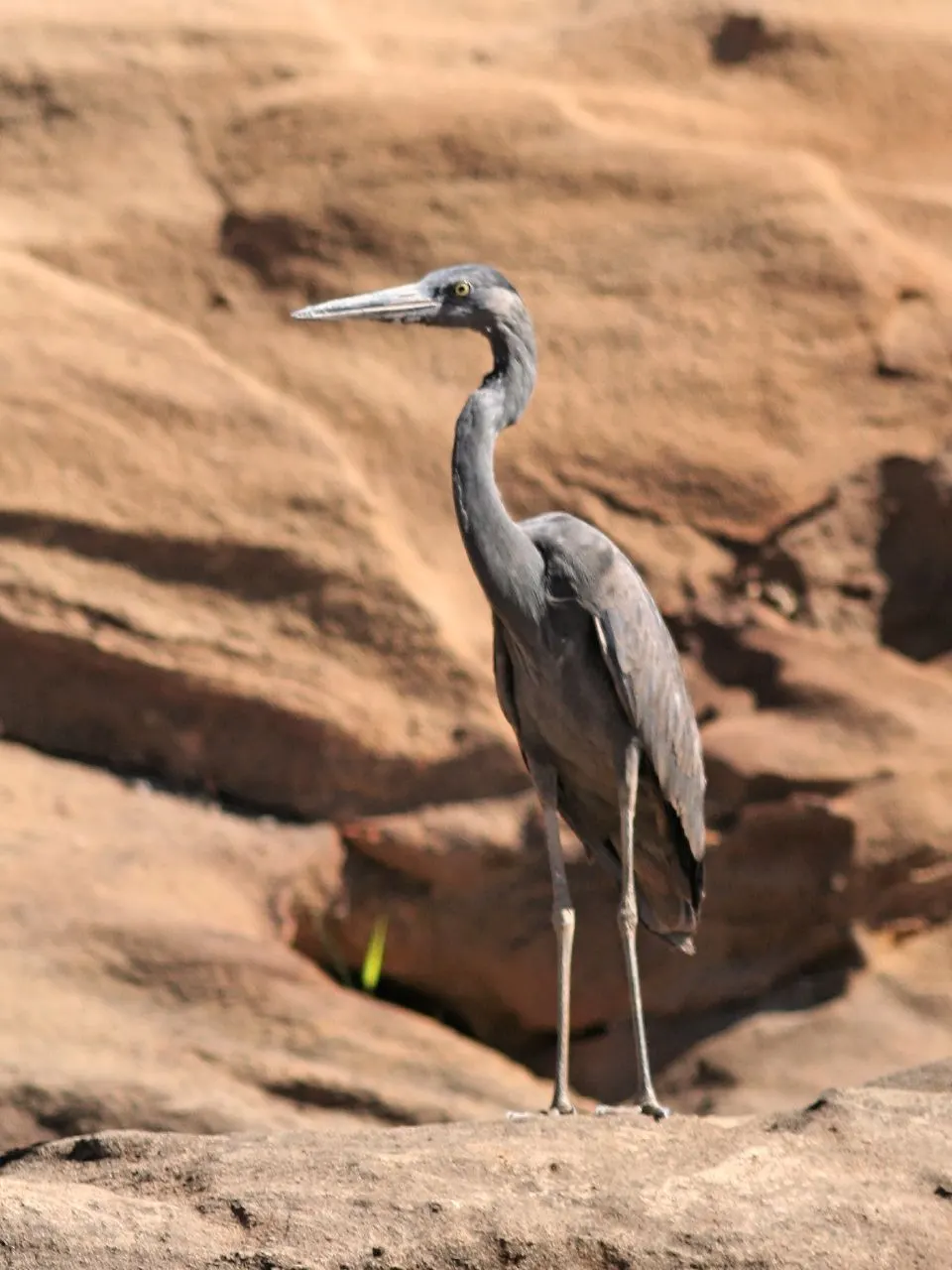
Humblot's heron has a uniform dark gray plumage on its body and darker feathers on its forehead and chin. Its nape feathers are elongated to form a crest. It has a large, pale bill as well as pale eyes and legs.
Humblot's heron is 92–100 cm (3.02–3.28 ft) tall.
Range and habitat
Humblot's heron is endemic to the island of Madagascar and is most commonly found in the coastal lowlands of southern, western and northern Madagascar. Small populations have also been found in the neighboring islands of Comoros and Mayotte. There has been one recorded and accepted observation of the heron in mainland Africa, in a game reserve in Tanzania.
It is commonly found on the north and west coasts of Madagascar but it is also present in the Comoro Islands and Mayotte.
Pins are Wikidata “endemic to” fields. Orange dots, when present, are GBIF occurrence tiles — survey bias included.
Diet and breeding
After catching their prey, they will fly to solid ground to consume it. Little information is known about its breeding cycle.
Nests are typically on the ground and surrounded by dense aquatic vegetation. The Humblot's heron's nest is mostly made of sticks and reeds and is approximately 50–70 cm (20–28 in) in diameter.
In crisis
Humblot's heron is considered an endangered species due to its declining population. The major threats the heron faces are poaching, habitat destruction, and the invasion of alien species such as the water hyacinth. Humblot's heron is considered endangered, per the IUCN Red List.
Its population is declining most likely due to poaching, both of the eggs and of the bird. Additionally, due to the increasing human population in Western Madagascar, the wetlands where the heron nests are being transformed more and more into rice paddies.
Humblot's Heron is Endangered on the IUCN Red List (assessed 2025, criteria C2a(ii)). Confirm the official criteria and any later count on the assessment page.
Sources
Adapted from the English Wikipedia article on Humblot's Heron (CC BY-SA 4.0; authors are listed in the article history; changes were made), Wikidata item Q373554. Family and order context is original field-guide writing about the group, not a copied assessment of this one species. Not an IUCN assessment. Counts, when quoted, can change — confirm them on the recovery programme and on iucnredlist.org. Status and assessment year: IUCN. 2026. The IUCN Red List of Threatened Species. Version 2026-1. iucnredlist.org.