Endangered
Montipora hispida
Montipora hispida
Montipora hispida is a pore coral that grows as plates, columns or fingers on Indo-Pacific reefs, from the Red Sea and East Africa to Japan, Australia and the central Pacific. The IUCN Red List moved it from Least Concern to Endangered in 2024, projecting a steep decline from reef habitat loss.
How to recognise it
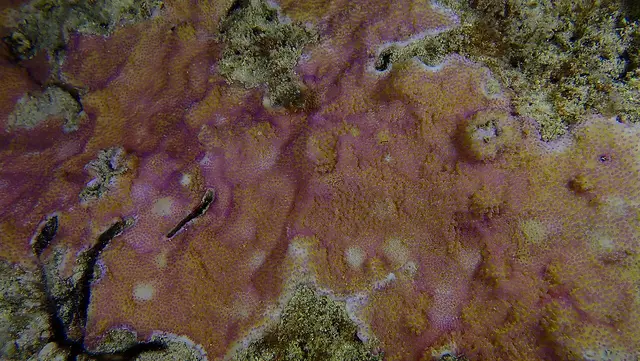
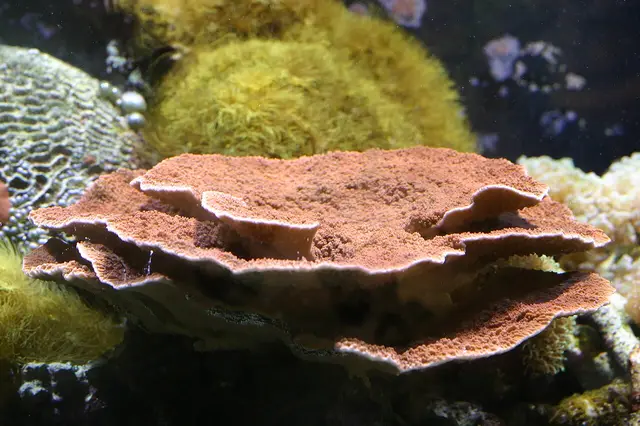
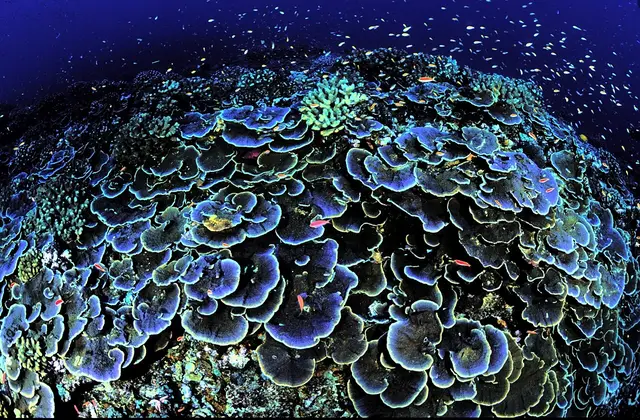
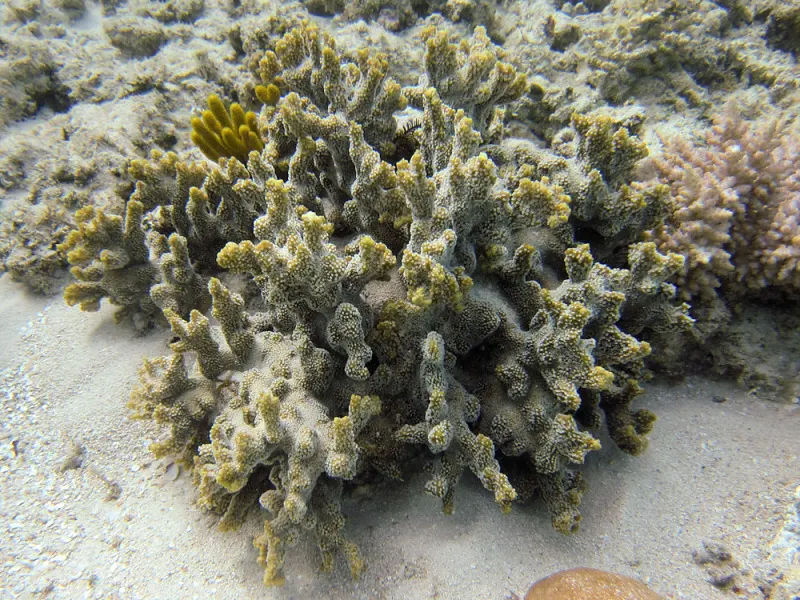
Dana described it in 1846. Colonies are usually pale brown, sometimes with white branch tips and white tentacles. The shape changes with the water: plates and fingers in turbid water, and thicker lumps or columns on reef slopes. Some colonies combine forms.
Up close, the skeleton carries small pits (corallites), some sunk into the surface and some standing proud, with little spiny bumps around them and across the coarse skeleton between. Montipora cactus has less prominent corallites, while M. gaimardi and M. grisea have similar ones. It is treated as a species complex, so identification is not always simple.
Where it lives
The Red List records it in more than 60 countries and territories. They run from the Red Sea (including Egypt, Sudan, Eritrea and Yemen) and East Africa (Kenya, Tanzania, Mozambique, Madagascar) through the Maldives, Sri Lanka and India, then across Southeast Asia to Japan, Australia, Fiji and the Pacific islands as far as Hawaii and French Polynesia. It sits on rocky reef and coral reef, from 1 m down to about 55 m.
It is mostly found in turbid water. It is common on the Great Barrier Reef but usually uncommon elsewhere, and public GBIF records come mostly from Australia and Japan.
Pins are Wikidata “endemic to” fields. Orange dots, when present, are GBIF occurrence tiles — survey bias included.
Why it is in trouble
The 2008 assessment rated the species Least Concern. The 2024 assessment lists it as Endangered under criterion A3ce, with the population decreasing. It projects a future population reduction of about 62 percent, based on loss of reef habitat and the effects of introduced species, pathogens, pollutants, competitors or parasites. Generation length is put at 10 years.
The listed threats include temperature extremes, storms and flooding, silt washing onto reefs, coastal housing and industry, shipping lanes, tourism and recreation, and small-scale harvest that catches corals by accident. A wider IUCN reassessment of reef-building corals, announced in October 2026, found climate change determines the status of over 90 percent of the species at highest risk. Its data stopped in 2020, before the 2023 to 2025 global bleaching event, so the real picture may be worse.
What is being done
The assessment calls for site protection and management, habitat restoration, captive breeding or propagation, a genome resource bank and species recovery work. Whether any colonies sit in a protected area is recorded as unknown. No population count exists for the species.
Sources
Written for this catalog in our own words from the sources below, checked against them on 12 November 2026. Population figures are estimates and carry the year they were made. Status and assessment year: IUCN. 2026. The IUCN Red List of Threatened Species. Version 2026-1. iucnredlist.org.