Endangered
Leaf plate montipora
Montipora capricornis
The leaf plate montipora (Montipora capricornis) is a stony coral that grows in tiers of flat plates on shallow Indo-Pacific reefs, and it is also a favourite in reef aquariums. The Red List lists it as Endangered (2024 assessment), with a decreasing population driven by reef decline.
How to recognise it
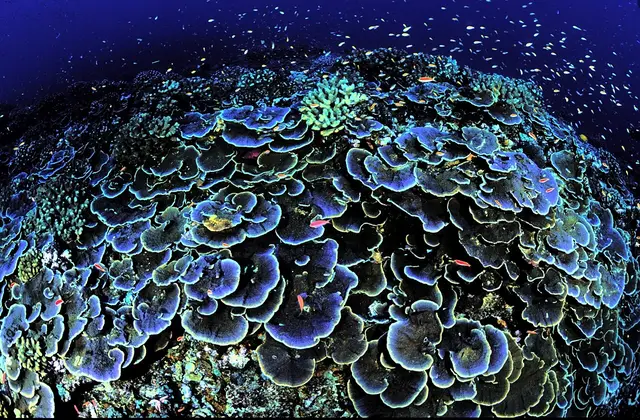
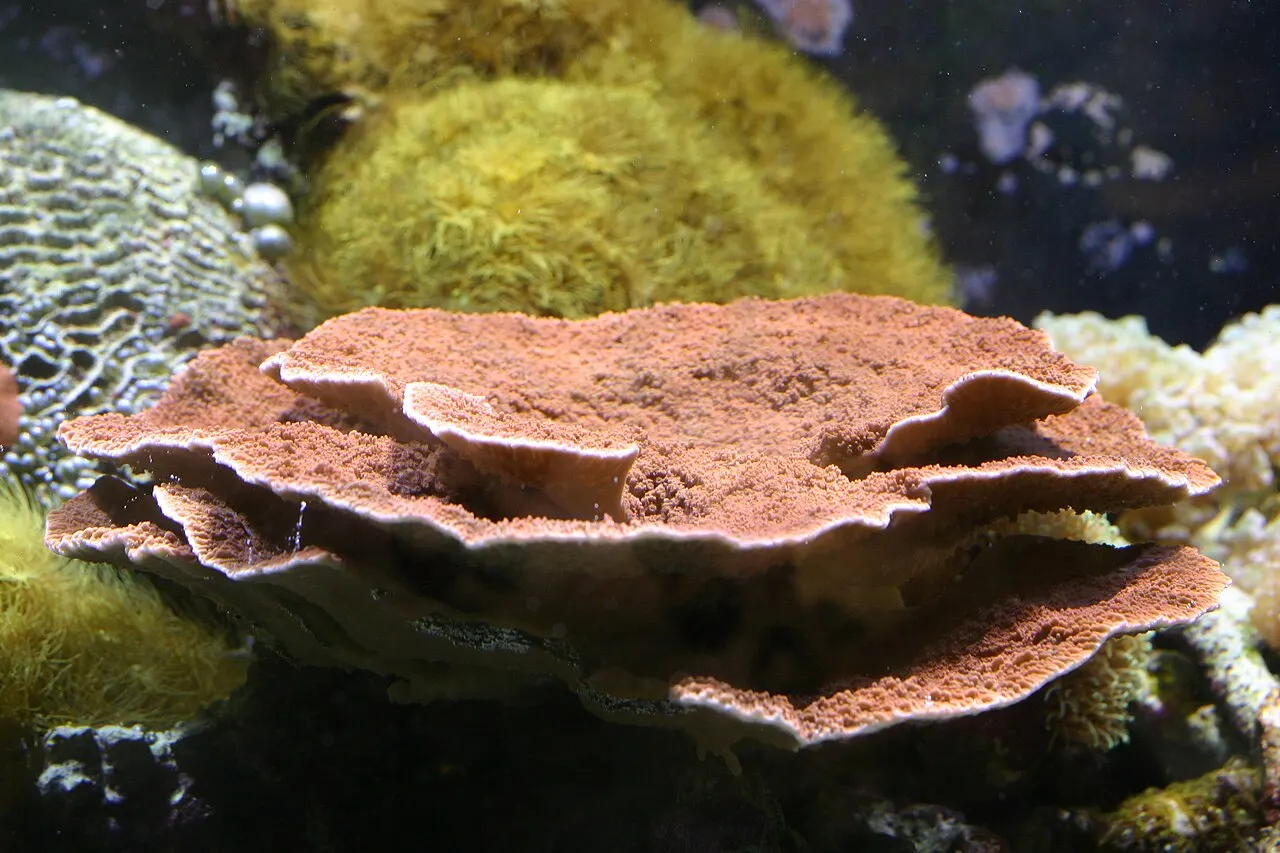
This is a small-polyp stony coral in the family Acroporidae, described by Veron in 1985. Colonies typically grow as flat plates in tiers, whorls or spirals, though a single colony can also be encrusting, columnar or blade-like. Wild and captive colonies can differ in shape depending on water flow and lighting.
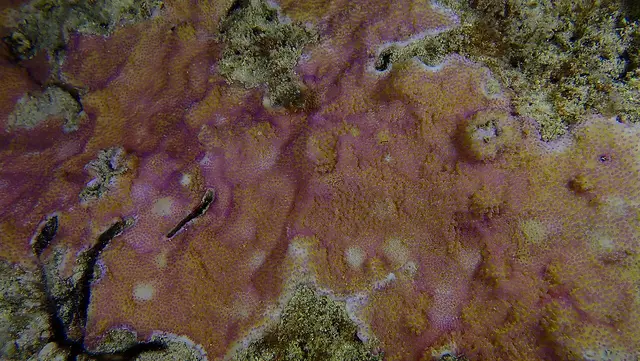
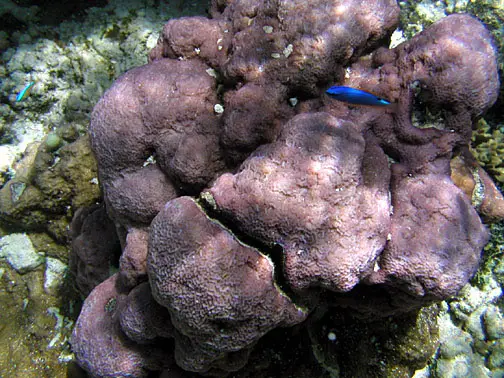
The polyps are small bumps on the skeleton, usually transparent with faint colour patches from the symbiotic algae living in the tissue. Wild colonies are usually brown, tan or green. Aquarium strains can be red, pink, purple or bright green.
It is easy to confuse with other plating Montipora. A 2018 CORAL Magazine article said many wild corals sold as 'Monti Caps' are actually Montipora foliosa, Montipora florida or Montipora monasteriata. M. foliosa, the most common plating species, has polyps lined up in rows between ridges that run from the centre of the plate to its edge.
Where it lives
The Red List records it in the Indo-West Pacific, from Indonesia, the Philippines, Malaysia and Papua New Guinea to Australia, New Caledonia, Fiji, Tonga and Pacific island nations such as Palau, Kiribati and Tuvalu. It also lists Christmas Island and the Cocos (Keeling) Islands.
It lives on coral reefs in sunlit shallows, at depths of about 2 to 20 metres according to the Red List, and its need for light keeps it in the upper part of the reef. Its habitat is listed as neritic coral reef, and the population is not severely fragmented.
Pins are Wikidata “endemic to” fields. Orange dots, when present, are GBIF occurrence tiles — survey bias included.
Why it is in trouble
Like most reef-building corals, it is under pressure from many directions at once. The Red List's threat list includes temperature extremes, storms and flooding, coastal housing and commercial development, tourism and recreation areas, shipping lanes, sediment from soil erosion, and the unintended effects of small-scale harvest. The area of habitat it occupies is recorded as still declining, and the Red List trend is decreasing.
The species has slipped down the Red List scale. It was rated Vulnerable in 2008 and Endangered in the latest assessment, under criterion A3ce. Generation length is estimated at 10 years, and the assessment projects a future population reduction of about 63 percent. No population size has been published.
In the aquarium trade
It is one of the more popular small-polyp corals sold to hobbyists, and is often described as a good beginner coral because it tolerates less-than-perfect conditions better than Acropora. It does best at a stable 24 to 27 degrees Celsius and strong lighting.
Aquacultured colonies are sold, and the 2018 CORAL Magazine article named commercial farms in Florida and Wisconsin. Named strains exist, such as a jade green and lavender line the article described as about 30 years old. Stony corals are covered by CITES Appendix II, which allows trade only with permits.
What is being done
The Red List lists captive breeding, species recovery, a genome resource bank, site management and protection, and habitat restoration as actions in place or needed. Whether wild colonies sit inside protected areas is recorded as unknown.
Sources
Written for this catalog in our own words from the sources below, checked against them on 12 November 2026. Population figures are estimates and carry the year they were made. Status and assessment year: IUCN. 2026. The IUCN Red List of Threatened Species. Version 2026-1. iucnredlist.org.