Endangered
Montipora aequituberculata
Montipora aequituberculata
Montipora aequituberculata is a stony coral that grows in thin plates and crusts on shallow reefs across the Indo-Pacific, from the Red Sea to the central Pacific. Once judged Least Concern, it was reassessed as Endangered in 2024 because of projected losses from heat, disease and habitat damage.
How to recognise it
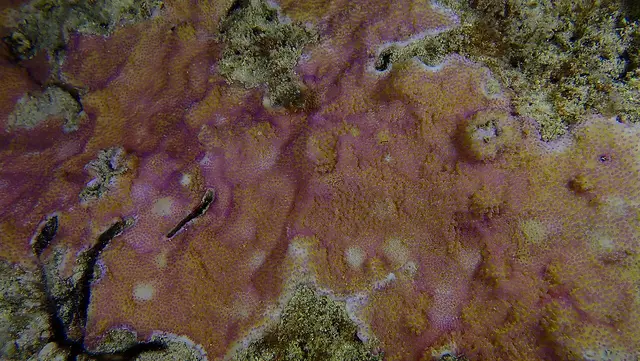
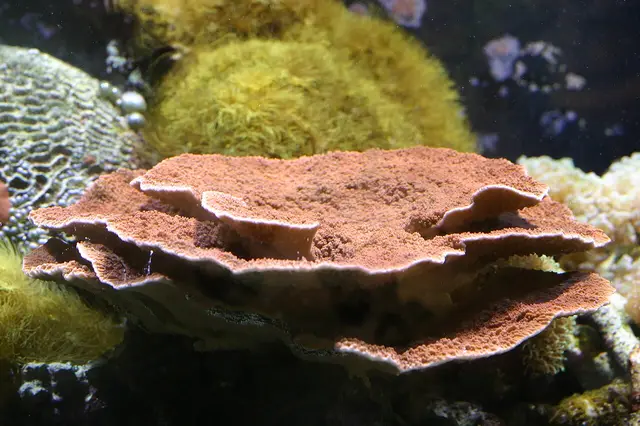
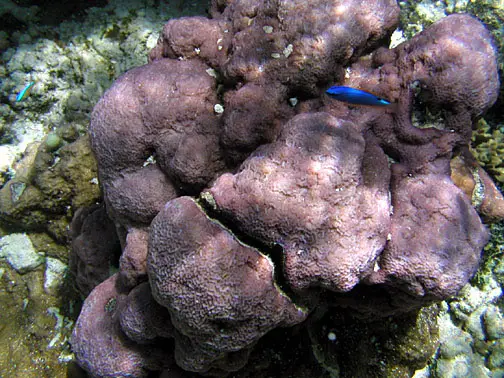
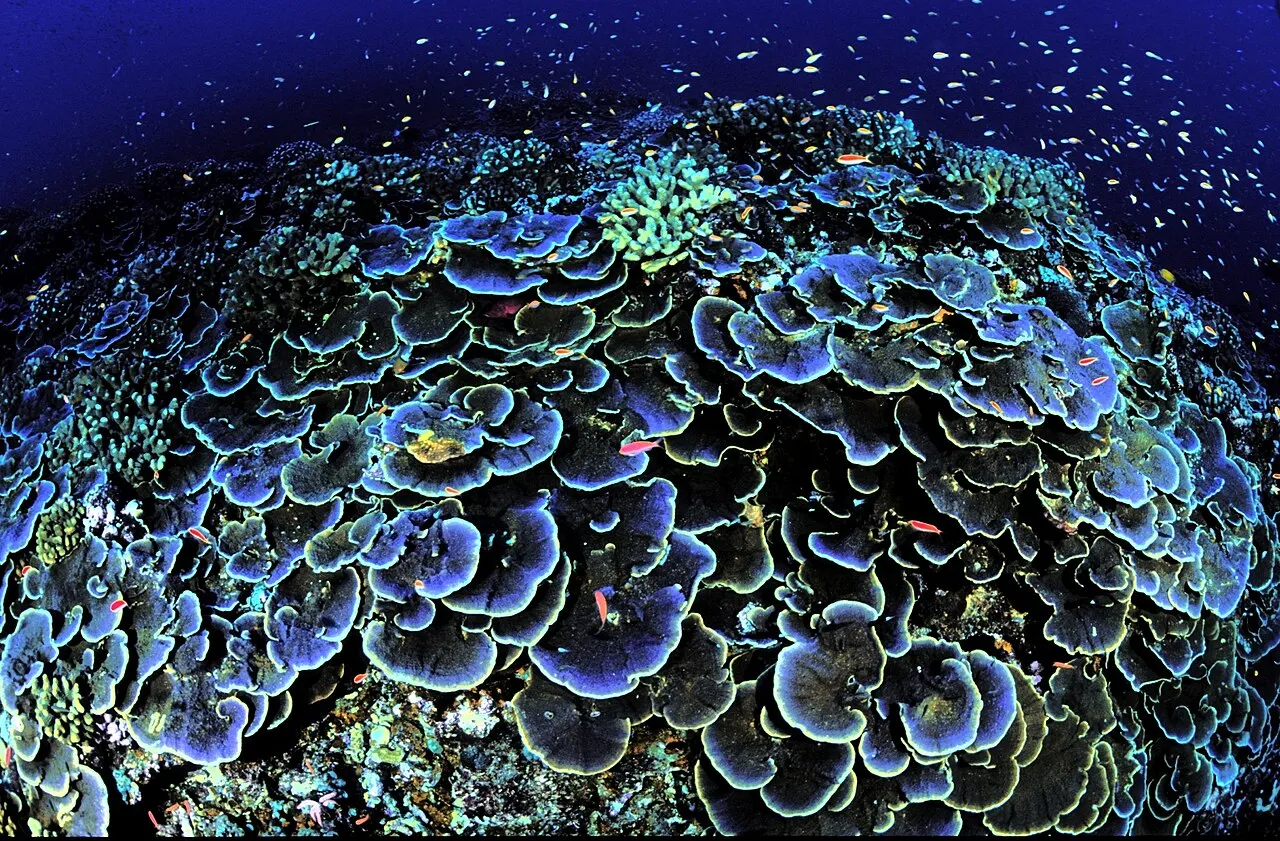
Colonies are encrusting, or built from thin, one-sided plates that sometimes curl into tubes. The tiny cups that hold the polyps (corallites) are ringed by small bumps called papillae, which often fuse into short ridges near the colony edge and can form little hoods over the cups. Colour is usually plain brown, cream or purple with paler margins, although some colonies are brightly coloured.
The Corals of the World project treats it as a species complex, and it can be confused with lookalikes. Montipora crassituberculata, for instance, has larger corallites and more papillae.
Where it lives
The IUCN lists the coral from about 70 countries and territories. They run from the Red Sea and Gulf of Aden through the Indian Ocean to Japan, Taiwan, the Philippines and Indonesia, and on to Australia, Micronesia, Fiji, French Polynesia and Pitcairn.
It lives on coral reefs and rocky reef from 1 to 60 m deep. It is common in shallow water and, on sheltered upper reef slopes, may be the most abundant coral present.
Pins are Wikidata “endemic to” fields. Orange dots, when present, are GBIF occurrence tiles — survey bias included.
How it lives
Like most reef-building corals, it hosts tiny algae (zooxanthellae) in its tissue. These reportedly supply most of the coral's energy, and the polyps also catch plankton with their tentacles. In a heatwave, stressed corals can expel the algae and turn pale, a process called bleaching. The IUCN gives a generation length of 10 years for the species.
Why it is in trouble
Earlier Red List assessments, in 2008 and 2014, rated it Least Concern. The 2024 assessment moved it to Endangered under criterion A3ce, which is based on projected decline. It projects a future reduction of about 62 percent, driven by loss of reef area and quality, and by introduced species, disease and pollutants. The population trend is listed as decreasing.
Threats named include temperature extremes, storms and flooding, soil erosion and sediment washing onto reefs, coastal housing, commercial and tourism development, recreation, shipping lanes, and disease. Unintentional small-scale harvest is also listed.
What is being done
Stony corals are all covered by CITES Appendix II, which regulates international trade rather than banning it. The 2024 assessment lists site protection and management, habitat restoration, captive breeding, species recovery and a genome resource bank among conservation actions, and calls for more work on taxonomy, population trends and the effects of harvest. Whether it occurs in a protected area is recorded as unknown.
Sources
Written for this catalog in our own words from the sources below, checked against them on 12 November 2026. Population figures are estimates and carry the year they were made. Status and assessment year: IUCN. 2026. The IUCN Red List of Threatened Species. Version 2026-1. iucnredlist.org.