Critically Endangered
Montipora patula
Montipora patula
Montipora patula, the sandpaper or ringed rice coral, grows only in the Hawaiian Islands and nearby Johnston Atoll and Midway. The IUCN Red List rated it Critically Endangered in 2024. Warming seas, storms, runoff and coastal development all put its shallow reefs under pressure.
How to recognise it
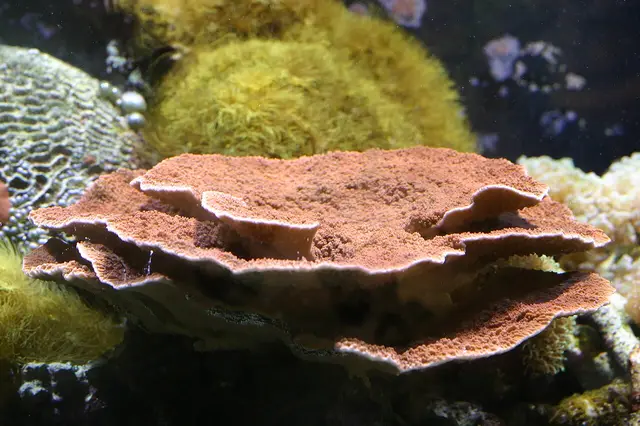
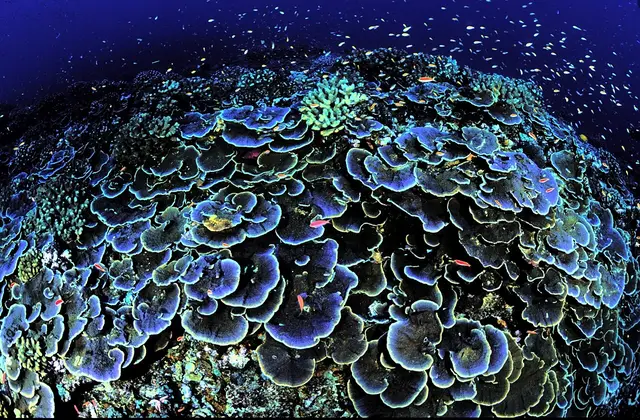
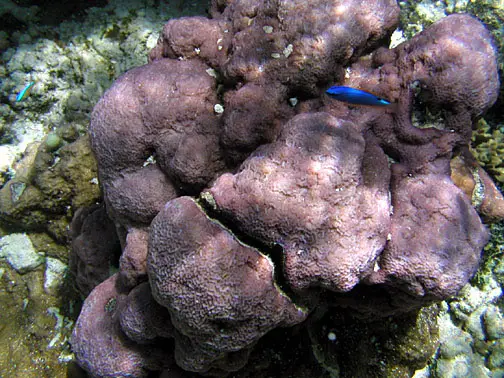
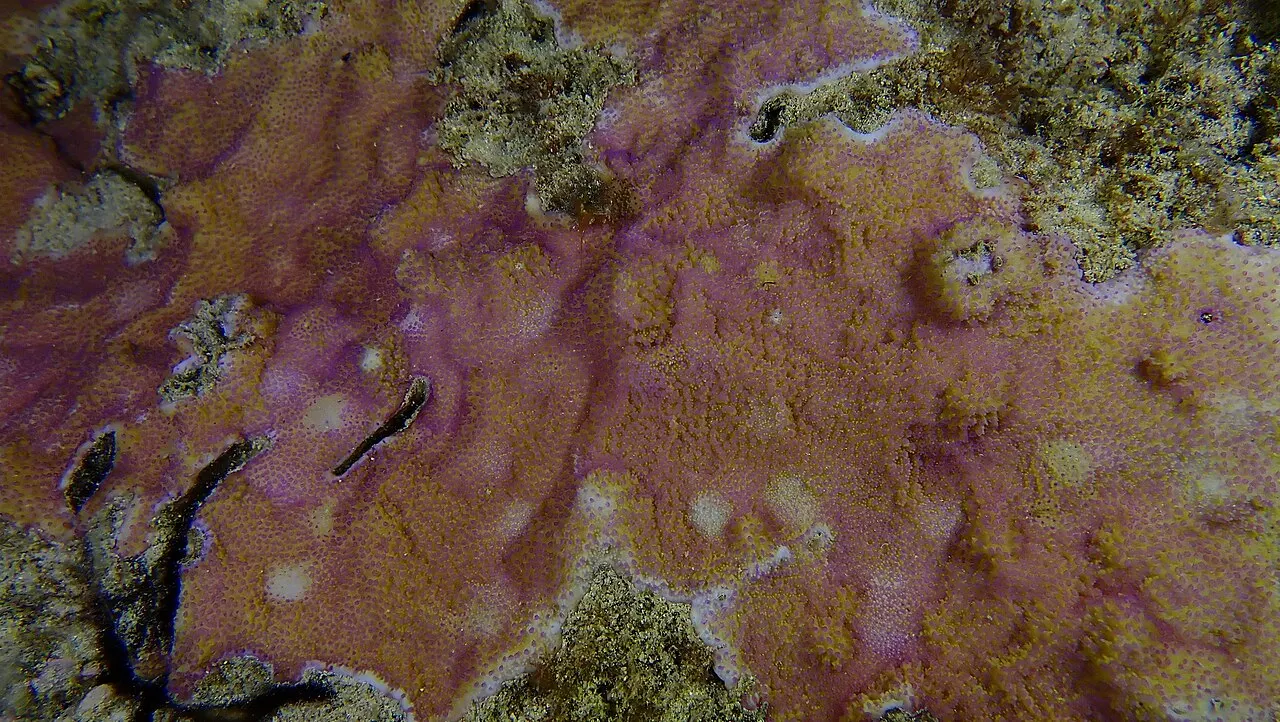
Colonies are either small crusts over rock or stacked, tiered plates with free edges, and the plates can grow more than 2 m across. Colonies are brownish with paler borders, and the polyps are usually purple. The corallites (the little cups each polyp sits in) are small and uneven in height, with small tan papillae around them. Verrill described the species in 1869.
Where it lives
It is endemic to Hawaii. The IUCN lists it from the Hawaiian Islands, Midway and Johnston Atoll, all within US waters. It lives on shallow rocky reefs and coral reefs, favouring reef flats, at depths of roughly 1 to 10 m. That shallow band is where heat, storm waves and runoff hit hardest.
Pins are Wikidata “endemic to” fields. Orange dots, when present, are GBIF occurrence tiles — survey bias included.
Why it is in trouble
The 2024 assessment (criterion A3ce) projects a future reduction of about 80% and records a continuing decline in the area the species occupies. A generation is put at about 10 years. The population is not classed as severely fragmented, so the concern is the shrinking area of healthy reef rather than isolated pockets of coral.
The listed threats include temperature extremes, storms and flooding, soil erosion and sedimentation, housing, commercial and industrial development, shipping lanes, and tourism and recreation. Competition and disturbance are among the stresses recorded.
Bleaching hits Hawaiian reefs in warm years, though this coral has fared better than some relatives. In NOAA's rapid surveys of Oahu in October 2019, about 40% of corals on average showed bleaching, but sandpaper coral was among the least affected species. Blue rice coral was hit hardest.
What is being done
The IUCN assessment calls for site protection and management, habitat restoration, species recovery, captive breeding and a genome resource bank. Whether the coral occurs in a protected area is recorded as unknown. International trade is monitored through CITES Appendix II.
Sources
Written for this catalog in our own words from the sources below, checked against them on 12 November 2026. Population figures are estimates and carry the year they were made. Status and assessment year: IUCN. 2026. The IUCN Red List of Threatened Species. Version 2026-1. iucnredlist.org.