Endangered
Cabbage coral
Cabbage coral
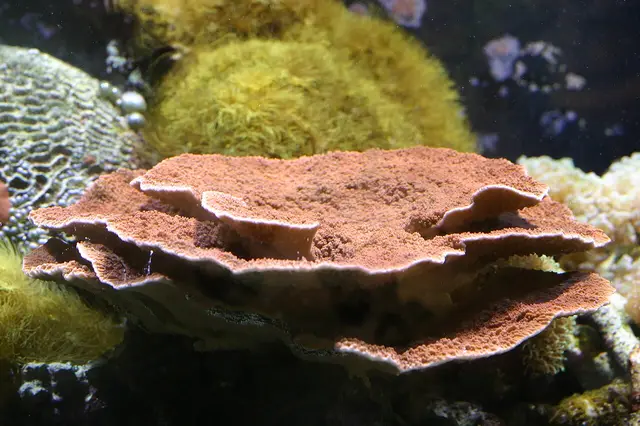
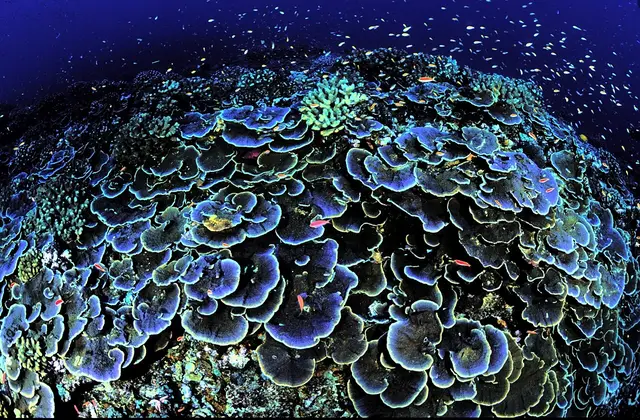
Cabbage coral, the cabbage coral, builds thin, one-sided plates that stack in tiers on sheltered upper reef slopes across the Indo-Pacific. The IUCN Red List moved it to Endangered in 2024, from Near Threatened in 2014, because reef decline is projected to cut its numbers by about 62%, even though it's currently described as common.
How to recognise it
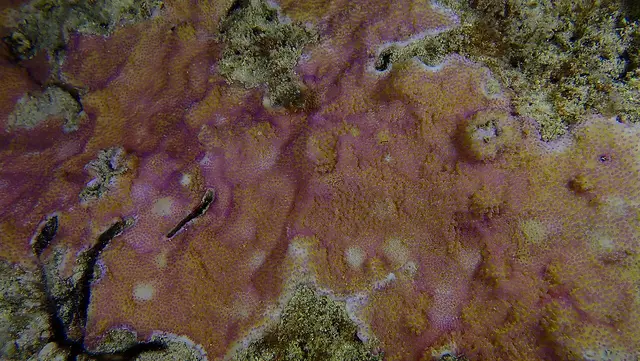
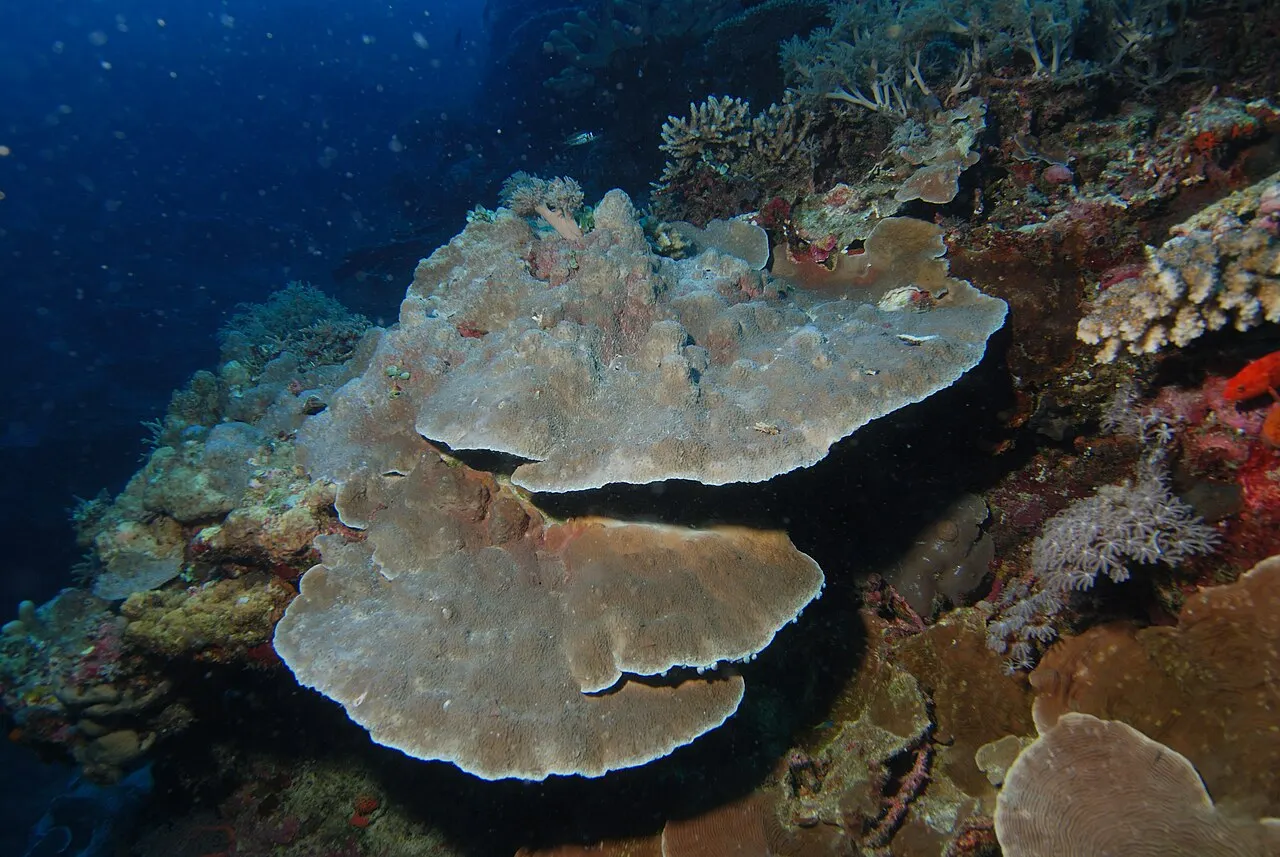
The colonies are made of thin plates that are one-sided, meaning the polyps sit on the upper face. Plates can form tiers or whorls, which fits the common name cabbage coral. The corallites sit in rows between conspicuous ridges of skeleton, and the ridges usually run at right angles to the plate edge.
Colour is usually cream, pink or brown, often with pale margins. It can be mixed up with Montipora aequituberculata, which lacks the ridges, and Montipora delicatula, which has thinner plates, less regular ridges and smaller corallites. The two can be hard to tell apart unless they grow together. Corals of the World treats M. foliosa as a species complex.
Where it lives
Pallas described the species in 1766. It lives across the tropical to subtropical Indo-Pacific. The Red List lists 73 countries, territories and island groups, from Egypt, Kenya, Madagascar and the Maldives to Japan, Fiji and French Polynesia. Corals of the World maps it in 87 of the world's 150 reef ecoregions, none of them in the Atlantic.
It mostly grows on sheltered upper reef slopes. The Red List gives a depth range of 1 to 52 m, while SeaLifeBase gives 0 to 20 m.
Pins are Wikidata “endemic to” fields. Orange dots, when present, are GBIF occurrence tiles — survey bias included.
How it lives
No study of this species' biology turned up, so what follows is about the genus. Montipora corals are hermaphroditic broadcast spawners, typically spawning in spring, and they pass their symbiotic algae to the next generation inside the eggs. Butterflyfish and other corallivorous fish feed on them.
The Red List uses a generation length of 10 years for M. foliosa.
Why it is in trouble
The 2024 listing (criteria A3ce) is a forecast. The assessment projects a population reduction of 62%, tied to a decline in habitat quality and the effects of introduced taxa, pathogens and other biological stresses. It records that the area the species occupies is continuing to shrink and that the population trend is decreasing. The population is not considered severely fragmented. Its 2014 and 2008 assessments were Near Threatened.
The threats named include temperature extremes, storms and flooding, sedimentation, housing and commercial development, tourism and recreation, and shipping lanes. A global reassessment announced in November 2024 covered 892 reef-building coral species and found 44% threatened with extinction. Climate change was named as the main threat.
What is being done
Stony corals, this one included, are on CITES Appendix II, which regulates international trade. The Red List records it as unknown whether the species occurs in any protected area. Its conservation actions include site protection and management, habitat restoration, species recovery work, and captive propagation and genetic resource banking. For reef-building corals generally, the IUCN says cutting greenhouse gas emissions is the main solution.
Sources
Written for this catalog in our own words from the sources below, checked against them on 12 November 2026. Population figures are estimates and carry the year they were made. Status and assessment year: IUCN. 2026. The IUCN Red List of Threatened Species. Version 2026-1. iucnredlist.org.