Marshall Islands
16 catalog pins
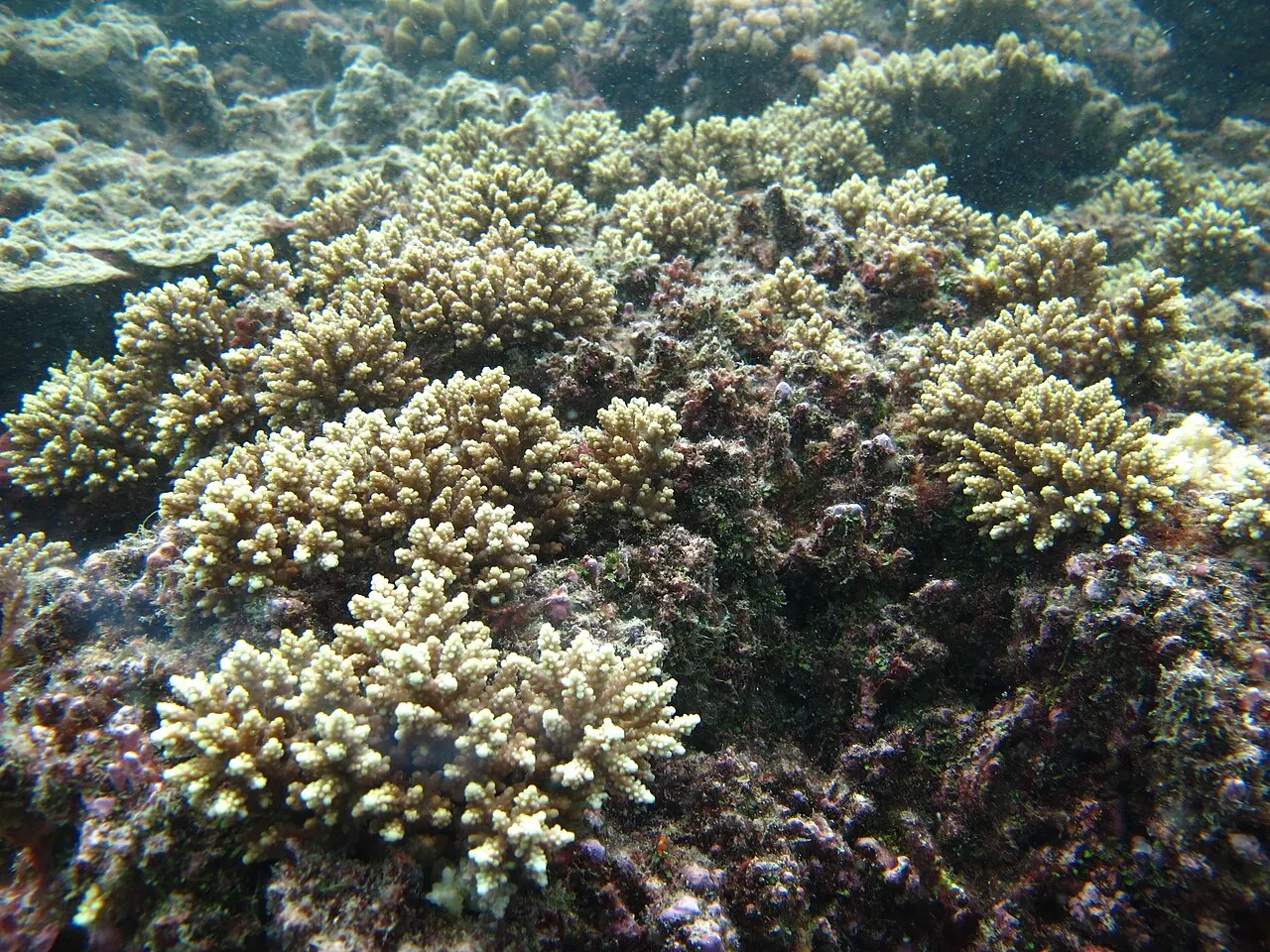
16 animals in this catalog carry a structured country pin for Marshall Islands. That is a filing fact, not a claim that the crisis is only here.
The photograph is one of those animals: Bottlebrush Coral. Open a dossier for the text, the status, and the map. Use the world map to jump to another country. Confirm official distributions on the Red List.
The Marshall Islands are a Pacific nation made of 29 coral atolls and five main islands, plus about 1,220 very small islands, in two chains called Ratak and Ralik. The country has only about 180 square kilometres of land, and lagoon water makes up roughly 98% of its territory. Average elevation is about 2 metres above sea level.
The country's report to the Convention on Biological Diversity lists 1,059 fish species, 728 crabs, shrimps and other crustaceans, 126 starfish, 40 sponges, 106 birds and 37 mammals. The animals listed for the islands in the catalog are all reef corals.
Where the pressure comes from
The CBD profile names the spread of invasive alien species and the loss of traditional knowledge as concerns. Rising sea level is another: sea levels around the islands have risen about 3.4 millimetres a year since 1993, more than twice the global average, and at a 1 metre rise large shares of buildings on atolls such as Kwajalein and Ebeye would flood.
The islands also carry a nuclear legacy. The United States carried out 67 nuclear tests on Marshallese atolls between 1946 and 1958, including 23 at Bikini. Bikini's reefs have since recovered in part, with a 2008 assessment finding they had regained nearly 65% of their earlier diversity, though 28 coral species appeared to be locally extinct there.
What is being done
Conservation here runs through Reimaanlok, the national framework for planning community-based conservation areas. In January 2025 fishing was banned in the waters of Bikar and Bokak atolls, about 48,000 square kilometres, reported as the country's first marine protected area. The expedition behind it recorded the highest coral cover and giant clam densities in the central and western Pacific, the largest green turtle nesting colony in the country and major seabird colonies.
Separately, an October 2011 shark sanctuary covers nearly 2 million square kilometres of ocean, although questions have been raised about enforcement. UNESCO named Bikini Atoll a World Heritage Site in 2010.
Reading the catalog for the Marshall Islands
Every animal in the catalog's list for the Marshall Islands is a coral (Anthozoa). Most belong to the family Acroporidae, with one each from the families Fungiidae and Pocilloporidae. The list is a map of reef-building corals at risk, not of fish, turtles or birds. With so little land, a single pin can stand for a whole atoll.
Sources for this section
- Marshall Islands country profile, Convention on Biological Diversity: Species counts by group, invasive species concern
- Marshall Islands, Wikipedia: Atoll counts, land and lagoon area, elevation, sea level rise, nuclear tests, 2011 shark sanctuary
- Bikini Atoll, Wikipedia: 23 tests at Bikini, 2010 World Heritage listing, 2008 reef assessment
- Safeguarding reefs, Marshall Islands establishes 48,000 sq km marine protected area, RNZ: Bikar and Bokak protection, January 2025, species and habitats, Reimaanlok
What the catalog records for Marshall Islands
The catalog has 16 animals with a country pin for Marshall Islands: 16 Endangered. By GBIF class the largest groups are Anthozoa (16). The families with the most records are Acroporidae (14), Fungiidae (1), Pocilloporidae (1). A pin means a structured source (Wikidata or a GBIF match) places the animal in Marshall Islands; it does not say the animal lives only there.
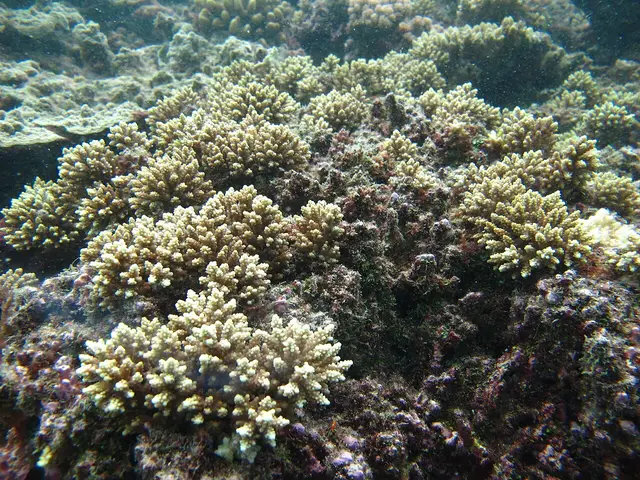 EN
Bottlebrush Coral
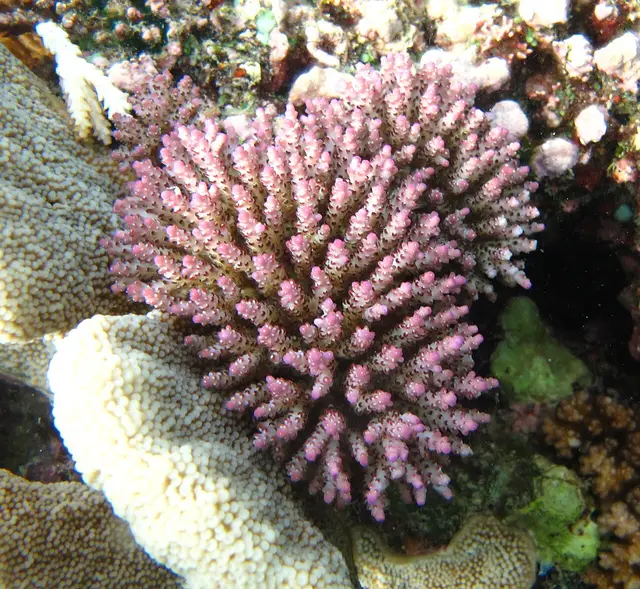 EN
Acropora nana
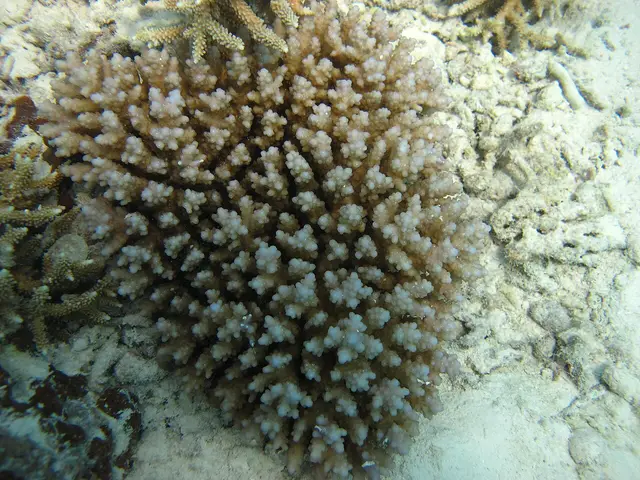 EN
Acropora squarrosa
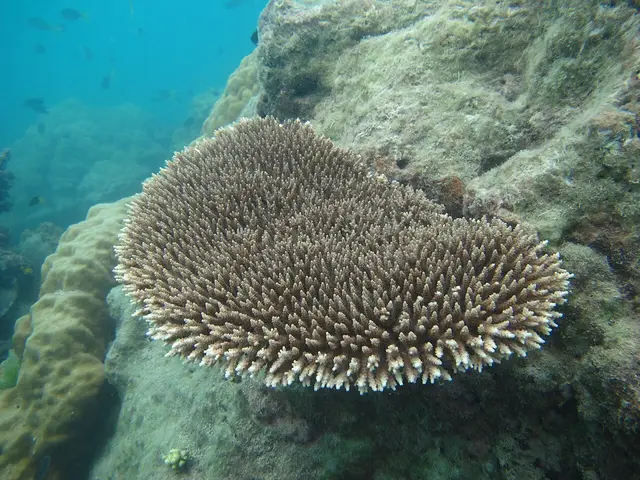 EN
Acropora subulata
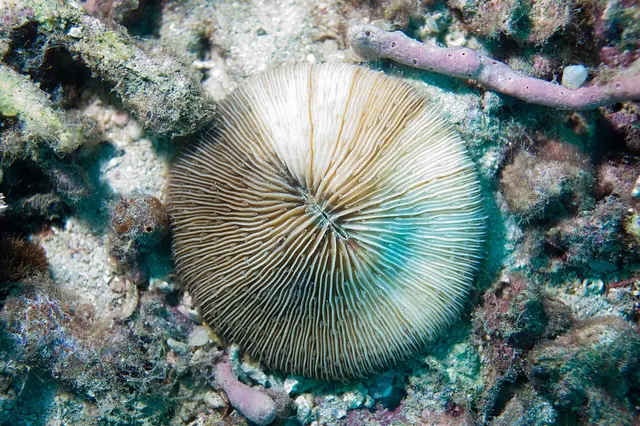 EN
Lithophyllon concinna
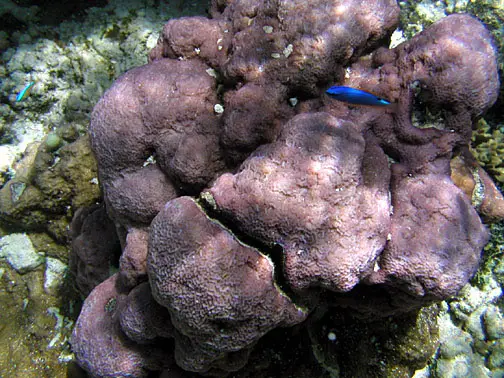 EN
Montipora caliculata
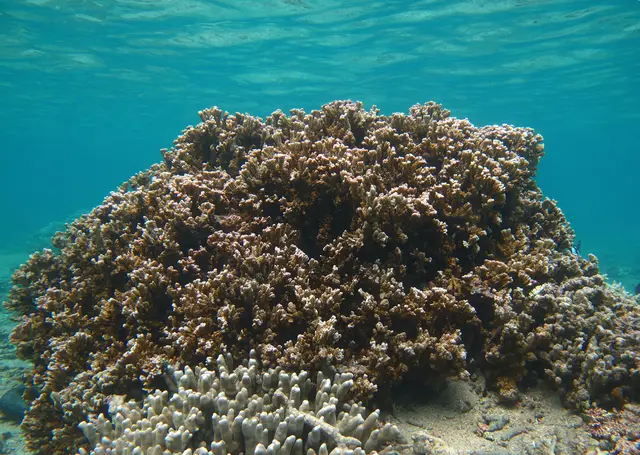 EN
Montipora circumvallata
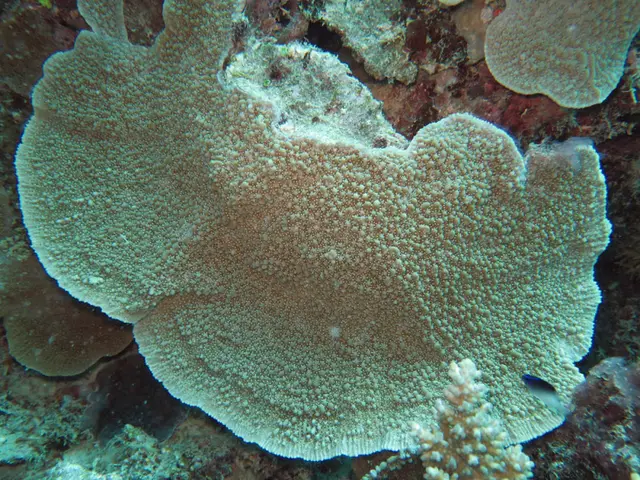 EN
Montipora danae
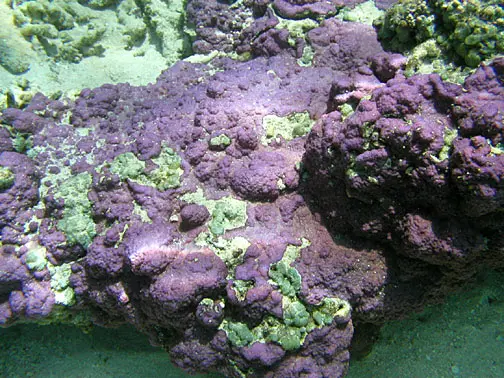 EN
Montipora efflorescens
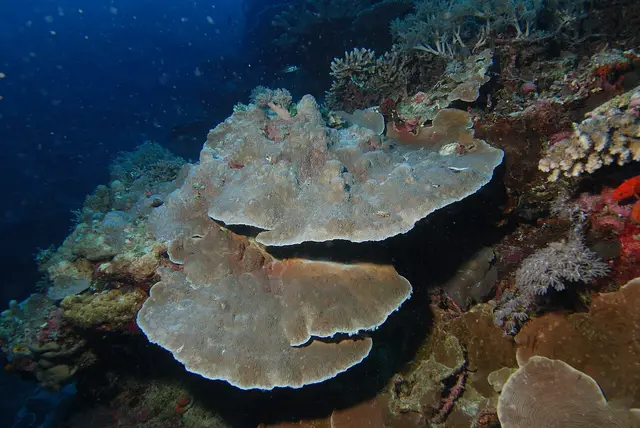 EN
Montipora foliosa
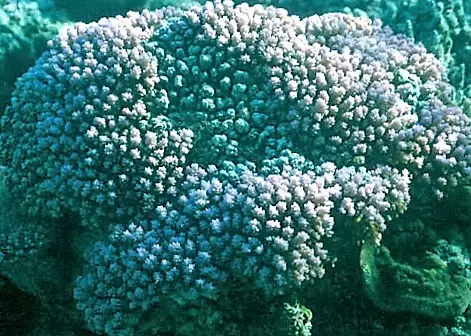 EN
Montipora informis
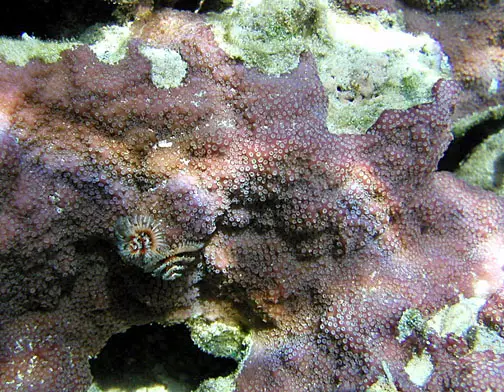 EN
Montipora nodosa
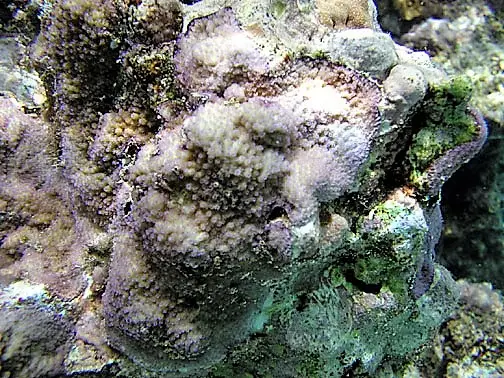 EN
Montipora peltiformis
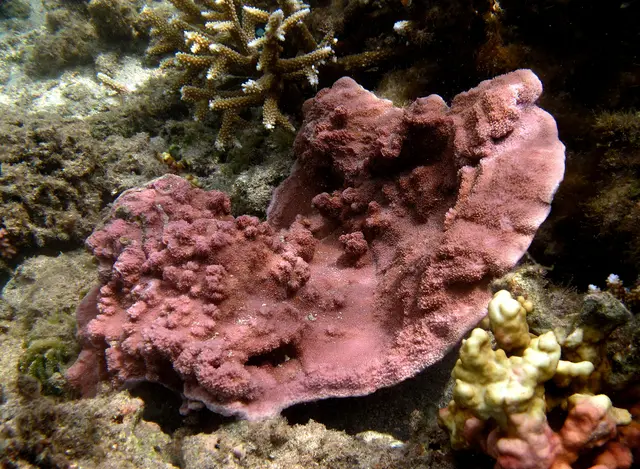 EN
Montipora tuberculosa
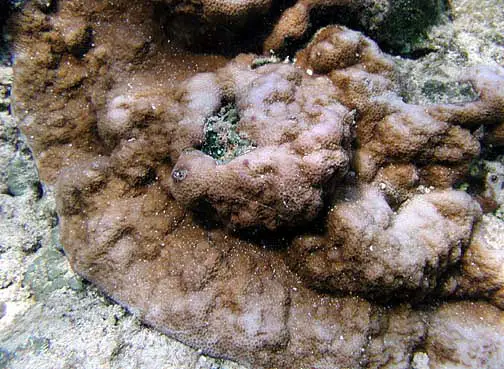 EN
Montipora venosa
 EN
Pocillopora ligulata
Total pins: 16.
Quick answers
- Do all these animals live only in Marshall Islands?
- No. A pin means a Wikidata place field resolved here. Official ranges can be wider.
- Is this a government list?
- No. It is a slice of this catalog.