Endangered
Wartmann's Whitefish
Coregonus wartmanni
Wartmann's whitefish, known around the lake as the Blaufelchen, is a silvery open-water fish found only in Lake Constance, where Germany, Switzerland and Austria meet. The IUCN Red List moved it from Least Concern in 2008 to Endangered in 2024, after a sharp fall in numbers and catches.
How to recognise it
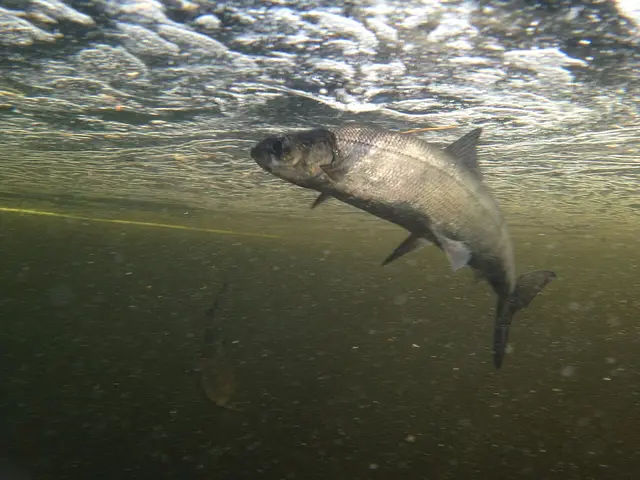
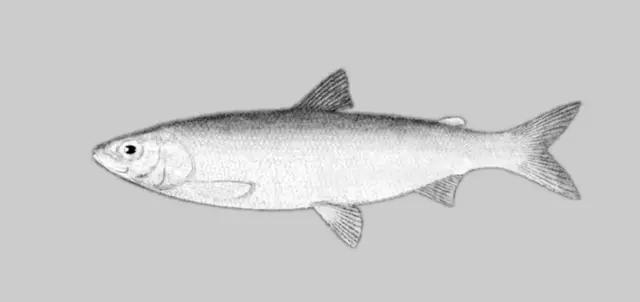
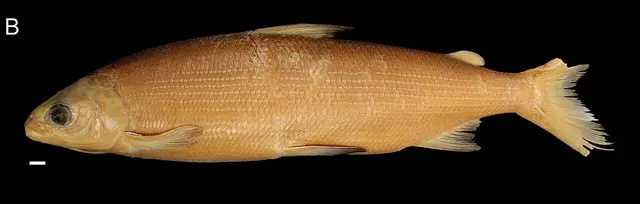
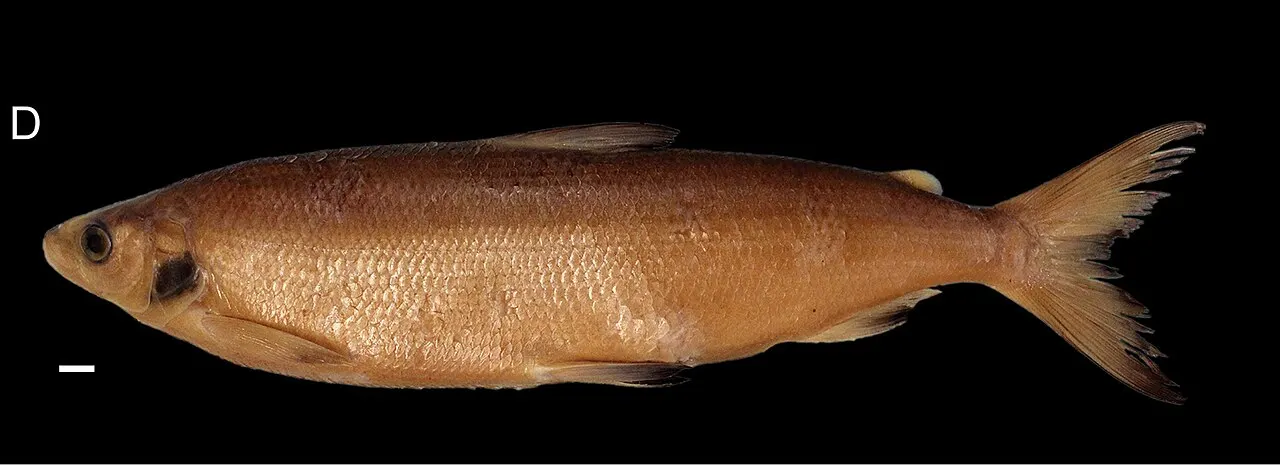
Coregonus wartmanni is a slender, slightly flattened fish that reaches up to about 50 cm. The sides are silvery white, the back is greenish, and the head is pointed and cone-shaped, with a mouth set near the tip and slightly underneath.
It is hard to tell from its lake-mate the Gangfisch (Coregonus macrophthalmus), which stays smaller at around 32 cm. Counting the gill rakers helps: roughly 33 to 39 in the Blaufelchen against 35 to 44 in the Gangfisch. Genetic differences between the two are small, and some researchers treat all European whitefish as one species, a view others dispute.
Where it lives
The Blaufelchen is a fish of open water, living in the upper layers of the lake rather than near the bottom or shore. It feeds on plankton. It spawns from September to December over deeper water, while the Gangfisch spawns near the shore or in the inflowing Rhine in November and December.
The Red List treats it as a single population in a single location. It gives an extent of occurrence of about 1,137 square kilometres and an area of occupancy of about 536 square kilometres, close to the lake's whole surface. Lake Constance is the only place it is recorded.
Pins are Wikidata “endemic to” fields. Orange dots, when present, are GBIF occurrence tiles — survey bias included.
Why it is in trouble
The 2024 assessment infers a population decline of at least 50 percent over three generations (about 12 years) and lists a continuing decline. Named pressures include changes to the lake's habitat, invasive sticklebacks and quagga mussels, stocking with hybrid whitefish, and small-scale fishing. High nutrient loads and sewage are listed as past pressures.
Fishers attribute much of the fall to the lake getting cleaner. Plankton boomed when phosphate input rose from the 1950s, and catches have fallen since the 1970s as the water cleared. Three-spined sticklebacks, which a 2023 newspaper report put at about 90 percent of open-water fish, compete for the same food, and quagga mussels bind phosphorus the whitefish need.
Catches in 2022 were 21 tonnes, down from 107 the year before and 89 percent under the ten-year average. Some fishers blame cormorants, but the conservation group Nabu says they are not the main cause, since the birds mostly eat sticklebacks.
What is being done
In June 2023 the international commission that governs Lake Constance fisheries agreed a three-year protection period for whitefish, in force from 1 January 2024. It closed the main Obersee, while fishing stayed open on the Untersee. The Red List records a recovery plan, a monitoring scheme, a harvest management plan and protected-area coverage.
A June 2026 newspaper report says researchers at Langenargen found the whitefish growing well, sticklebacks declining and more eggs and larvae than before. The overall situation is still described as fragile. The closure runs out at the start of 2027, and the lake states are debating whether to extend it or reopen with new rules such as bigger mesh sizes, fewer nets and fewer fishing days. Some experts warn against reopening too soon.
Sources
Written for this catalog in our own words from the sources below, checked against them on 12 November 2026. Population figures are estimates and carry the year they were made. Status and assessment year: IUCN. 2026. The IUCN Red List of Threatened Species. Version 2026-1. iucnredlist.org.