Critically Endangered
Atlantic whitefish
Coregonus huntsmani
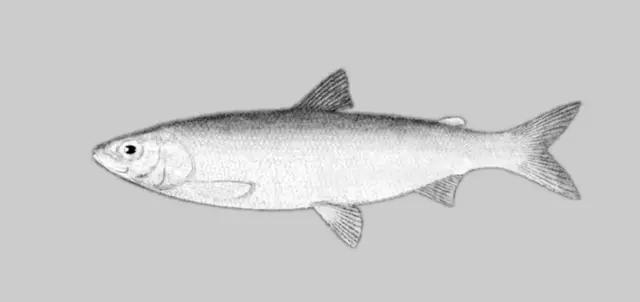
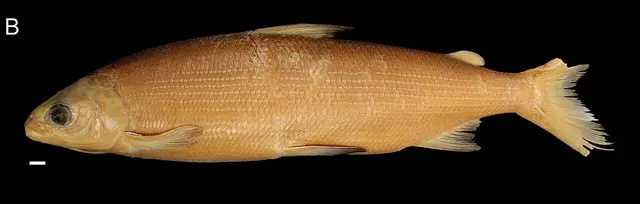
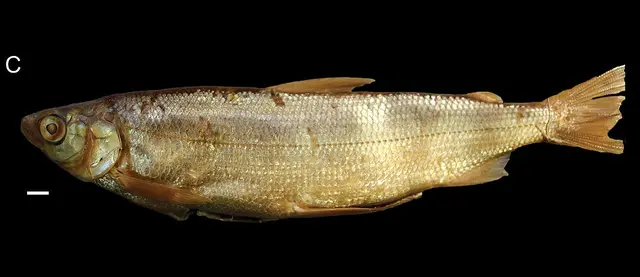
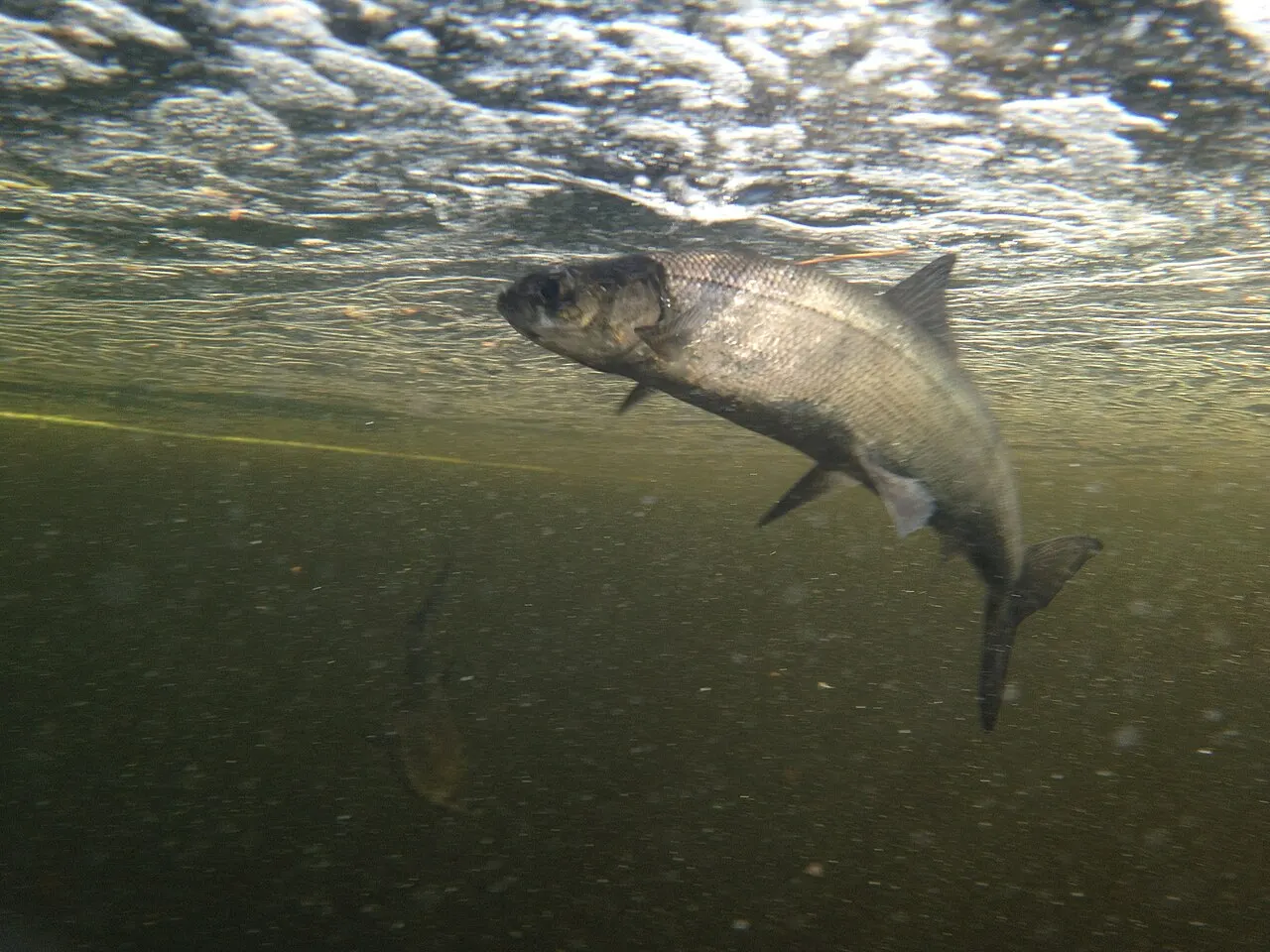
The Atlantic whitefish (Coregonus huntsmani) is a silvery freshwater fish found nowhere outside Nova Scotia, Canada. It now survives only as landlocked fish in a few lakes of the upper Petite Rivière drainage. The IUCN Red List rated it Critically Endangered in its 2017 assessment.
How to recognise it
It has the classic salmonid shape, with silvery sides and belly and a back that runs from dark blue to dark green. It is one of the whitefishes, but genetic work shows it is distinct from the widespread lake whitefish and cisco. It is the sister group to all other Coregonus species, a lineage that split off roughly 15 million years ago, in the mid-Miocene.
It was first described under the name Coregonus canadensis and renamed in 1987. Acadian whitefish and sault whitefish are other common names.
Where it lives
Historically the fish was known only from the Tusket River and Petite Rivière watersheds in southwestern Nova Scotia, with sea-going (anadromous) populations that fed in estuaries and bred in fresh water. It's believed to be gone from the Tusket. Canadian government documents describe it as now entirely landlocked in three small semi-natural lakes in the upper Petite Rivière, totalling about 1,600 hectares.
Those lakes are Hebb, Milipsigate and Minamkeak. The IUCN records it from a single location.
Pins are Wikidata “endemic to” fields. Orange dots, when present, are GBIF occurrence tiles — survey bias included.
How it lives
Landlocked fish eat insects and small fish. Natural reproduction of the species has not been observed directly, though a rotary screw trap below Milipsigate Dam caught young-of-the-year fish, 4 in spring 2015 and 53 in spring 2016, so spawning is happening somewhere in the system.
Whether the sea-going form can be re-established is unknown. The 2012 to 2017 progress report found no evidence that anadromy has been established on the Petite Rivière.
Why it is in trouble
Dams and their fishways, acid rain, and unregulated heavy harvest in the past all took a toll. Today the biggest worry is illegally introduced predators, smallmouth bass and chain pickerel. Surveys counted 235 bass nests in 2012 and 53 in 2013 (effort was higher in 2012), and one Atlantic whitefish turned up in a bass stomach in 2013. Chain pickerel were first confirmed in the upper Petite Rivière on 17 May 2013.
Numbers are poorly known. Fisheries and Oceans Canada's progress report for 2012 to 2017, published in 2022, says abundance and trends could not be estimated and no mature fish were caught in the Petite Rivière during that period. In fall 2012, 19 adults were intercepted at the Hebb Dam fishway, and none have been recorded there since. The IUCN lists the population trend as unknown.
What is being done
The species has been listed as endangered under Canada's Species at Risk Act since 2003. The recovery goal is a stable population, a restored sea-going form and a wider range, with a target of more than 1,275 mature fish in the Petite Rivière. A recovery strategy came out in 2007 and was amended in 2018, along with an action plan and critical habitat order.
Crews had removed over 3,200 smallmouth bass and nearly 400 chain pickerel by February 2017, though eradication of pickerel by boat electrofishing is considered highly unlikely. A fishway at Hebb Dam was commissioned in fall 2012, and Nova Scotia brought in live fish possession rules in November 2012.
Backup populations have struggled. About 12,000 captive-bred fish were stocked in Anderson Lake between 2005 and 2008, with a final allotment in 2012, but monitoring found no young. The government captive-breeding program at Milton, Nova Scotia, ended in 2012. The 2022 report judged recovery biologically and technically feasible, though the time needed depends on the wild population and on controlling the invasive fish.
Sources
Written for this catalog in our own words from the sources below, checked against them on 12 November 2026. Population figures are estimates and carry the year they were made. Status and assessment year: IUCN. 2026. The IUCN Red List of Threatened Species. Version 2026-1. iucnredlist.org.