Endangered
Sand Whitefish
Coregonus arenicolus
The sand whitefish, or Sandfelchen, is a fish found only in Lake Constance, shared by Switzerland, Germany and Austria. It lives near the lake bed and is far rarer than the lake's other whitefish. The IUCN Red List raised its status to Endangered in 2024, up from Vulnerable in 2008.
How to recognise it
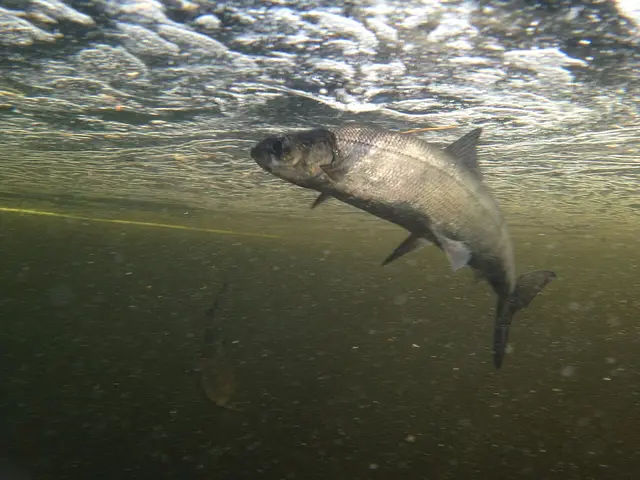
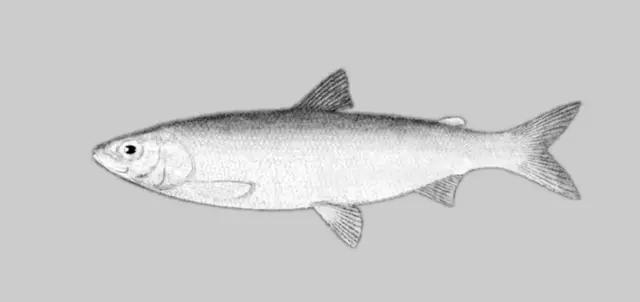
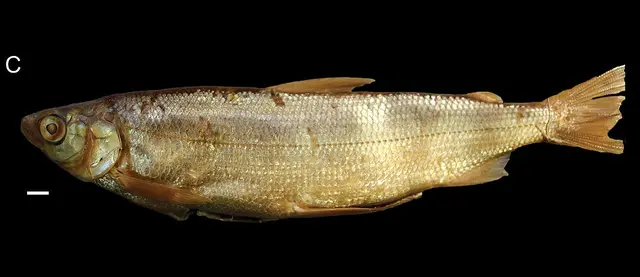
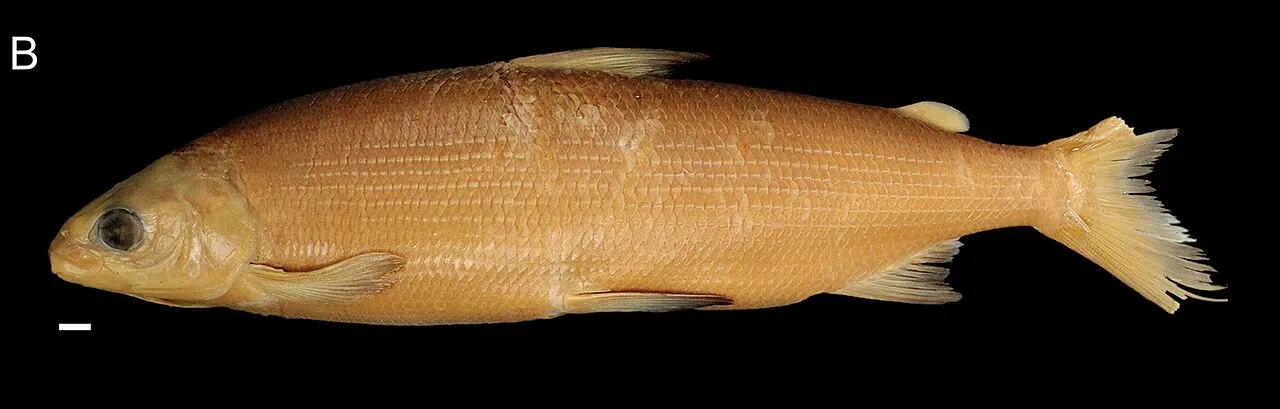
It's a whitefish of the genus Coregonus, with a herring-like body covered in small silvery scales and a small adipose fin. It reportedly has fewer, shorter gill rakers (18 to 27) than the two common Lake Constance whitefish, the Blaufelchen and the Gangfisch, which have more than 28.
Telling the lake's whitefish apart isn't easy. Maurice Kottelat described this one as a species in 1997, after it had been treated as a form of Coregonus nasus. Today DNA barcoding can't reliably separate it from its neighbours, some researchers place it in the Coregonus lavaretus complex, and it is thought to be only a few thousand years old, having arisen since the last ice age.
Where it lives
It exists nowhere else but Lake Constance, where it occurs in both the upper and lower basins. The IUCN counts a single location and a single subpopulation, with an area of occupancy of about 536 square kilometres and an extent of occurrence of about 1,137 square kilometres.
The fish stays near the bottom in the shallower parts of the lake. The Blaufelchen lives in open water and the Gangfisch nearer the shore, so the three share the lake by depth and food.
Pins are Wikidata “endemic to” fields. Orange dots, when present, are GBIF occurrence tiles — survey bias included.
How it lives
Adults reportedly feed mainly on animals that live on the lake bed, especially mussels and snails. The spawning season and spawning sites aren't well described in the sources available.
It is much rarer than the Blaufelchen and the Gangfisch and plays no role in the commercial fishery, which is built on those two.
Why it is in trouble
The sand whitefish suffered in the 1970s and 1980s, when nutrient pollution caused eutrophication and oxygen problems in Lake Constance. Unlike the open-water whitefish, it never seems to have returned to its former abundance, and experts don't know why. Germany's 2023 Red List rates it Endangered, calls it extremely rare, and judges the recent trend stable at a very low level after a moderate long-term decline.
The IUCN's 2024 assessment lists ongoing threats from habitat shifting and alteration, introduced genetic material, and several entries that name particular species. Hybridisation with the Gangfisch is a concern, and one German source suggests it may have occurred during a breeding programme that ended in 2004, though genetics hasn't confirmed it. Sewage and nutrient loads are listed as past threats unlikely to return. The IUCN gives the population trend as unknown, with no population size, and records a continuing decline in area.
What is being done
The 2024 assessment records a recovery plan and a harvest management plan, with conservation sites identified over the whole range. It also notes that no systematic monitoring scheme is in place. German experts say the species hasn't been bred artificially for many years, so it has no hatchery support like the Blaufelchen and Gangfisch.
Sources
Written for this catalog in our own words from the sources below, checked against them on 12 November 2026. Population figures are estimates and carry the year they were made. Status and assessment year: IUCN. 2026. The IUCN Red List of Threatened Species. Version 2026-1. iucnredlist.org.