Critically Endangered
Riedling
Coregonus danneri
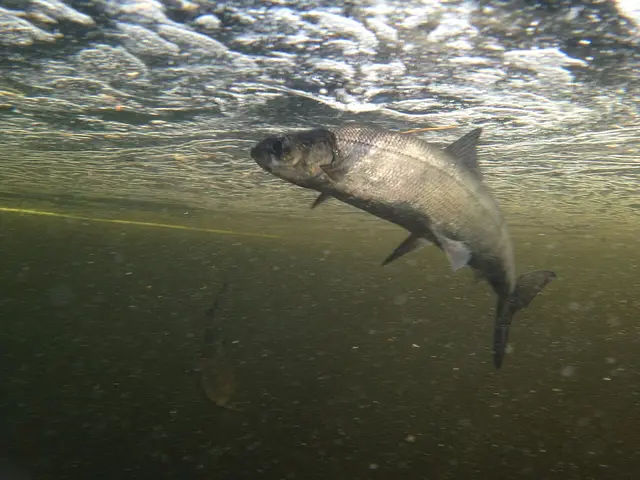
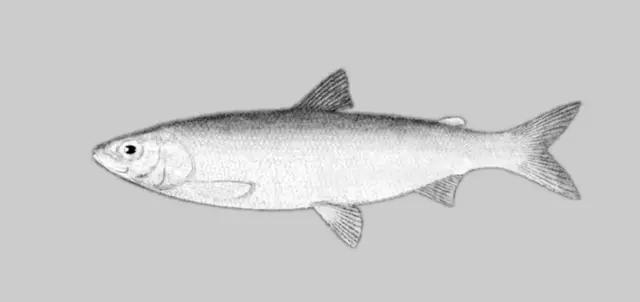
The Riedling (Coregonus danneri) is a small, deep-living whitefish found nowhere except Lake Traunsee in the Austrian Salzkammergut. The IUCN Red List rated it Critically Endangered in 2024, with a decreasing population confined to a single lake of about 24 square kilometres.
How to recognise it
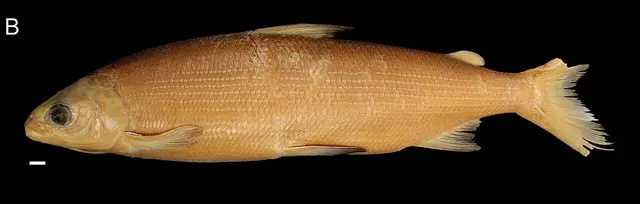
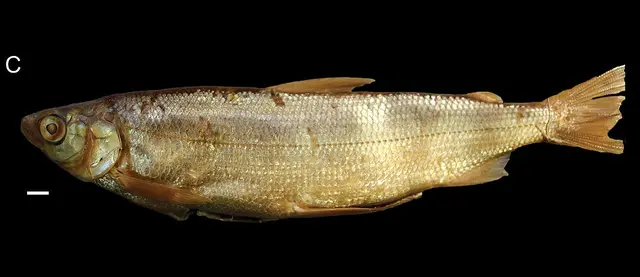
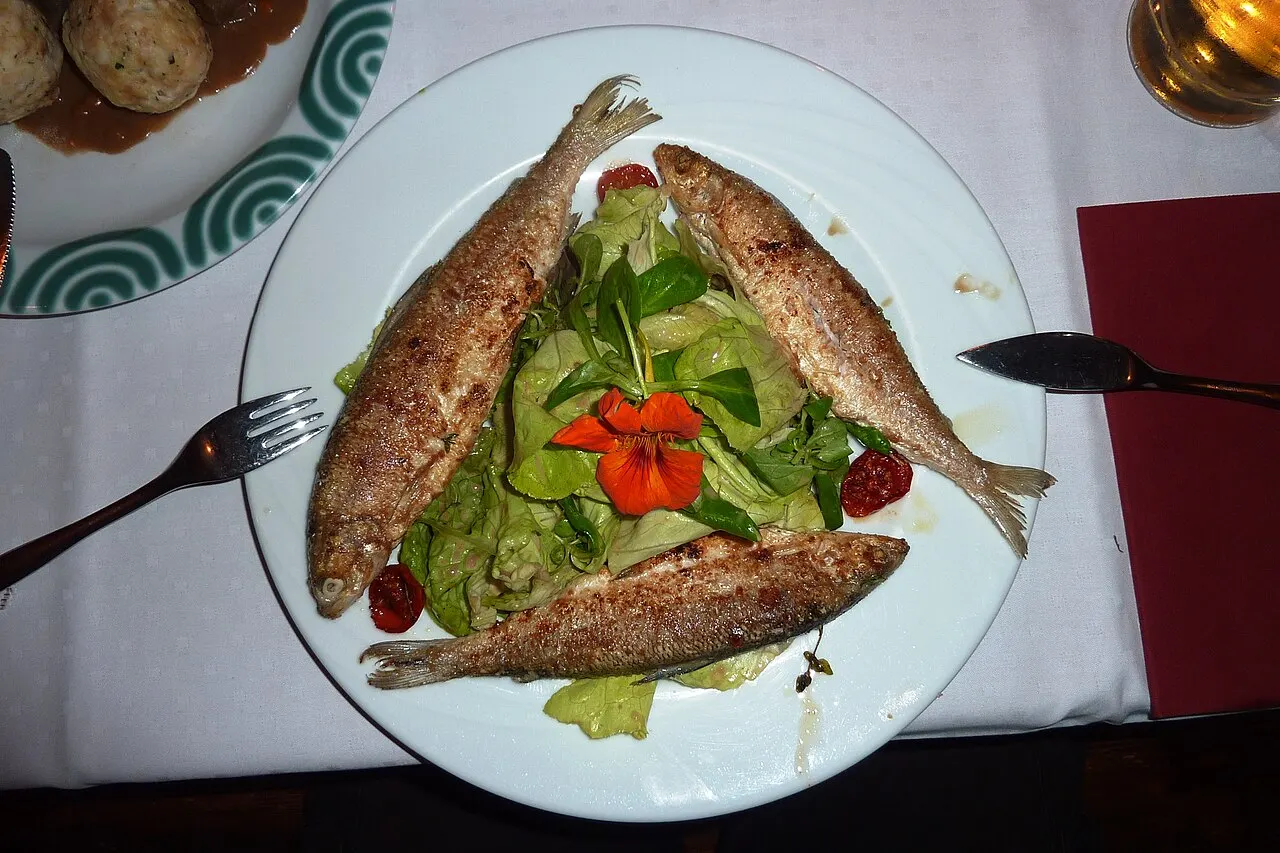
The Riedling is the slimmer, smaller cousin of the Reinanke, the larger whitefish of the Salzkammergut lakes. It has bigger eyes, a blunter snout, brownish scales and yellowish to white fins. It grows to about 22 cm standard length, and the oldest recorded age is 6 years.
It was described in 1908 by Vogt, with Traunsee as the type locality. The original specimens were lost in the Second World War. Austrian government sources describe it as a subspecies of the Reinanke, while the IUCN and the Catalog of Fishes treat it as a valid species. It is named for H. Danner, a fisheries inspector from Linz who collected the first specimen.
Where it lives
The IUCN records a single location, Lake Traunsee, and lists Austria as the only country. It estimates the area the fish occupies at 24 square kilometres. It lives in open freshwater, usually at depths of 40 to 60 m, noticeably deeper than the Reinanke. It forms year-round schools and isn't a migrant.
Pins are Wikidata “endemic to” fields. Orange dots, when present, are GBIF occurrence tiles — survey bias included.
How it lives
Riedlinge first spawn at about 2 years old. Spawning runs close to shore from mid-October or November to March, depending on the source.
Why it is in trouble
The IUCN assessment ties the Riedling's decline to a mix of pressures, and the cause of past decline is not well understood. Using an index of abundance, it records a past reduction of about 60 percent. Sewage polluted the lake in the past and is not expected to return. Four fish species, among them rainbow trout, zander, European eel and the maraena whitefish (Coregonus maraena), are listed as ongoing threats. The assessment also lists other ecosystem changes, future shifts in habitat, and small-scale fishing for food.
No recent count of the population is available.
What is being done
The IUCN assessment records no recovery plan, no protected area and no systematic monitoring scheme, and says research is needed on its numbers, ecology, threats and possible actions. It does note that a harvest management plan is in place. Austrian government sources describe the Riedling as endangered in Austria.
Sources
Written for this catalog in our own words from the sources below, checked against them on 12 November 2026. Population figures are estimates and carry the year they were made. Status and assessment year: IUCN. 2026. The IUCN Red List of Threatened Species. Version 2026-1. iucnredlist.org.