Critically Endangered
Lowrelief Lettuce Coral
Agaricia humilis
The lowrelief lettuce coral (Agaricia humilis) is a plate-forming stony coral of reefs across the Caribbean and western Atlantic. The IUCN rated it Critically Endangered in 2022 (criterion A3c), with a decreasing population. It looks a lot like its commoner relative, the lettuce coral Agaricia agaricites.
How to recognise it
Agaricia humilis belongs to the Agariciidae, a family of stony corals that includes the plating lettuce corals. It was described by A. E. Verrill in 1901.
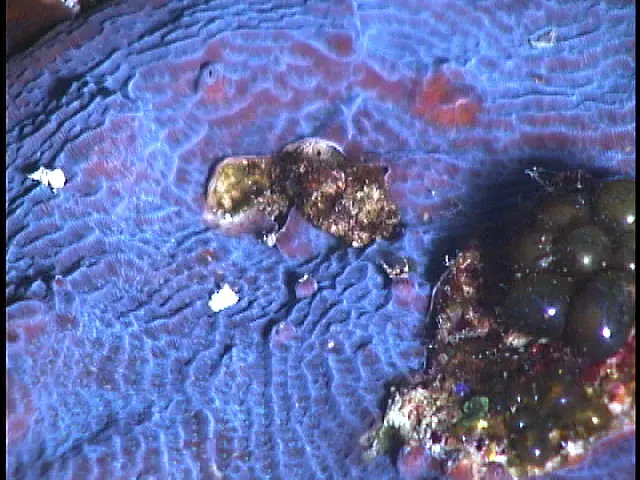
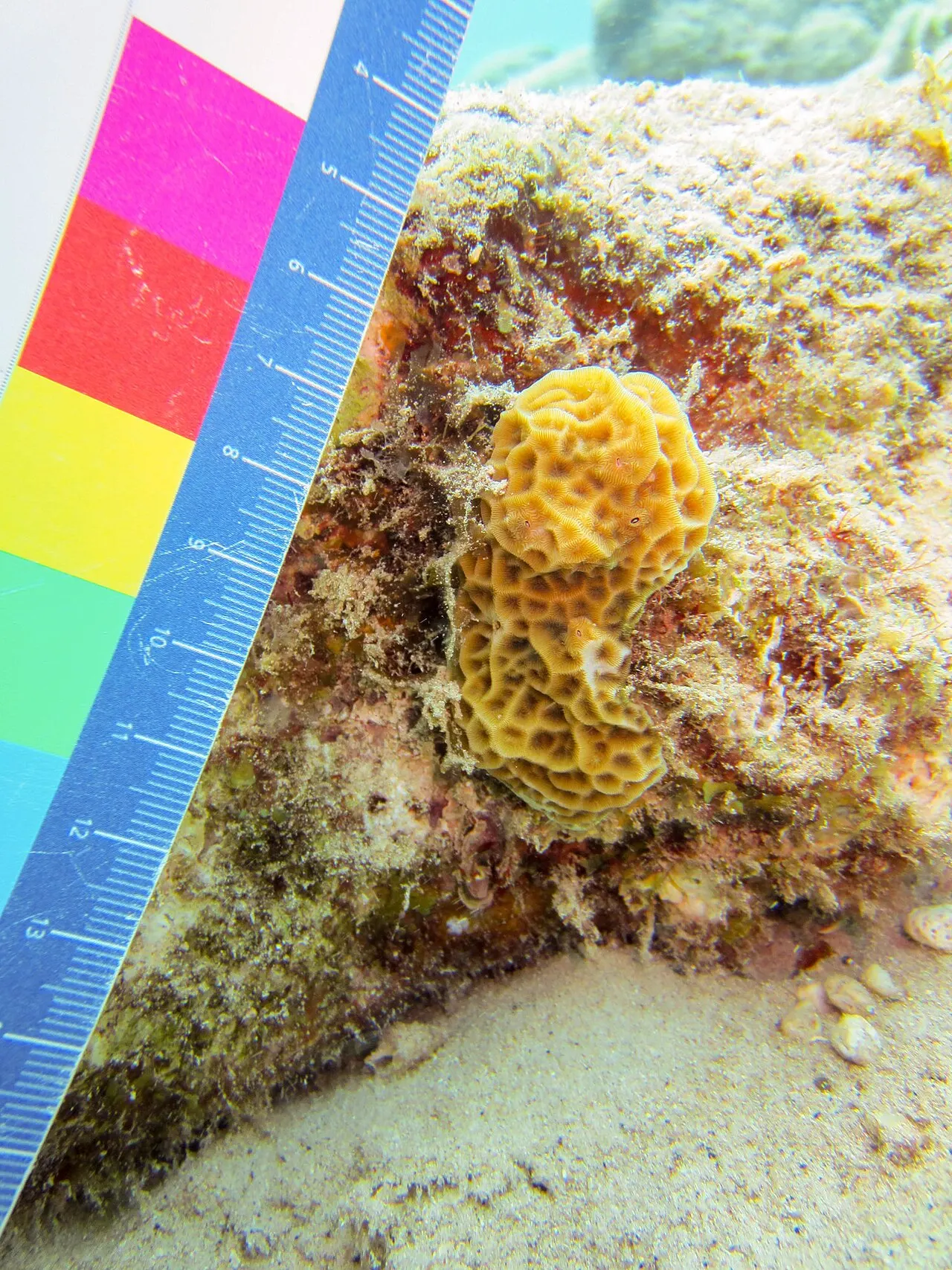
It is easy to confuse with Agaricia agaricites. A reef-aquarium guide separates the two by the ridges on the surface: pointed ridges that turn sharply in humilis, flowing squiggles in agaricites. Some scientists have suggested humilis is just the juvenile form of agaricites. A 2013 genetic study on Curaçao, however, resolved the two as separate lineages within the same shallow-water group of corals.
Where it lives
The IUCN assessment records the species from the Flower Garden Banks in the northwestern Gulf of Mexico, Florida and the Bahamas south through the Caribbean to Trinidad and Tobago. It also occurs on the coast of Brazil, from Maranhão to Espírito Santo, including offshore islands. Its structured range list names around 40 countries and territories.
The assessment gives a depth range of 5 to 23 metres and describes fore reef, channels and deep lagoons. The 2013 Curaçao study found it to be a shallow-water specialist, largely confined to the reef terrace at 2 to 10 metres and the most dominant agariciid at the shallowest depths sampled. The two sources overlap but differ at the edges, so treat the depth limits as approximate.
Pins are Wikidata “endemic to” fields. Orange dots, when present, are GBIF occurrence tiles — survey bias included.
How it lives
The IUCN calls the species common in parts of its range but less abundant than Agaricia agaricites. In Brazil it is somewhat rare and usually covers little of the reef. The assessment says it has a short lifespan there but high recruitment, and that young colonies are prone to being eaten by a fireworm.
Brooding, where larvae develop inside the parent before release, is described for the Agaricia genus, and brooders supply many of the new coral recruits on Caribbean reefs. That comes from the 2013 study's treatment of the genus, not from work on this species alone.
The IUCN uses a generation length of 10 years. Its entry says the population is not severely fragmented, but that the area it occupies is still shrinking.
Why it is in trouble
The Critically Endangered rating rests on modelling rather than a colony count. Using global coral cover monitoring data, the IUCN infers a decline of about 26 percent since 1989. It then projects a decline of at least 80 percent by 2050, based on when reefs are expected to suffer severe bleaching every year, given the coral's depth range and sensitivity to bleaching.
The assessment also reports white plague disease killing colonies in this species, high deaths in intense bleaching events in Puerto Rico, the US Virgin Islands and the eastern Caribbean, and a 203-fold fall in larval release near coastal development.
Its structured threat list adds storms and flooding, temperature extremes, soil erosion and sediment, housing, commercial and industrial development, tourism, shipping lanes and small-scale harvest of reef life.
For wider context, a 2024 PLoS One study reassessed all 85 reef-building coral species of the Atlantic and put 26 in the Critically Endangered category, using modelled coral cover loss from 1989 to 2019 and projected severe bleaching from 2020 to 2050. Climate change, disease and pollution were the drivers it named.
What is being done
The species occurs in at least one protected area, including Florida Keys National Marine Sanctuary, Biscayne National Park, Hol Chan Marine Reserve in Belize and Exuma Cays Land and Sea Park in the Bahamas. All corals are on CITES Appendix II, though the IUCN reports practically no international trade in this species.
The assessment lists site protection and management, habitat restoration, species recovery work, captive breeding and a genome resource bank among actions relevant to it, and recommends more research on abundance, trends and threats. It does not describe a dedicated recovery programme for this particular coral.
Sources
Written for this catalog in our own words from the sources below, checked against them on 12 November 2026. Population figures are estimates and carry the year they were made. Status and assessment year: IUCN. 2026. The IUCN Red List of Threatened Species. Version 2026-1. iucnredlist.org.