Critically Endangered
Rough Cactus Coral
Mycetophyllia ferox
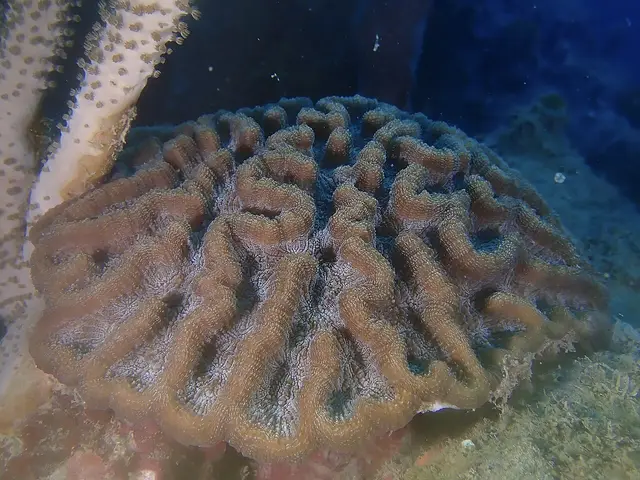
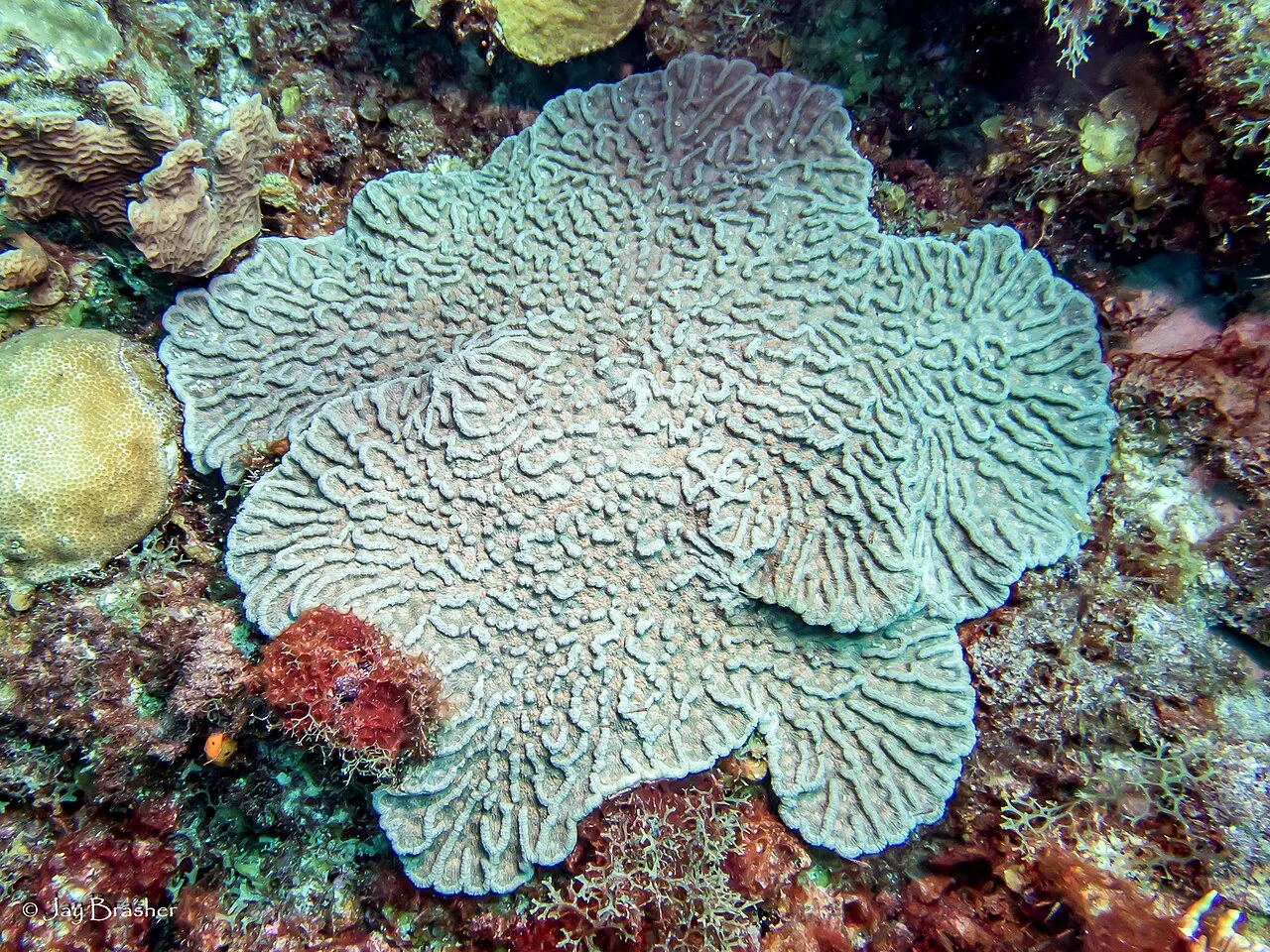
The rough cactus coral (Mycetophyllia ferox) is a plate-forming stony coral of Caribbean reefs, usually grey or brown, with ridges and winding valleys across its surface. It's uncommon wherever it occurs. The IUCN Red List lists it as Critically Endangered (assessed 2022), mainly because of projected habitat decline.
How to recognise it
Rough cactus coral grows as thin, loosely attached plates. The surface is marked by narrow, slightly wavy valleys with walls that often contrast in colour with the valley floors. Grey and brown are the usual colours, though reddish and green colonies occur. The polyp centres tend to sit in single rows.
Colonies are small. NOAA gives a maximum of about 50 cm, while a reef guide lists 30 to 60 cm. A look-alike, the low-ridge cactus coral (M. danaana), has longer, wider and more widely spaced valleys.
Where it lives
The species lives on reefs in the Caribbean Sea, the southern Gulf of Mexico, southern Florida and the Bahamas. The Red List records it from dozens of countries and territories, from Mexico and Central America through the Greater and Lesser Antilles to Colombia and Venezuela, and it also occurs in the United States.
Depth ranges vary by source. The IUCN gives about 5 to 40 m, NOAA says 5 to 90 m with most colonies between 10 and 20 m, and one reef guide lists 1 to 37 m.
Pins are Wikidata “endemic to” fields. Orange dots, when present, are GBIF occurrence tiles — survey bias included.
How it lives
Like other reef-building corals, it gets food from algae living inside its tissue and by catching plankton with its tentacles. It's hermaphroditic: each colony makes eggs and sperm. Sperm is released into the water, eggs are fertilised inside the colony, and the colony broods them until they become larvae that settle on hard surfaces. Colonies are reported to mature at about 6 cm across.
NOAA describes recruitment as very low, which limits how well the species can recover from losses. It also says colonies can live for hundreds of years.
Why it is in trouble
The coral has never been common, and it's so rarely encountered that its population trend is hard to measure. The IUCN assessment estimates a past population reduction of 26 percent and projects a reduction of about 80 percent, based on expected decline in habitat quality, which is the basis for the Critically Endangered listing.
NOAA names ocean warming and acidification, disease, habitat degradation, land-based pollution, unsustainable fishing and small population size as threats. The Red List threat titles also include temperature extremes, storms, sedimentation, coastal housing and commercial development, tourism and recreation, and shipping lanes. Bleaching, when corals lose their algae, can lead to starvation or more disease.
Stony coral tissue loss disease first appeared off Miami in 2014 and spread through Florida and across the Caribbean by 2020. Cactus corals (Mycetophyllia) are among the 22 species on NOAA's affected list, though susceptibility varies by coral species, place and season.
What is being done
The species is listed as threatened under the US Endangered Species Act and on CITES Appendix II. NOAA designated critical habitat for it in 2023, effective 8 September that year, in waters off Florida, Puerto Rico, the US Virgin Islands and Navassa Island. It occurs in at least one protected area.
NOAA lists nurseries that grow fragments for planting on reefs, gene banking, rescue of colonies broken by ship groundings or storms, and research on rearing larvae and cryopreserving sperm among the conservation actions for the species.
Sources
Written for this catalog in our own words from the sources below, checked against them on 12 November 2026. Population figures are estimates and carry the year they were made. Status and assessment year: IUCN. 2026. The IUCN Red List of Threatened Species. Version 2026-1. iucnredlist.org.