Cameroon
8 catalog pins
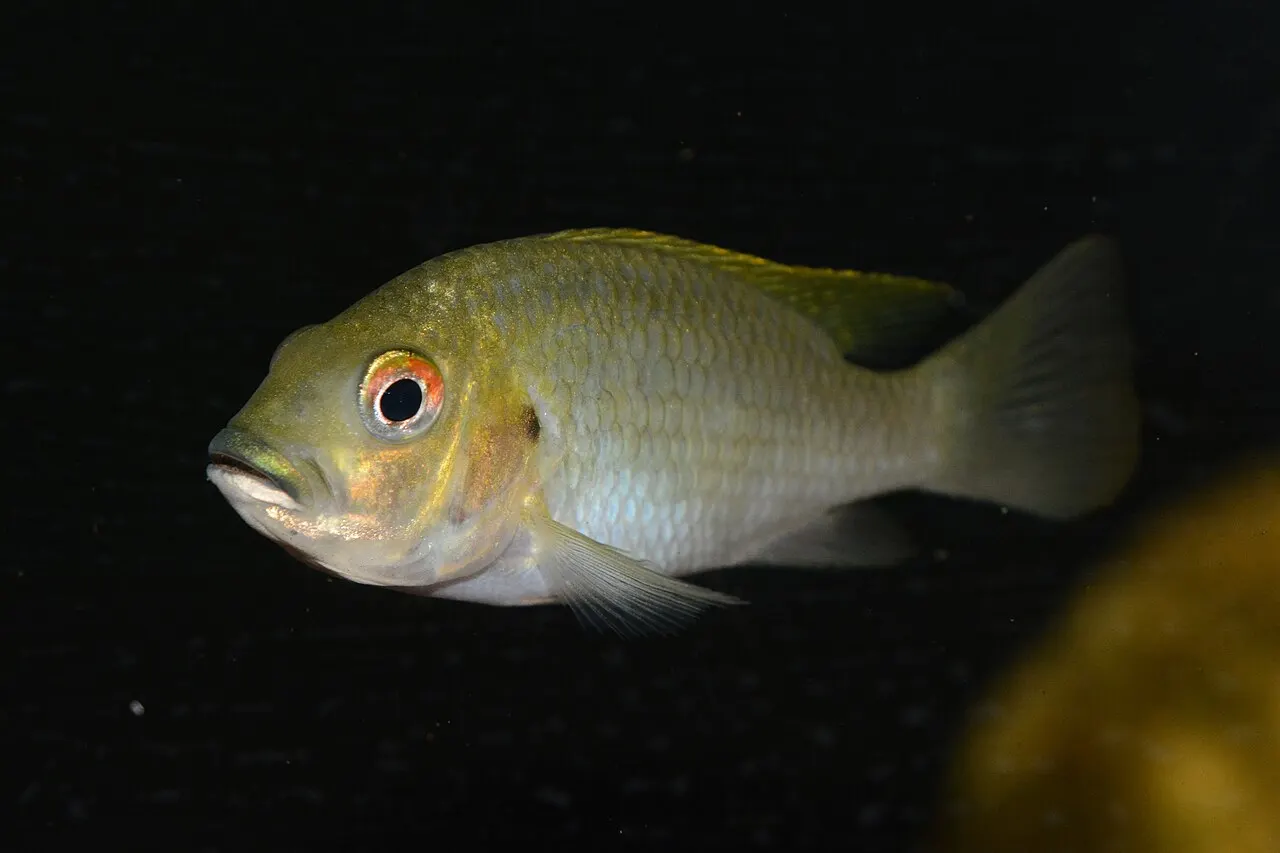
8 animals in this catalog carry a structured country pin for Cameroon. That is a filing fact, not a claim that the crisis is only here.
The photograph is one of those animals: Tilapia flava. Open a dossier for the text, the status, and the map. Use the world map to jump to another country. Confirm official distributions on the Red List.
Cameroon sits where West and Central Africa meet. Mount Cameroon, at 4,070 m, rises in the southwest near the Nigerian border, and the Cameroonian Highlands forests cover roughly 38,000 km2 across western Cameroon and eastern Nigeria above 900 m. The country is described as one of the wettest parts of Africa and has Africa's second-highest concentration of biodiversity, according to a wildlife overview.
That overview records about 8,260 plant species, 409 mammals, 250 reptiles and 200 amphibians, and gives conflicting bird counts of 690 and more than 900. The catalog's list for Cameroon is dominated by freshwater fish and crabs rather than the large mammals the country is known for.
Where the pressure comes from
The CBD country profile names ecosystem degradation, itinerant slash-and-burn farming, poaching of large mammals and forest conversion as direct drivers, with population growth, urbanization, poverty and weak financing behind them. It also notes 494 mining and oil titles issued in 2011.
In the Bamenda-Banso Highlands, forest loss has passed 50% since the 1960s, attributed to conversion to agriculture. The same overview lists firewood demand, grassland fires, hydro-electric schemes and bauxite mining as national threats, plus hunting for ivory and skins in many parks. Forest covered about 43% of land in 2020, down from 22.5 million hectares in 1990 to about 20.3 million.
What is being done
Cameroon's first protected areas date to 1932 under French colonial rule. Korup became a national park in 1986 (it had been a forest reserve since 1937). It covers 1,260 km2 and holds 161 mammal species. After the Korup Project ended in 2003, park management was left with little or no financial and logistical support, and a German-Cameroonian cooperation programme for natural resource management in the southwest dates from 2006.
The CBD profile says protected areas covered 16% of the country (7.4 million hectares) around 2011, an increase of 8% since 2006 that came from creating 10 new national parks. Eight protected areas had management plans. Lobeke National Park is one part of the Sangha River Tri-national Protected Area (2.8 million hectares across three countries, WWF-backed). Ape Action Africa, founded in 1996, runs a sanctuary for gorillas and chimpanzees. The national biodiversity strategy was revised in 2012, with implementation to 2020.
Reading the catalog for Cameroon
The catalog's list for Cameroon is short: 8 animals, 1 Critically Endangered and 7 Endangered. Four of the 8 have no class recorded in the catalog, and the families involved (Cichlidae, Nothobranchiidae) are fish. That fits the CBD's count of 112 threatened fish in Cameroon (IUCN, 2013). A short list does not mean few threatened species; adding up the CBD profile's 2013 counts by group gives about 260.
Sources for this section
- CBD country profile, Cameroon: protected area share, drivers, mining titles, NBSAP, threatened species counts 2013
- Wildlife of Cameroon (Wikipedia): species counts, Mount Cameroon, highlands, forest cover, threats, Lobeke, Ape Action Africa
- Korup National Park (Wikipedia): area, 1986 park, 1937 reserve, mammals, funding gap after 2003
What the catalog records for Cameroon
The catalog has 8 animals with a country pin for Cameroon: 1 Critically Endangered and 7 Endangered. By GBIF class the largest groups are unknown (4), Malacostraca (2), Testudines (1), Squamata (1). The families with the most records are Cichlidae (2), Nothobranchiidae (2), Potamonautidae (2). A pin means a structured source (Wikidata or a GBIF match) places the animal in Cameroon; it does not say the animal lives only there.
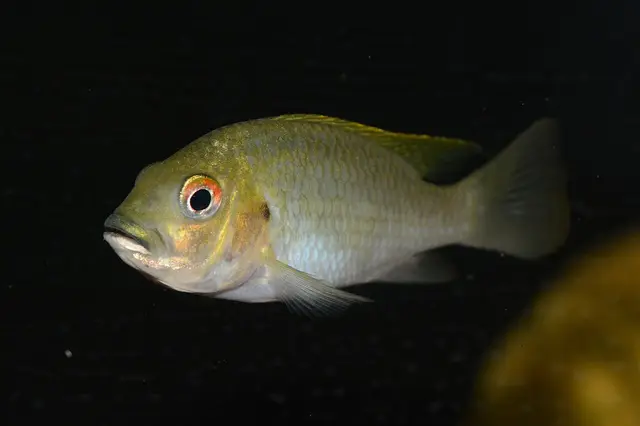 CR
Tilapia flava
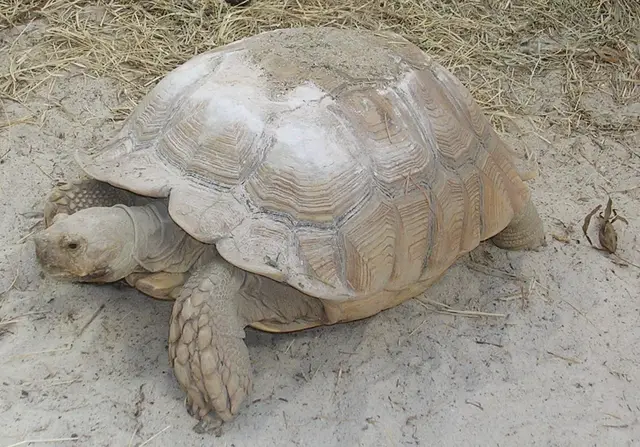 EN
African spurred tortoise
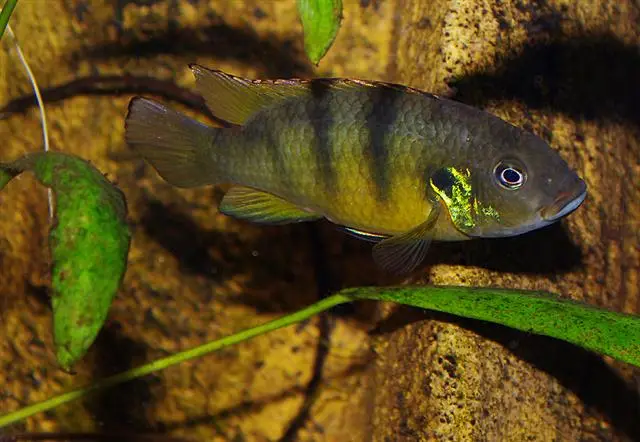 EN
Benitochromis ufermanni
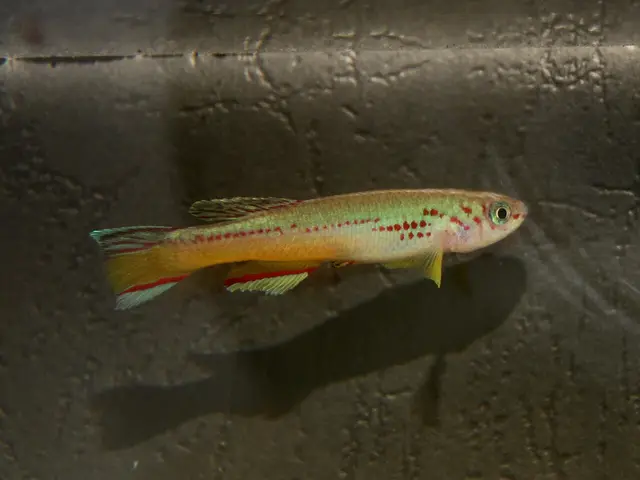 EN
Amiet's Lyretail
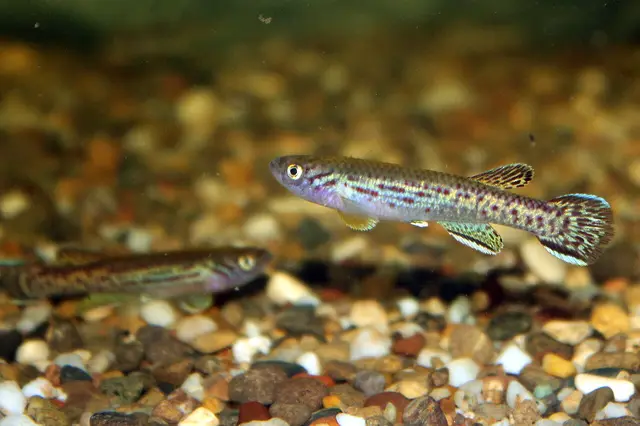 EN
Marbled Lyretail
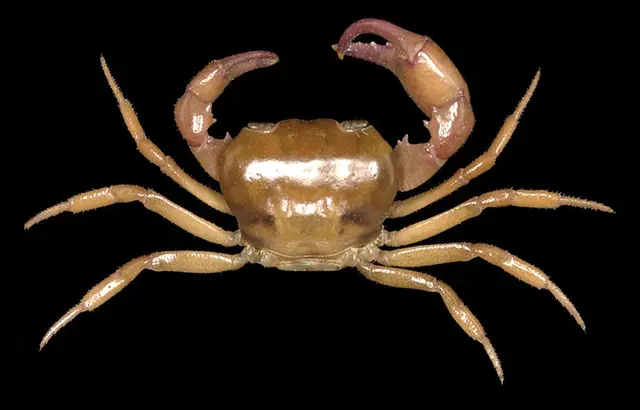 EN
Louisea balssi
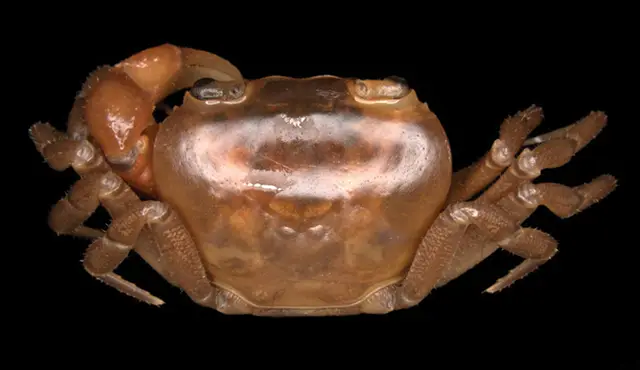 EN
Louisea edeaensis
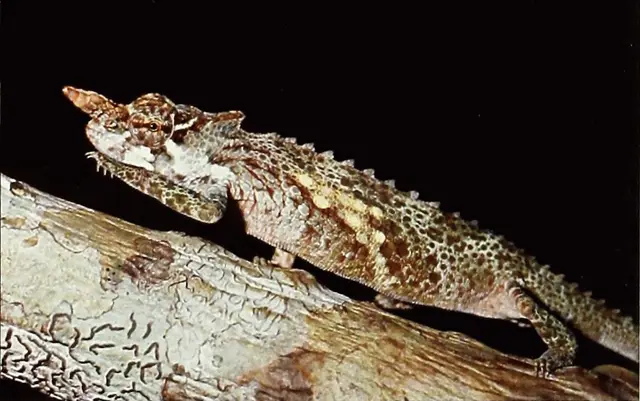 EN
Pfeffer’s Two-horned Chameleon
Total pins: 8.
Quick answers
- Do all these animals live only in Cameroon?
- No. A pin means a Wikidata place field resolved here. Official ranges can be wider.
- Is this a government list?
- No. It is a slice of this catalog.