Endangered
Marbled Lyretail
Fundulopanchax marmoratus
The marbled lyretail (Fundulopanchax marmoratus) is a small killifish known only from coastal rainforest around Mbonge in southwestern Cameroon. The IUCN Red List rated it Endangered in 2010, because of its tiny range and declining habitat quality. Unlike many killifish it lives in permanent water, and aquarium keepers have long kept it.
How to recognise it
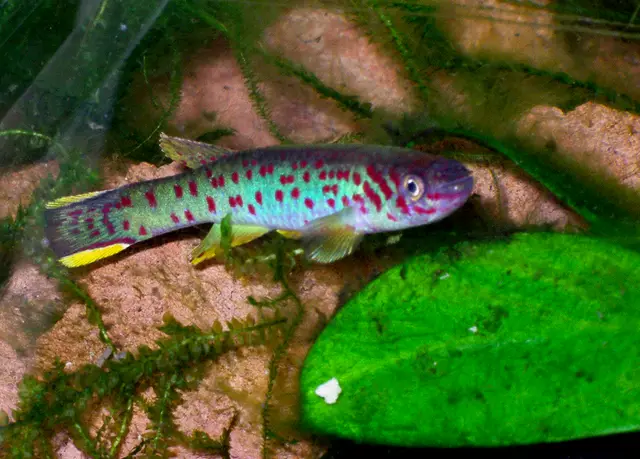
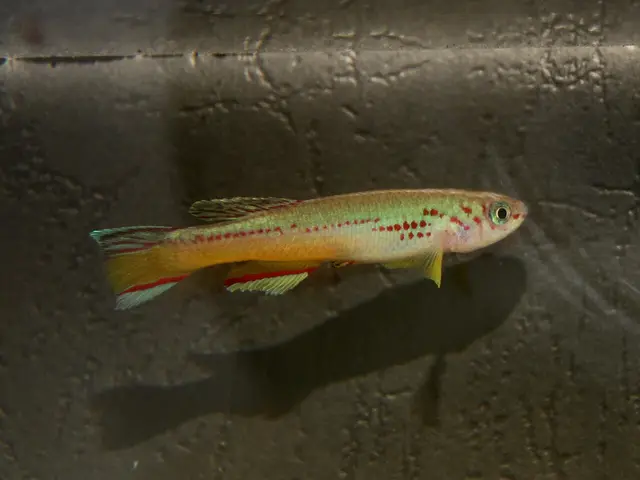
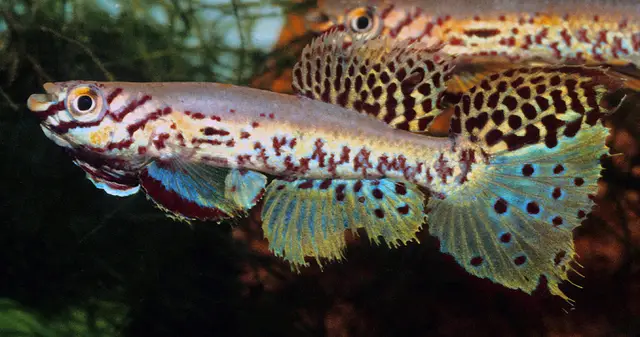
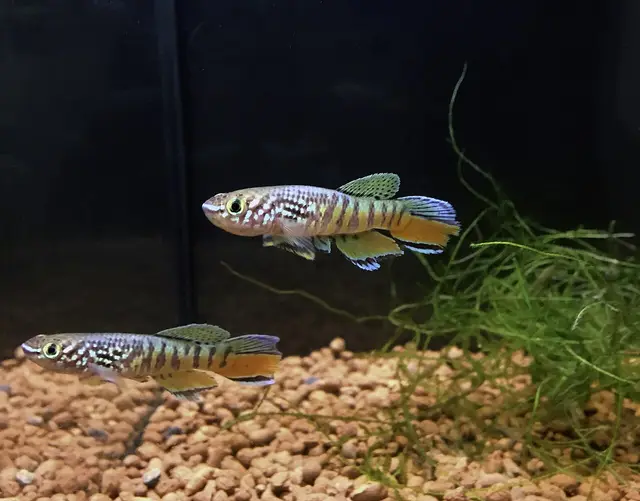
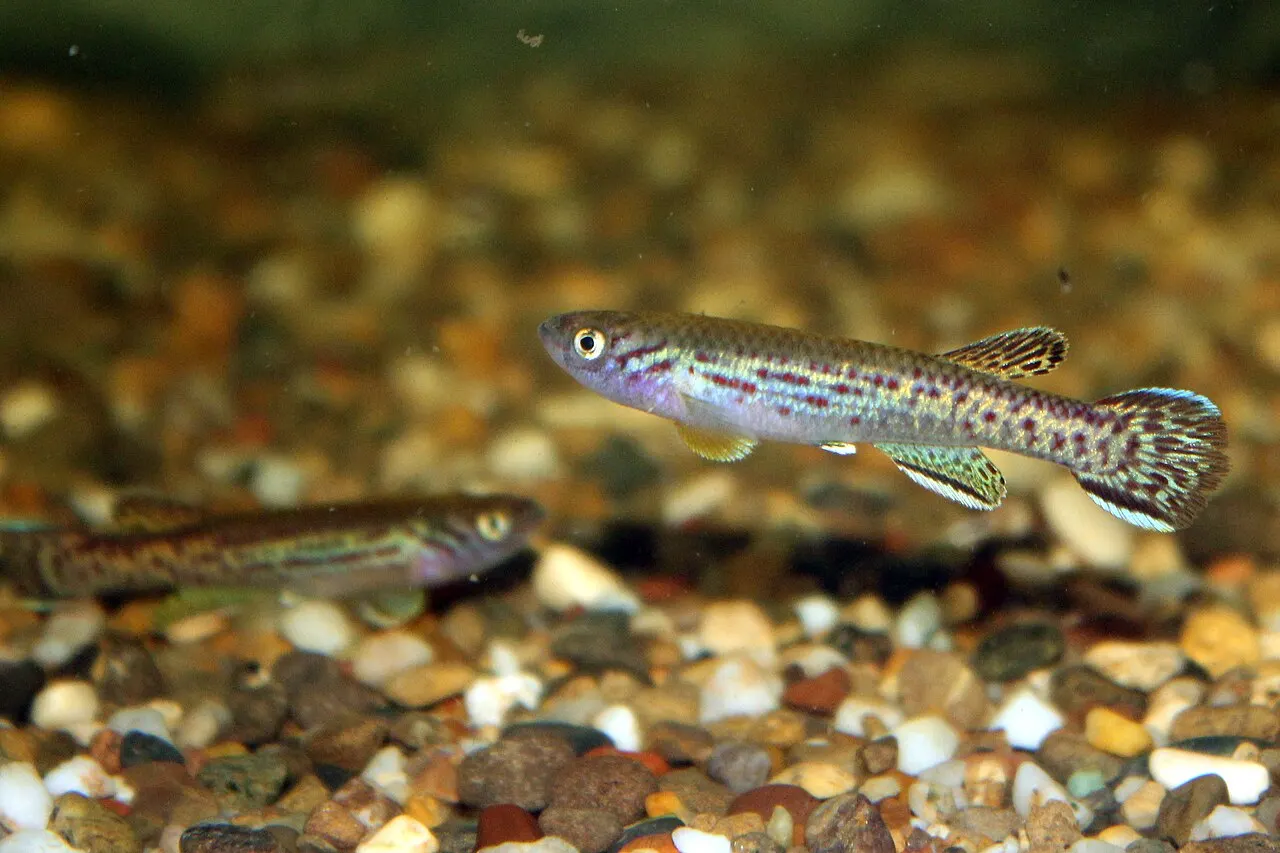
It's a small fish, reaching about 6 cm. Males are more brightly coloured than females, and the marbled patterning that gives the species its name is a feature of the fish.
Radda described it in 1973 and the name is now written with the authority in parentheses, which means it was first placed in a different genus. Older books and hobby literature may therefore list it under another name.
Where it lives
The marbled lyretail is endemic to Cameroon, where it is known only from the area around Mbonge in the south-west. The IUCN lists no other country. It lives in swamps, swampy stretches of brooks and small streams in coastal rainforest. The assessment's habitat list covers marshes and bogs, plus both seasonal and permanent streams.
Unlike annual killifish, which live in pools that dry out each year and survive as buried eggs, it isn't seasonal. It lives in permanent water, and its eggs reportedly don't need a dry spell before they hatch.
Pins are Wikidata “endemic to” fields. Orange dots, when present, are GBIF occurrence tiles — survey bias included.
How it lives
Almost nothing has been published on how it behaves in its home streams. What's recorded comes from aquarium keepers, so treat it as a guide to tank life rather than wild biology.
In aquaria it prefers small live or frozen foods such as daphnia and bloodworm, though it usually accepts good flake. Keepers suggest about 21 to 24 C (one reference gives 21 to 23 C), soft to moderately hard water and a pH of 6 to 7. Eggs reportedly hatch in 15 to 17 days, depending on temperature.
Why it is in trouble
The 2010 assessment, under criteria B1ab(iii)+2ab(iii), rates it Endangered because its range is so small and its habitat quality is declining. It lists soil erosion and sedimentation as an ongoing threat, alongside two further entries of unrecorded type and scale, all scored as low impact. The population trend is unknown, the population isn't considered severely fragmented, and the species occurs in at least one protected area.
The surrounding region is under pressure. A 2019 study in Nature Communications by Ordway and colleagues found that much recent oil palm expansion in southwest Cameroon, and the forest clearing that came with it, happened outside large company concessions and was more likely near small informal mills. The study doesn't mention this fish, and the effect on its streams hasn't been measured.
Sources
Written for this catalog in our own words from the sources below, checked against them on 12 November 2026. Population figures are estimates and carry the year they were made. Status and assessment year: IUCN. 2026. The IUCN Red List of Threatened Species. Version 2026-1. iucnredlist.org.