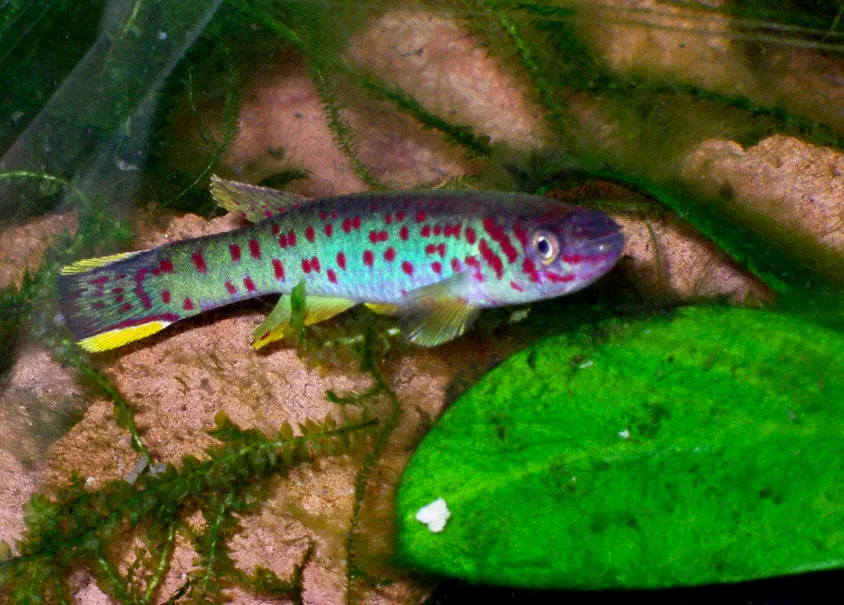
Critically Endangered
Emerald aphyosemion
Fundulopanchax scheeli
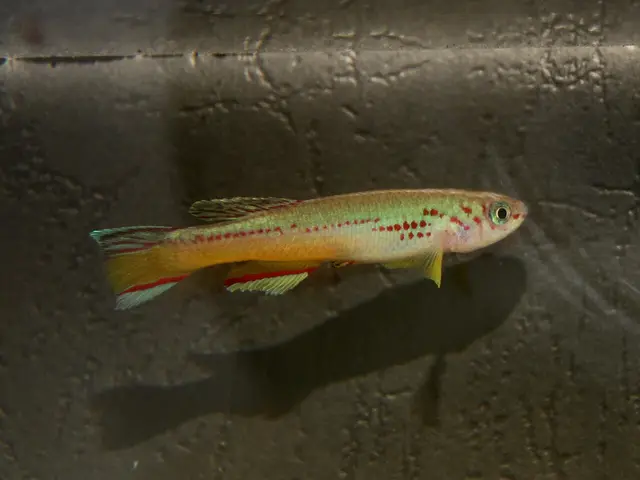
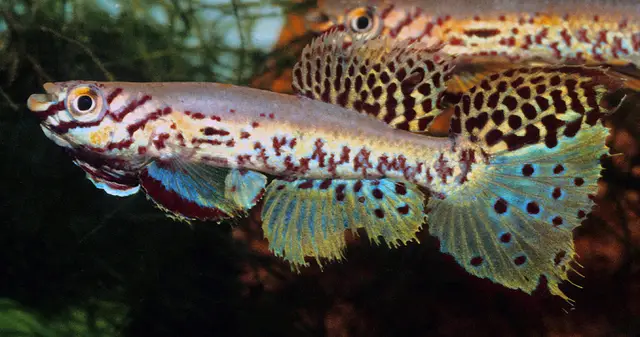
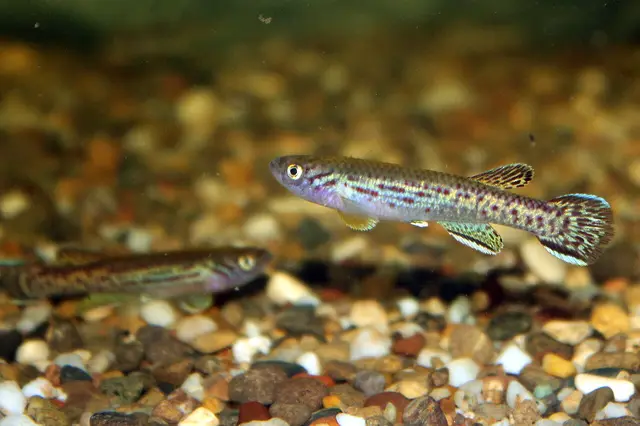
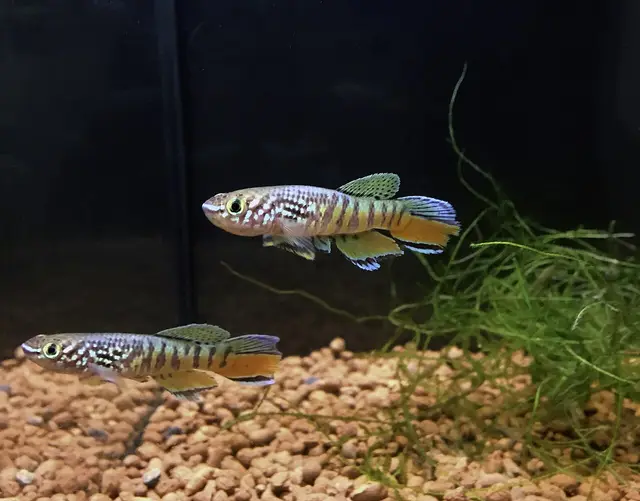
The emerald aphyosemion (Fundulopanchax scheeli) is a small killifish from coastal rainforest streams and ponds in the lower Cross River basin of Nigeria. The IUCN Red List rated it Critically Endangered in 2020 because it occupies a very small area. It is also traded and kept in home aquariums.
How to recognise it
This is a small fish, reaching about 6 cm in total length. Males are more brightly coloured than females. Radda described it in 1970, and the species name honours the Danish ichthyologist Jorgen J. Scheel (1916 to 1989).
Where it lives
The fish comes from the lower Cross River system in southeastern Nigeria, where it lives in small streams, brooks and ponds in coastal rainforest. FishBase also records it from the Ndian River in southwest Cameroon, while other sources treat it as endemic to the Cross River basin in Nigeria, so the exact range is not settled.
Its Red List listing rests on the very small area it occupies. The criterion used (B2ab(iii)) applies to species with a restricted area of occupancy and a continuing decline in habitat quality.
Pins are Wikidata “endemic to” fields. Orange dots, when present, are GBIF occurrence tiles — survey bias included.
How it lives
Unlike many killifishes, it isn't an annual species. It lives only in permanent water rather than in pools that dry out. It does best at about 22 to 26 C in slightly acidic water, around pH 6 to 7.
In aquariums it is described as very peaceful and shy, easily outcompeted by livelier fish, and an accomplished jumper that needs a tight-fitting lid. Keepers favour small live or frozen foods such as daphnia and bloodworm, and good flake is usually accepted. A dark substrate, dense planting, wood for cover and floating plants to dim the light suit it.
Why it is in trouble
The main problem is the tiny range. With the fish confined to coastal streams in one corner of Nigeria, a single pollution event or a patch of land clearance could affect a large share of the population.
Herbicides and pesticides used in agriculture, such as in rice farming, and deforestation are the threats usually cited for the species. No population size or trend has been published in the sources consulted.
What is being done
No protection or managed conservation programme aimed at this fish appears in the available sources. Hobbyists keep and breed it, and FishBase describes it as easy to maintain and traded as an aquarium fish, but aquarium stock is not the same as a coordinated plan to protect the wild streams.
Sources
Written for this catalog in our own words from the sources below, checked against them on 12 November 2026. Population figures are estimates and carry the year they were made. Status and assessment year: IUCN. 2026. The IUCN Red List of Threatened Species. Version 2026-1. iucnredlist.org.