Endangered
Kribi killi
Fundulopanchax fallax
The Kribi killi (Fundulopanchax fallax) is a small egg-laying killifish from swamps and forest streams of western Cameroon. The IUCN Red List last assessed it as Endangered in 2010. It is known from fewer than five localities, its numbers are unrecorded, and aquarists have kept it for over a century.
How to recognise it
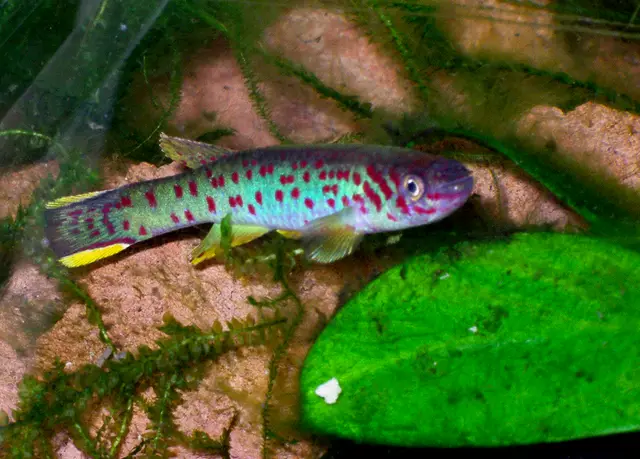
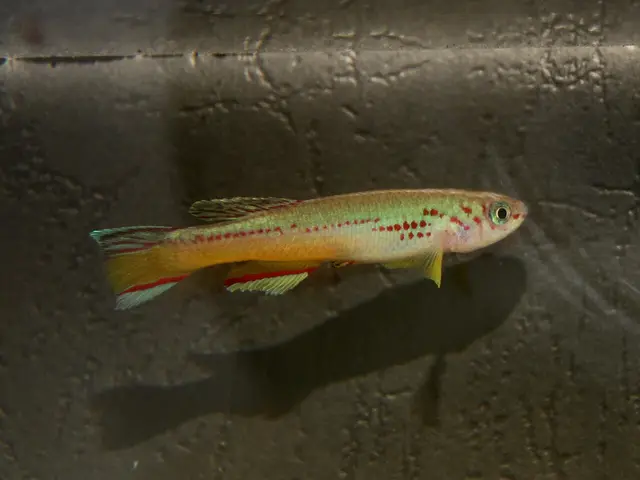
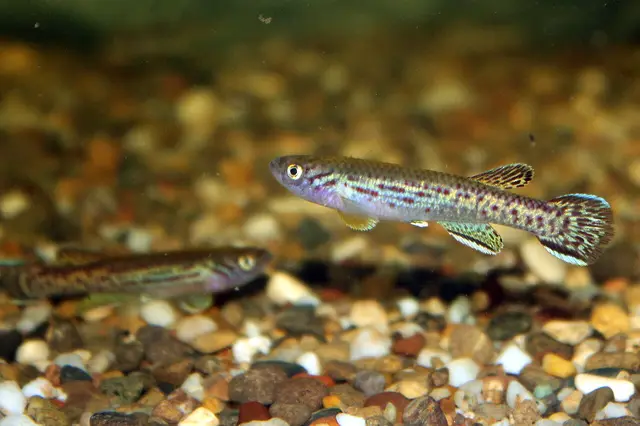
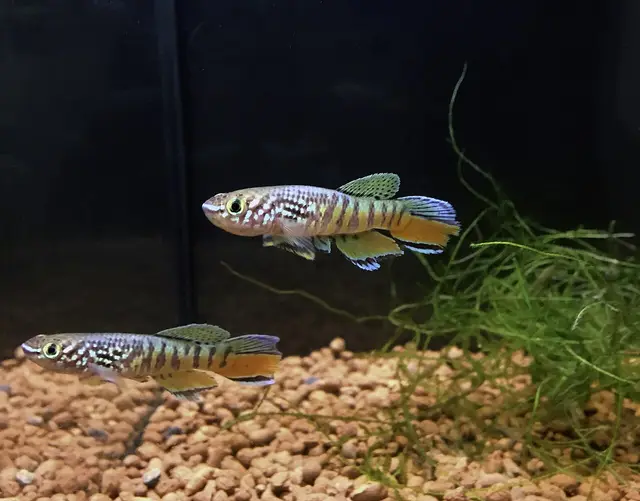
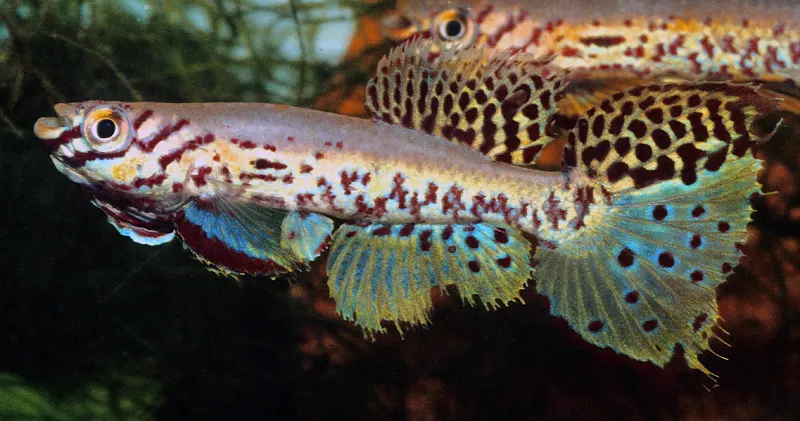
Adults reach about 8 to 9 cm in length, with sources giving slightly different maximums. Males are the showy sex. They carry longer, pointed dorsal, tail and anal fins, a deep burgundy body and dark orange fins. Females are plainer and brown.
Colour varies between populations. A general reference describes orange, blue and yellow forms at the Kribi type locality, and the fish has several scientific names, which complicates identification.
Where it lives
The IUCN gives the range as western Cameroon, from Malende in the north to the lower Lobe River area south of Kribi. The fish lives in swamps and swampy parts of brooks in the humid coastal rainforest. The IUCN lists marshes and swamps, seasonal streams and permanent streams as its habitats.
The IUCN estimates its area of occupancy at under 500 square km and the number of localities at fewer than five. The assessment states that no population information is available.
Pins are Wikidata “endemic to” fields. Orange dots, when present, are GBIF occurrence tiles — survey bias included.
How it lives
FishBase and the IUCN describe it as omnivorous and an egg-layer that spawns on the bottom, with about two months of incubation. Aquarium profiles say the fish prefers live or frozen foods. A breeding profile advises letting pairs spawn in peat, then keeping the peat damp and dark for roughly six to ten weeks.
It is a peaceful fish. Care is rated moderate to difficult in one aquarium profile and very difficult by FishBase and the IUCN. Aquarists suggest soft water of about pH 6 to 7.2 at 22 to 28 degrees C, and a small colony of two males to three or four females.
Why it is in trouble
The Red List gives the species Endangered status under criterion B2ab(iii), meaning a very small area of occupancy with a continuing decline in habitat quality. The assessment names oil palm plantations in the northern part of the range as a threat. It also names the Sunda Gorge dam on the lower Nyong River as a potential one, since construction began before the war and it is unknown whether work will resume.
The population trend is recorded as unknown. The IUCN lists no conservation measures as known.
Keeping and naming
Aquarists reportedly kept Kribi killis from 1905, long before Ahl described the species in 1935. The scientific name is not fully settled. FishBase and the IUCN accept Fundulopanchax fallax as valid. The IUCN treats Aphyosemion kribianum and F. schwoiseri as synonyms of it. FishBase notes that the Catalog of Fishes, as of 2013, treated kribianus as a valid species, and hobby sources often keep the forms separate. Which fish the common name Kribi killi covers therefore depends on the author.
Sources
Written for this catalog in our own words from the sources below, checked against them on 12 November 2026. Population figures are estimates and carry the year they were made. Status and assessment year: IUCN. 2026. The IUCN Red List of Threatened Species. Version 2026-1. iucnredlist.org.