Endangered
Pectinia lactuca
Pectinia lactuca
The lettuce coral is a plate-forming stony coral of Indo-Pacific reefs, named for the frilled, ruffled ridges that cover its colonies. It grows in shallow water from East Africa to the western Pacific. The IUCN moved it from Vulnerable to Endangered in 2024 and records a decreasing trend.
How to recognise it
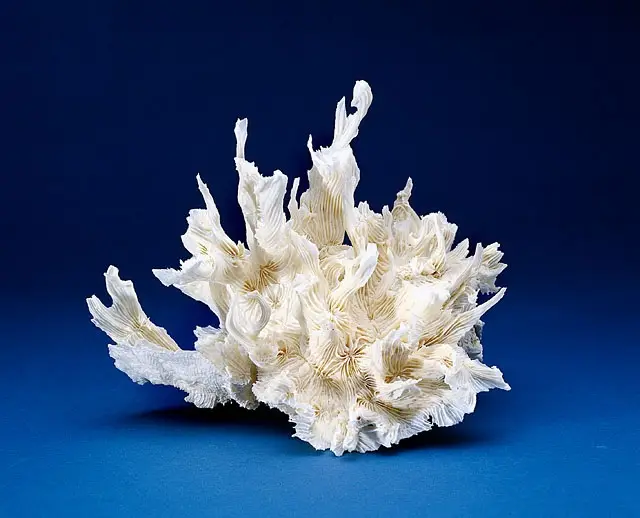
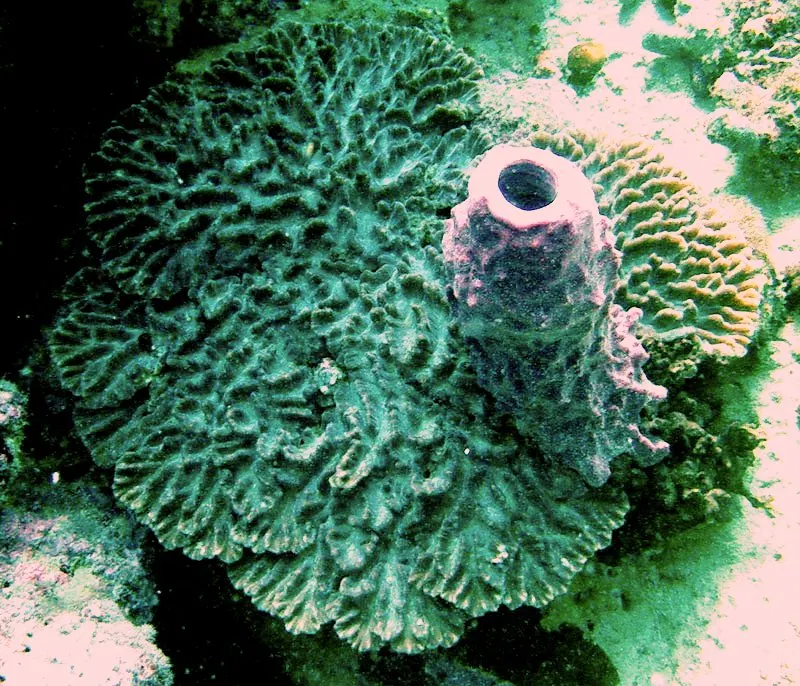
A lettuce coral grows as a wide, leafy plate. Thin, tall ridges rise from its surface and fan out into radiating valleys, which gives the folded look of a head of lettuce or cabbage. The plates can pass 1 m across, yet a colony stands only a few centimetres high.
The polyps (corallites) are widely spaced along the valleys, with fine ridges running unbroken from one to the next. The coral hosts symbiotic algae in its tissue, so it lives in sunlit water.
Where it lives
The species is spread across the tropical Indo-Pacific, and the IUCN lists around 45 countries and territories, from Kenya, Madagascar and the Comoros through the Maldives and Sri Lanka, across Southeast Asia, and east to Fiji, Samoa and Kiribati. Most records in the GBIF database come from Australia, Indonesia, New Caledonia and Japan.
It's a shallow-water coral. Reference works give a depth of 1 to 15 m, and the IUCN records it from rocky reef and coral reef down to about 54 m. It's common from just below the reef flat out to the limit of coral growth, including lower reef slopes and cloudy, silty water where many corals struggle.
Pins are Wikidata “endemic to” fields. Orange dots, when present, are GBIF occurrence tiles — survey bias included.
How it lives
Colonies are hermaphrodites. Eggs and sperm are released into the gut cavity and spawned through the mouth. The fertilised egg becomes a free-swimming larva, which drifts before settling and turning into a young polyp on the reef. The IUCN uses a generation length of 10 years for the species.
Hobbyists keep it in reef tanks, where it is described as moderate to easy, with moderate to high light and moderate flow that keeps sediment from settling on it.
Why it is in trouble
No one counts individual corals, so the 2024 assessment rests on habitat. The IUCN rates the decline as ongoing, with a projected 62% reduction in the future. It ties this to loss of reef area and quality and to disease, pollutants and other biological pressures, under criterion A3ce. The 2008 assessment had rated the species Vulnerable.
The threats the IUCN lists are all scored low on their own, but there are many of them. They include coastal housing and industry, shipping lanes, tourism and recreation, small-scale harvest, storms, soil erosion and sediment, ozone and temperature extremes. In Palau the species showed high bleaching and high estimated mortality. It is also traded internationally as a display coral.
What is being done
The whole group of stony corals is listed under CITES Appendix II, so exports need permits. The IUCN lists habitat restoration, site protection and management, captive breeding, a genome resource bank and species recovery among relevant actions, and it records the lettuce coral as occurring in at least one protected area, though it marks that as unknown.
Sources
Written for this catalog in our own words from the sources below, checked against them on 12 November 2026. Population figures are estimates and carry the year they were made. Status and assessment year: IUCN. 2026. The IUCN Red List of Threatened Species. Version 2026-1. iucnredlist.org.