Critically Endangered
Haplochromis xenostoma
Haplochromis xenostoma
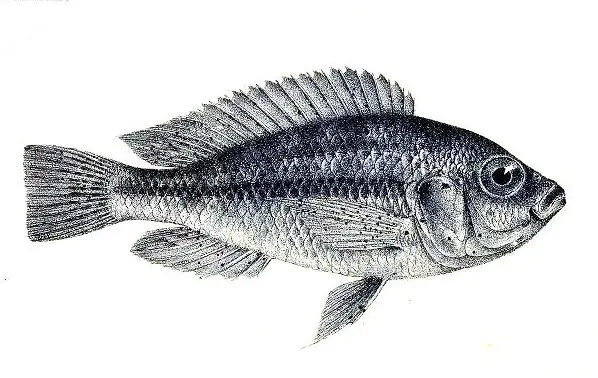
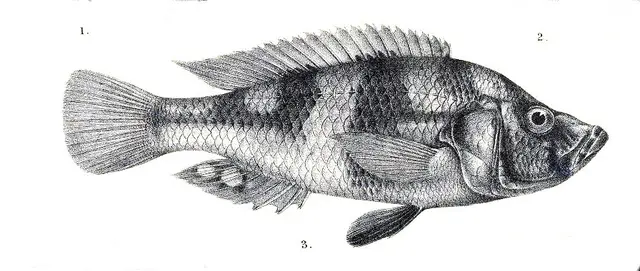
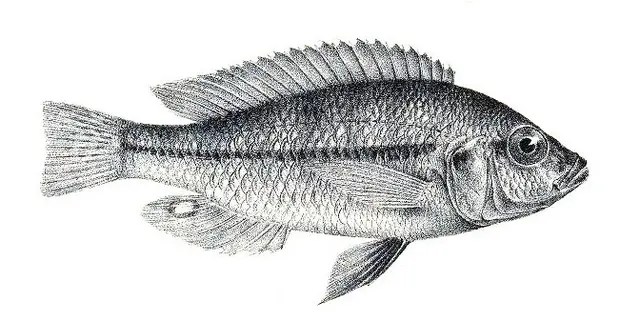
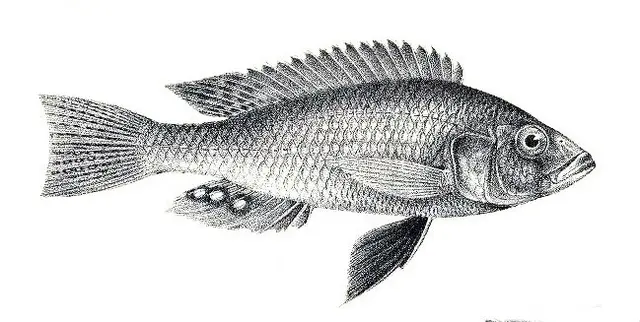
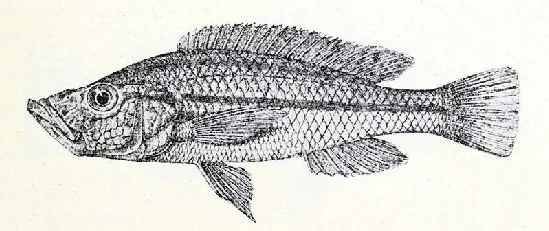
Haplochromis xenostoma is a fish-eating cichlid from Lake Victoria in East Africa, growing to about 20 centimetres. The IUCN Red List (2010) rates it Critically Endangered and possibly extinct. A database of recently extinct species gives 1983 as its last record, and it has no widely used common name.
What it is
Charles Tate Regan described this cichlid in 1922. It has also gone by the name Prognathochromis xenostoma. Haplochromis is a genus of African cichlids, and this species is one of the Lake Victoria members that feed on other fish.
The largest recorded length for this species is 20.3 centimetres (standard length, measured without the tail fin).
Where it lived
It is known only from Lake Victoria, which is shared by Tanzania, Uganda and Kenya. The IUCN assessment lists Tanzania, treats the whole lake as a single location and gives an extent of occurrence of about 68,800 square kilometres. The upper elevation limit is recorded as 1,134 metres, the height of the lake surface.
FishBase describes it as living in water down to about 12 metres, in sheltered or fairly undisturbed areas with soft mud, sand or shingle bottoms.
Pins are Wikidata “endemic to” fields. Orange dots, when present, are GBIF occurrence tiles — survey bias included.
How it lived
It fed on other fish, and FishBase puts it high on the food chain, at a trophic level of about 4.2. It was a mouthbrooder, a fish that incubates its eggs in the mouth. No finer details of its breeding or behaviour are recorded.
Why it is in trouble
The 2010 assessment rates the species under criterion C2a(ii), which applies to a very small population in steady decline. The IUCN lists sewage and soil erosion with sedimentation among the pressures on the lake. It also names the Nile perch (Lates niloticus), a big predator introduced to Lake Victoria, along with unspecified invasive species. Each is scored as a low-impact threat. The IUCN records subsistence use of the species as human food.
Whether any survive is not known. A database of recently extinct species lists it as missing, with 1983 as the last record, and the IUCN carries the possibly extinct flag.
What is being done
The assessment lists a long set of measures for Lake Victoria's fishes: site protection and management, habitat restoration, harvest management, awareness work, training and education, at national and international level. They are general measures, and none specific to this species is recorded.
Sources
Written for this catalog in our own words from the sources below, checked against them on 12 November 2026. Population figures are estimates and carry the year they were made. Status and assessment year: IUCN. 2026. The IUCN Red List of Threatened Species. Version 2026-1. iucnredlist.org.