Critically Endangered
Haplochromis granti
Haplochromis granti
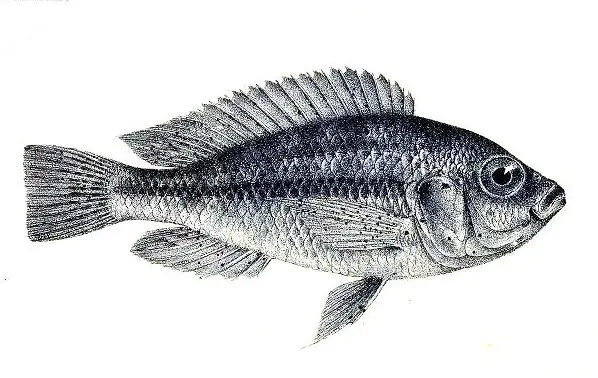
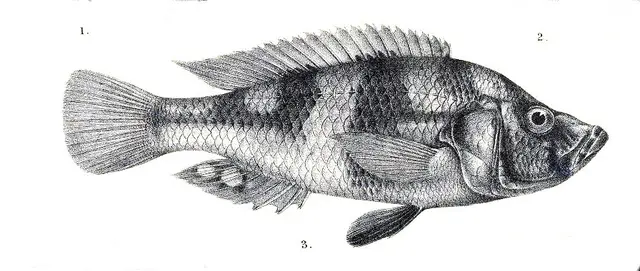
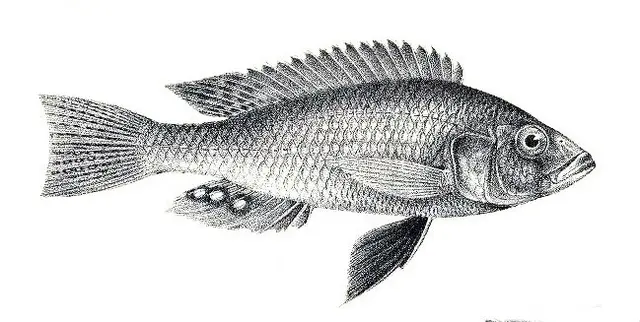
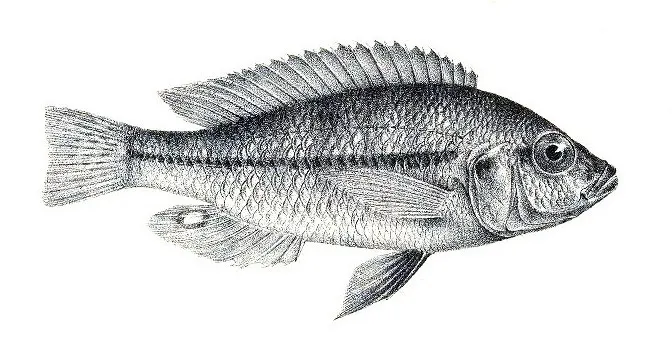
Haplochromis granti is a small cichlid fish known only from Lake Victoria, East Africa. The IUCN Red List rated it Critically Endangered in 2010 and tags it as possibly extinct in Uganda, Kenya and Tanzania. It reached about 12 centimetres in length and has no widely used common name.
What it is
Boulenger described the species in 1906, in a paper on new fishes discovered by E. Degen in Lake Victoria. Its name honours the Scottish explorer James Augustus Grant (1827 to 1892), who with John Speke worked out that the lake is a major source of the Nile.
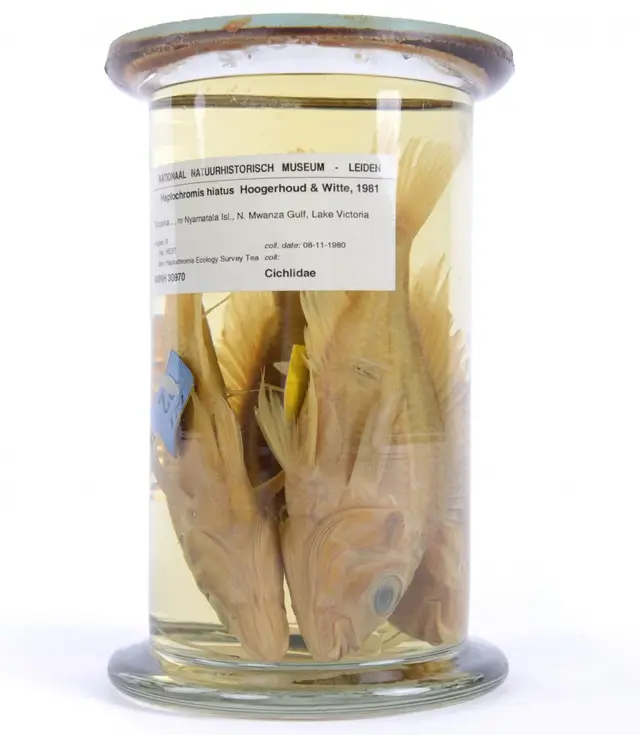
It belongs to the haplochromine cichlids, a group of more than 500 Lake Victoria species, nearly all found nowhere else. About 300 more are thought to be undescribed. This one reached about 12.2 cm standard length, measured from the snout to the base of the tail fin. Almost nothing has been published on its diet, breeding or behaviour.
Where it lived
Lake Victoria covers about 59,947 square kilometres and is shared by Tanzania (about 49 percent), Uganda (about 45 percent) and Kenya (about 6 percent). Its surface sits roughly 1,135 metres above sea level.
The Red List gives the fish's habitat as permanent freshwater lakes, counts the whole lake as one location, and lists all three countries as places where it is possibly extinct. A database of recently extinct species gives the last record as 1986 and lists it as missing.
Pins are Wikidata “endemic to” fields. Orange dots, when present, are GBIF occurrence tiles — survey bias included.
Why it is in trouble
Lake Victoria's cichlids lost a large share of their species in a few decades. The Nile perch, a big predatory fish, was released upstream of Murchison Falls in Uganda after the Owen Falls Dam was completed in 1954. It was being caught in Lake Victoria by the late 1950s and had spread through the whole lake by 1970. An estimated 200 haplochromine species, about 40 percent, have been lost, through Nile perch predation, eutrophication (nutrient pollution that fuels algal blooms and cuts oxygen in deep water) and other changes. Some species once feared gone have since turned up again.
The Red List assessment for this fish names the introduced Nile perch (Lates niloticus), sewage, soil erosion and sediment as pressures, along with fishing, each scored as low impact. It also records use of the species as food for local people.
Research in the Mwanza Gulf, in Tanzanian waters, shows the wider pattern. A 2015 study in the Journal of Great Lakes Research says haplochromines from the gulf's sub-littoral waters vanished almost completely in the 1980s. Some species recovered in the 1990s as Nile perch stocks fell, and the number of feeding guilds in the community dropped from 12 in 1979 and 1980 to nine in 2006 and 2008. That study covers haplochromines in general, and this species may never have lived in the gulf.
What is being done
The assessment lists habitat restoration, site protection and management, harvest management, education and training among the conservation actions relevant to the lake and its fishes, and records none in place for this species. Its Critically Endangered rating rests on criterion C2a(ii), which concerns small, declining populations. Until surveys find it again, its true status remains uncertain.
Sources
Written for this catalog in our own words from the sources below, checked against them on 12 November 2026. Population figures are estimates and carry the year they were made. Status and assessment year: IUCN. 2026. The IUCN Red List of Threatened Species. Version 2026-1. iucnredlist.org.