Critically Endangered
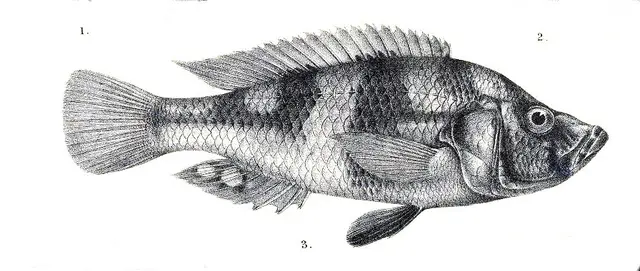
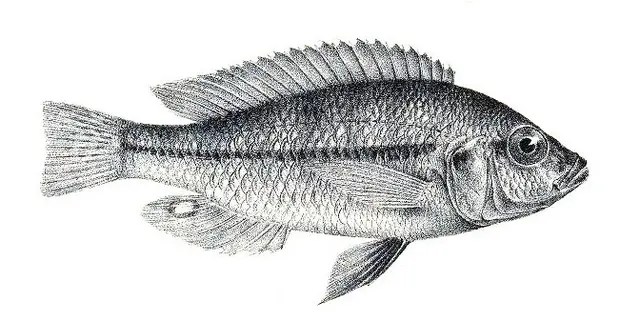
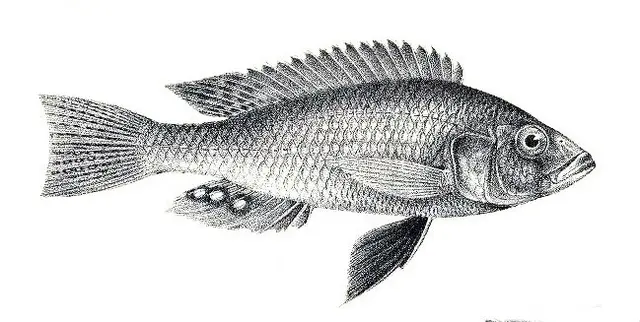
Haplochromis crassilabris
Haplochromis crassilabris
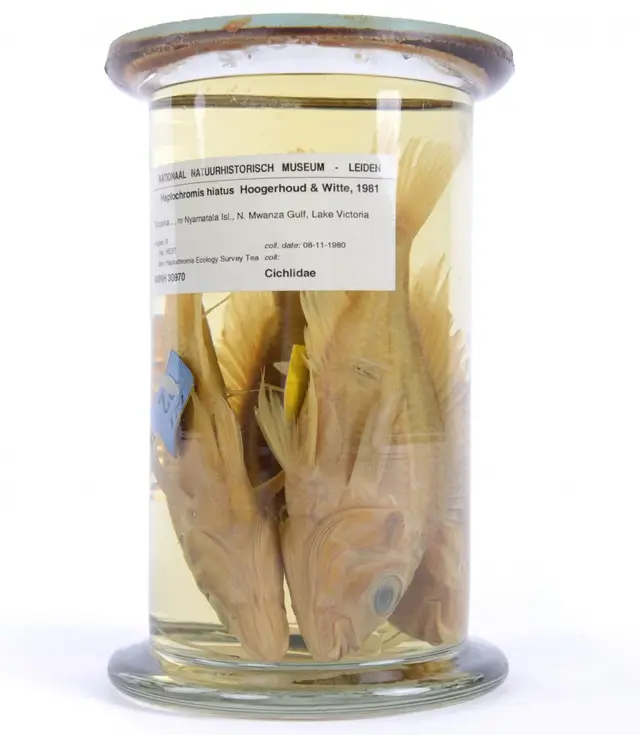
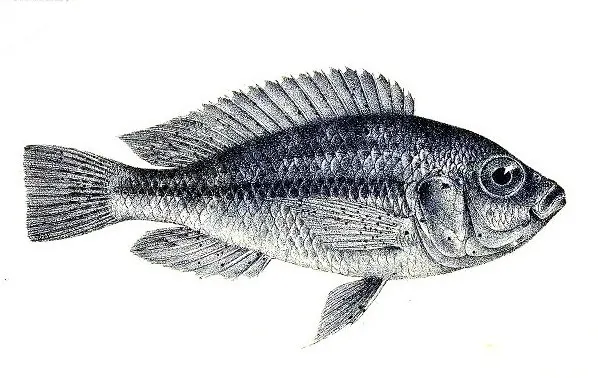
Haplochromis crassilabris is a small cichlid fish endemic to Lake Victoria in East Africa. The IUCN Red List assessed it in 2010 as Critically Endangered and possibly extinct, because it has not been confirmed since the 1980s. It was one of hundreds of haplochromine species in the lake's cichlid flock.
What it was
Boulenger described it in 1906, and the IUCN lists Paralabidochromis crassilabris as a synonym. Adults reportedly reached about 15 cm in total length.
The IUCN classes it as an insectivore found over sandy bottoms in the littoral zone, the shallow water near shore. A 1990 review by Witte and van Oijen places it in the lake's insectivore group and notes that its anatomy and ecology are partly like those of the mollusc eaters. That review describes the group as a whole, not this species. Group members ate mainly insect larvae and pupae, such as midge larvae, along with many other small items.
Where it lived
It is known only from Lake Victoria. The IUCN assessment lists Uganda and Tanzania as range countries, marks its presence as possibly extinct, and counts a single location. Its habitat is recorded as a large permanent freshwater lake.
Pins are Wikidata “endemic to” fields. Orange dots, when present, are GBIF occurrence tiles — survey bias included.
What happened to it
The IUCN cites trawl data from shallow sand in the Mwanza Gulf. The species turned up in 81 percent of five-minute trawls in 1979 to 1982 and in none in 1987 and 1988 or in 1993 to 1995. A few fish caught in 2006 to 2008 might have belonged to it, but apparent hybridisation meant they could not be confirmed and were probably misidentified.
Nile perch, introduced to the lake in the 1950s, surged in the early 1980s. The 1990 review reported that the lake's haplochromine stock and fishery had virtually disappeared. Insectivores of the deeper sub-littoral waters had almost completely vanished, while species in very shallow water and rocky habitat fared better.
The IUCN names hybridisation as the main threat. Murkier water from erosion and nutrient pollution hides the visual cues fish use to recognise mates. Predation by Nile perch is a second threat, and the IUCN calls it potentially reversible. Sewage, silt and fishing, though the species was not a specific target, are also listed.
What is known now
The IUCN gave the species a decreasing population trend and the small-population criterion C2a(ii). No population estimate was made. If any survive, the assessment says, they are probably extremely rare, and it should be revised if the species is positively identified again.
The assessment calls for more monitoring, action to curb the lake's degradation and overfishing, and protected areas. It names no programme aimed at this species.
Sources
Written for this catalog in our own words from the sources below, checked against them on 12 November 2026. Population figures are estimates and carry the year they were made. Status and assessment year: IUCN. 2026. The IUCN Red List of Threatened Species. Version 2026-1. iucnredlist.org.