Uganda
5 catalog pins
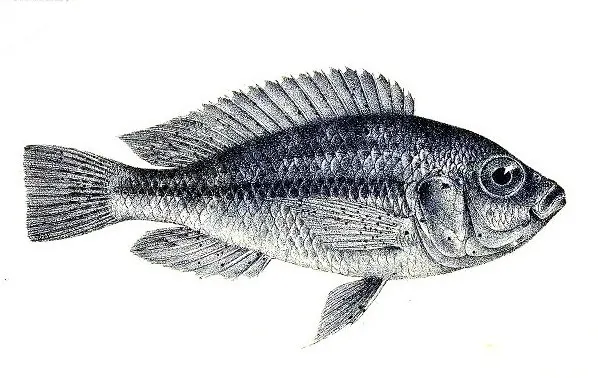
5 animals in this catalog carry a structured country pin for Uganda. That is a filing fact, not a claim that the crisis is only here.
The photograph is one of those animals: Haplochromis crassilabris. Open a dossier for the text, the status, and the map. Use the world map to jump to another country. Confirm official distributions on the Red List.
Uganda is landlocked, sitting where the East African savanna meets the western rainforests and the Albertine Rift. Its national profile reports about 18,783 recorded animal and plant species, 1,057 birds (about 11% of the world's recorded birds), 345 mammals and about 600 fish. The profile appears to date from around 2015.
Uganda's list in the catalog is only about fish, and only one family: Cichlidae, all in the genus Haplochromis, a group closely tied to the Lake Victoria story told below.
Where the pressure comes from
On land, the profile lists encroachment into protected areas, poaching, wetland drainage, destructive fishing and invasive species. Forest cover fell from about 50% of the land in 1900 to an estimated 2.97 million ha in 2012, and wetlands shrank from 15.6% of the country in 1994 to 10.9%.
The cichlid story is largely a lake story. Nile perch were introduced in the 1950s, first upstream of Murchison Falls and then into Lake Victoria by the late 1950s. Together with nutrient pollution and other changes, the lake lost an estimated 200 or more of its more than 500 haplochromine species. Water hyacinth later spread widely, from the late 1990s.
What is being done
The first national biodiversity strategy was completed in 2002. A 2014 Wildlife Policy, a REDD+ strategy and a Strategic Environment Assessment for the oil-rich Albertine region are listed in the profile.
For the lake, the sources describe stocks of some surviving cichlids recovering in many cases as perch declined, but they also say the ecosystem has changed irrevocably, and many survivors remain critically endangered. They don't describe a specific Ugandan programme for these fish.
Reading the catalog for Uganda
All entries in the catalog's list for Uganda are Cichlidae. Uganda holds about 45% of Lake Victoria, with Tanzania at about 49% and Kenya at about 6%. The same fish appear on the Tanzania page.
That doesn't mean Uganda has no other animals at risk. The profile itself mentions mountain gorillas (about 400 individuals, 53.9% of the world's remaining population), but they aren't in this list.
Sources for this section
- CBD country profile, Uganda: species counts, forest and wetland trends, threats, strategy, 2014 policy
- Lake Victoria (Wikipedia): lake shares, Nile perch timeline, 500 species, 200 extinct, hyacinth
- Haplochromis (Wikipedia): decline after Nile perch, survivors recovering, no specific conservation programmes
What the catalog records for Uganda
The catalog has 5 animals with a country pin for Uganda: 5 Critically Endangered. By GBIF class the largest groups are unknown (5). The families with the most records are Cichlidae (5). A pin means a structured source (Wikidata or a GBIF match) places the animal in Uganda; it does not say the animal lives only there.
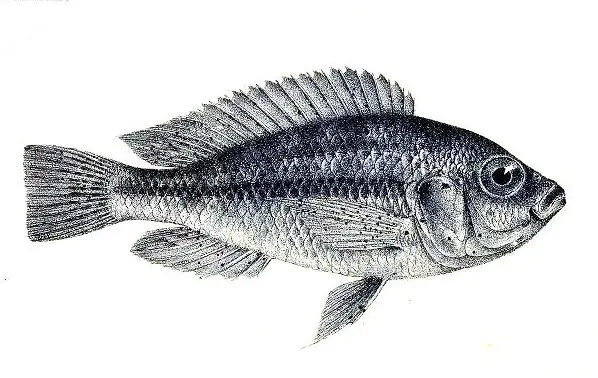 CR
Haplochromis crassilabris
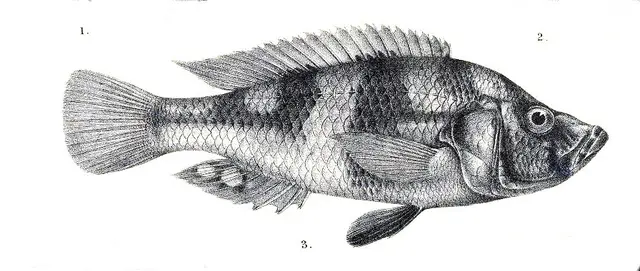 CR
Haplochromis flavipinnis
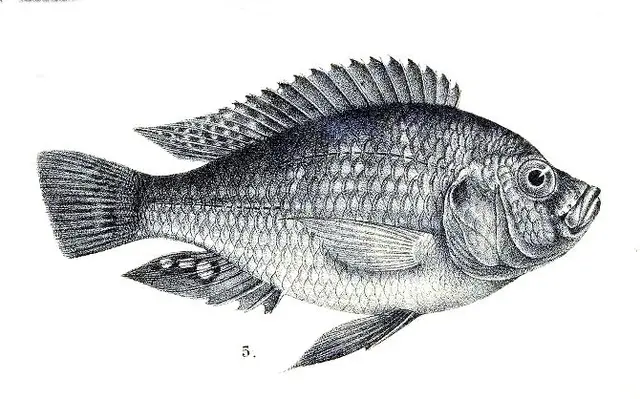 CR
Haplochromis obesus
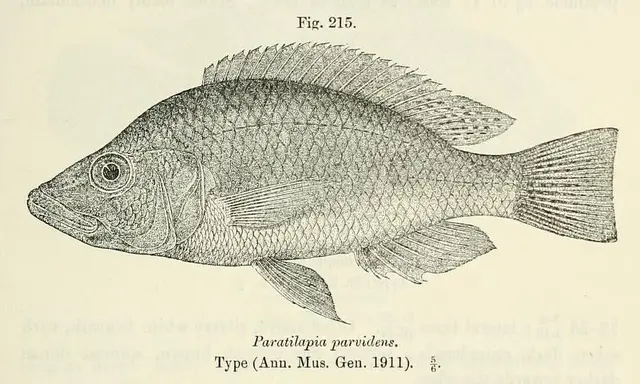 CR
Haplochromis parvidens
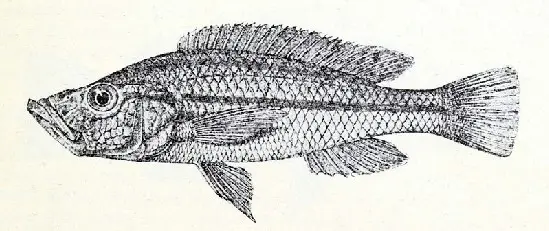 CR
Haplochromis xenostoma
Total pins: 6.
Quick answers
- Do all these animals live only in Uganda?
- No. A pin means a Wikidata place field resolved here. Official ranges can be wider.
- Is this a government list?
- No. It is a slice of this catalog.