Critically Endangered
Haplochromis parvidens
Haplochromis parvidens
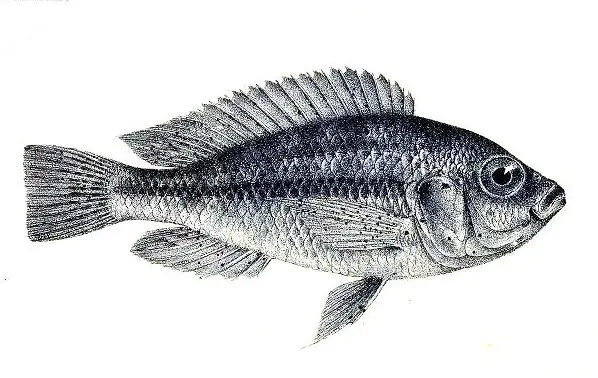
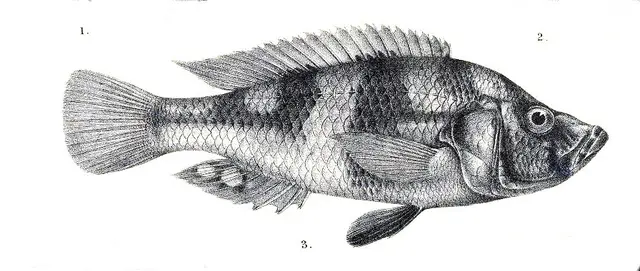
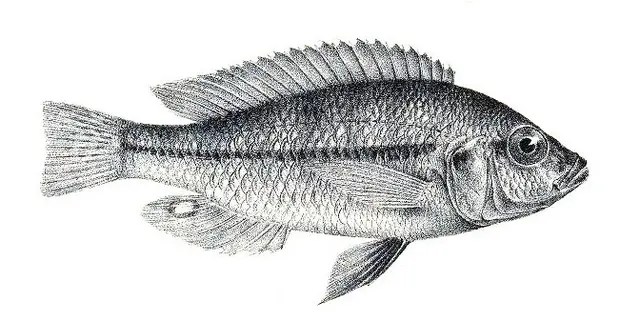
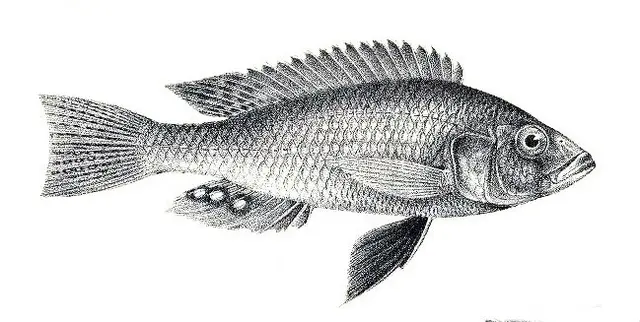
Haplochromis parvidens is a small cichlid fish from Lake Victoria in East Africa that feeds on the eggs and young of other cichlids. The IUCN Red List rated it Critically Endangered, and possibly extinct, in 2010. The last record in the wild dates to 1995.
How to recognise it
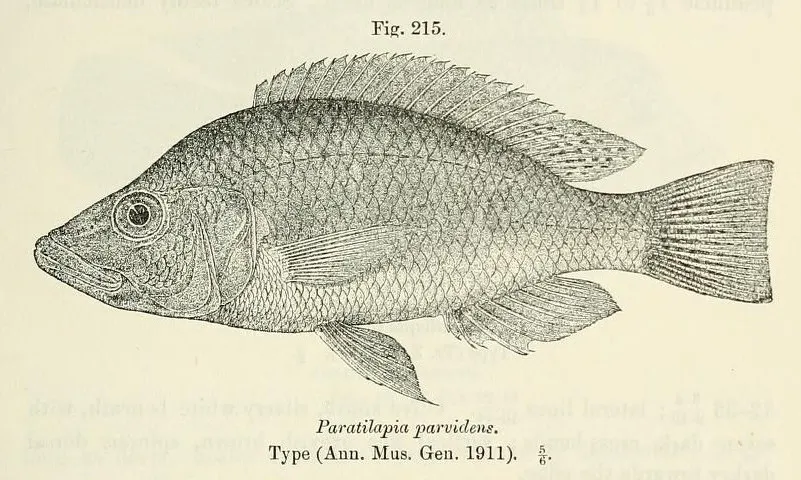
This is one of the many Lake Victoria cichlids grouped as haplochromines. Boulenger described it in 1911 as Paratilapia parvidens, and it has also been placed in the genus Lipochromis. FishBase gives a maximum length of about 16 cm (standard length) for males and fish of unrecorded sex.
No source consulted describes its colour or shape in life, so little can be said about how to tell it from its many relatives in the lake.
Where it lives
The fish is native to Lake Victoria, shared by Uganda, Kenya and Tanzania. The Red List assessment records it as possibly extinct in all three countries and counts a single location, with an estimated extent of occurrence of about 68,800 square km. It lists permanent freshwater lakes as its habitat.
FishBase describes it as a fish of the shallows and the zone just below them, recorded down to 15 m and possibly common over muddy bottoms.
Pins are Wikidata “endemic to” fields. Orange dots, when present, are GBIF occurrence tiles — survey bias included.
How it lives
FishBase reports that it eats the embryos and larvae of other cichlids, and that females carry their young in the mouth. Another Lake Victoria cichlid, Lipochromis microdon, also fed on the fry of other cichlids.
Little else has been published on its breeding, lifespan or numbers. The Red List gives no population estimate, and it records use of the species as human food.
Why it is in trouble
Lake Victoria holds about 500 endemic haplochromine cichlids, nearly all in the genus Haplochromis. Conservative estimates put the number extinct or severely reduced at more than 200, and some sources say up to 400. The Nile perch, introduced in the 1950s, boomed in the 1980s and is widely blamed, especially for the loss of predatory cichlids.
Other pressures hit the whole lake. Runoff from farms, cleared land and sewage caused algal blooms and oxygen loss, and murky water blurs the colour signals females use to choose mates, so related species interbreed more. For this species, the assessment lists sewage, soil erosion and sedimentation, and effects from other species as ongoing threats, and its population trend as decreasing.
What is being done
The 2010 assessment lists site and habitat protection, habitat restoration, harvest management and public awareness among the actions needed, and records no conservation measures in place for the species.
Other lost Lake Victoria cichlids have turned up again. A team led by Ole Seehausen caught single males of Lipochromis microdon on a rocky reef in the southern Mwanza Gulf in 2023 and 2024, after no records since 1985. No survey has reported the same for this species.
Sources
Written for this catalog in our own words from the sources below, checked against them on 12 November 2026. Population figures are estimates and carry the year they were made. Status and assessment year: IUCN. 2026. The IUCN Red List of Threatened Species. Version 2026-1. iucnredlist.org.