Kenya
7 catalog pins
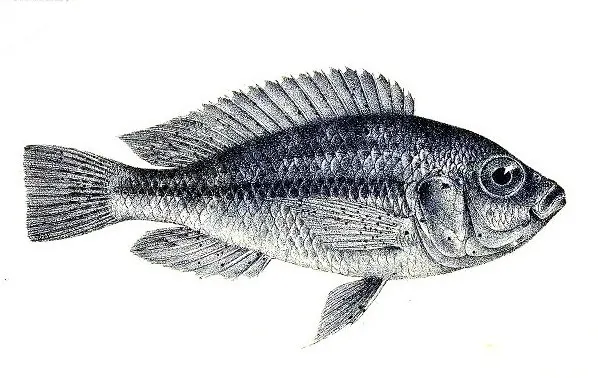
7 animals in this catalog carry a structured country pin for Kenya. That is a filing fact, not a claim that the crisis is only here.
The photograph is one of those animals: Haplochromis crassilabris. Open a dossier for the text, the status, and the map. Use the world map to jump to another country. Confirm official distributions on the Red List.
Kenya runs from Indian Ocean coast to highland forest and from semi-arid scrub to the shores of Lake Victoria. According to its Convention on Biological Diversity profile, its ecosystems include lowland and mountain forests, wooded and open grasslands, dry woodland, inland waters, and coastal and marine habitats, with mangroves and coral reefs along the coast. Freshwater and saline systems cover about 8 percent of the country.
The profile notes that coastal forests and the hills are especially rich in plants and endemics. It also calls Kenya's biodiversity assessments nearly two decades old, so some figures in national documents are dated.
Where the pressure comes from
The CBD profile points to high population pressure, poverty, poor land use, inadequate laws and policies, invasive species, pollution, tourism encroaching on the coast, and climate change. Mangroves are being rapidly degraded, and the Kakamega and Nandi forests are highly threatened despite their diversity.
Lake Victoria is the clearest case. Nile perch were introduced to the Victoria basin in the 1950s and again in 1962 to 1963, and had spread throughout the lake by 1970. The lake's haplochromine cichlids number more than 500 species, almost all endemic, and at least 200 of them (about 40 percent) have become extinct. A water hyacinth invasion in the late 1990s added to the damage. Kenya holds about 6 percent of the lake's area, and the lake produces 90 percent of Kenya's total fish catch.
On the Tana River, the Tana River mangabey lives only in riverine forest fragments along a stretch of about 60 kilometres. A 1994 census estimated 1,000 to 1,200 animals. Forest loss to farming, felling of trees and hunting threaten it, and a 2007 High Court ruling found the Tana River Primate Reserve was not abiding by the law.
What is being done
Kenya joined the Convention on Biological Diversity on 24 October 1994, completed a national biodiversity plan in 1999 (now described as outdated), and revised its Forest Act in 2005. A draft revised plan exists. Lake Victoria responses include the Lake Victoria Environment Management Programme, whose second phase had not begun at the time of the profile. For the mangabey, a World Bank and Global Environment Facility project begun in 1996 was ended after two years, and communities are now developing tourism alongside conservation with the Kenya Wildlife Service.
Reading the catalog for Kenya
All 7 records for Kenya are Critically Endangered. Five of them are Haplochromis cichlids from the lake, shown without a class label in the catalog's data (family Cichlidae, 5). The others are the Kenya jewel damselfly and the Tana River mangabey. The list is therefore short and weighted toward Lake Victoria fish. It is not a guide to Kenya's wildlife as a whole.
Sources for this section
- CBD country profile, Kenya: Ecosystems, threats, treaty and plan dates, Lake Victoria fish catch
- Lake Victoria (Wikipedia): Nile perch dates, cichlid losses, oxygen, hyacinth, Kenya share
- Tana River mangabey (Wikipedia): Range, 1994 census, threats, 2007 ruling, projects
- Wildlife of Kenya (Wikipedia): Background on parks; no species totals
What the catalog records for Kenya
The catalog has 7 animals with a country pin for Kenya: 7 Critically Endangered. By GBIF class the largest groups are unknown (5), Insecta (1), Mammalia (1). The families with the most records are Cichlidae (5), Chlorocyphidae (1), Cercopithecidae (1). A pin means a structured source (Wikidata or a GBIF match) places the animal in Kenya; it does not say the animal lives only there.
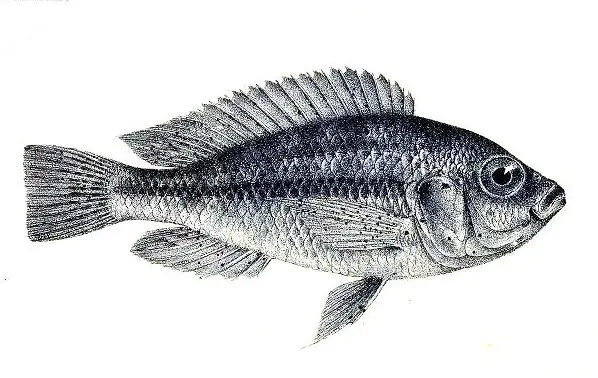 CR
Haplochromis crassilabris
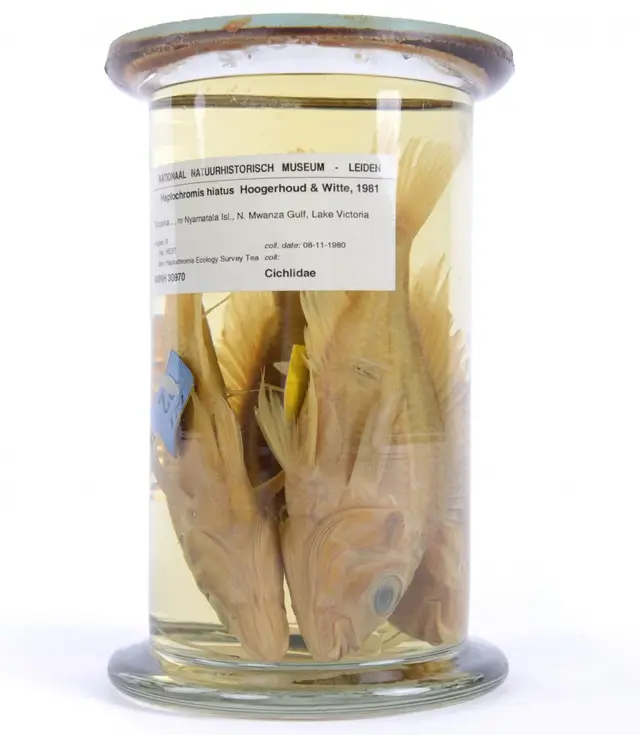 CR
Haplochromis hiatus
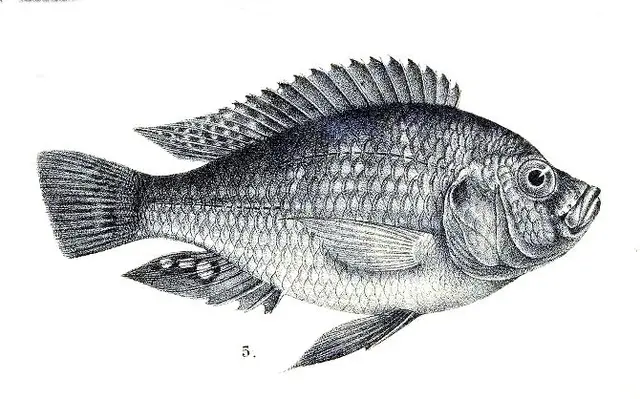 CR
Haplochromis obesus
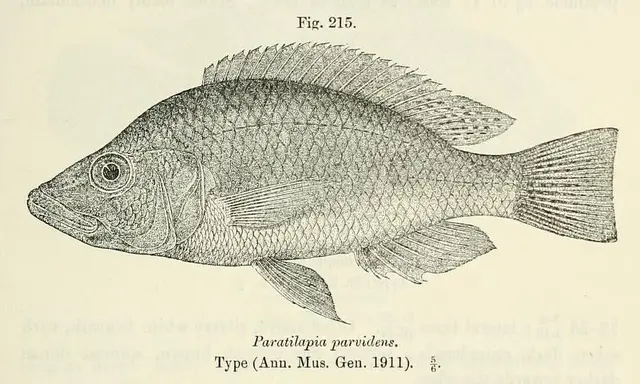 CR
Haplochromis parvidens
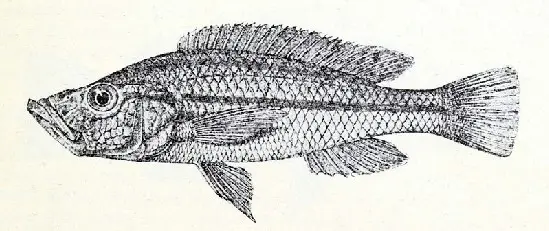 CR
Haplochromis xenostoma
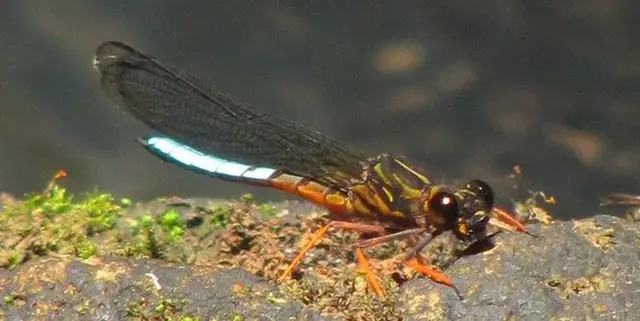 CR
Kenya jewel
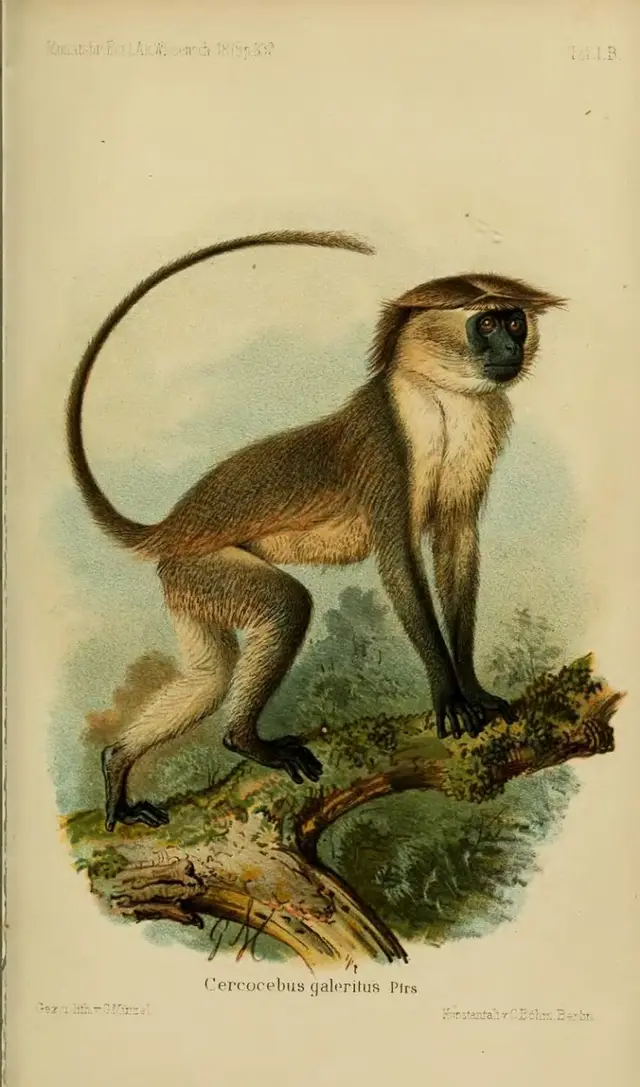 CR
Tana River mangabey
Total pins: 7.
Quick answers
- Do all these animals live only in Kenya?
- No. A pin means a Wikidata place field resolved here. Official ranges can be wider.
- Is this a government list?
- No. It is a slice of this catalog.