Critically Endangered
Haplochromis obesus
Haplochromis obesus
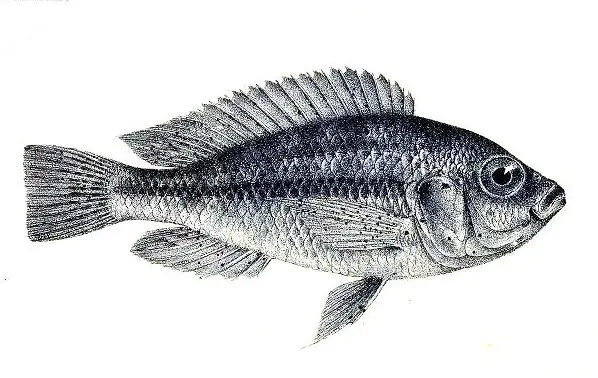
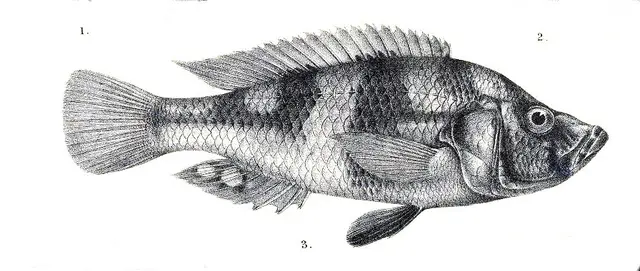
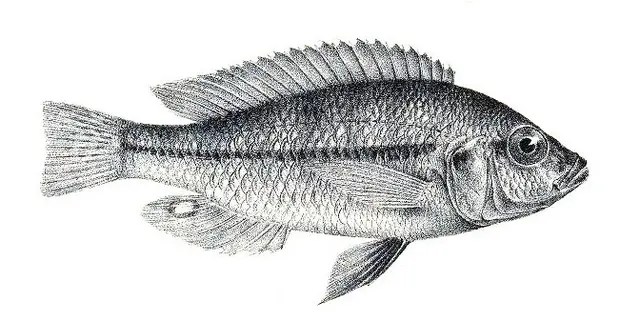
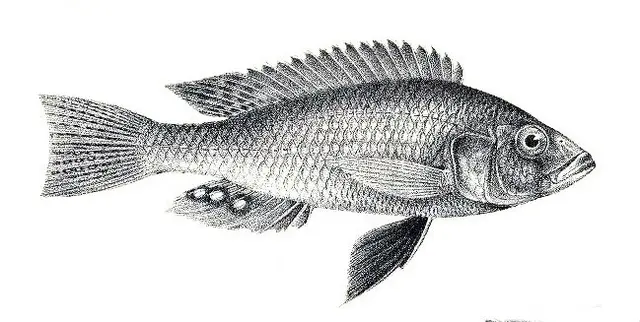
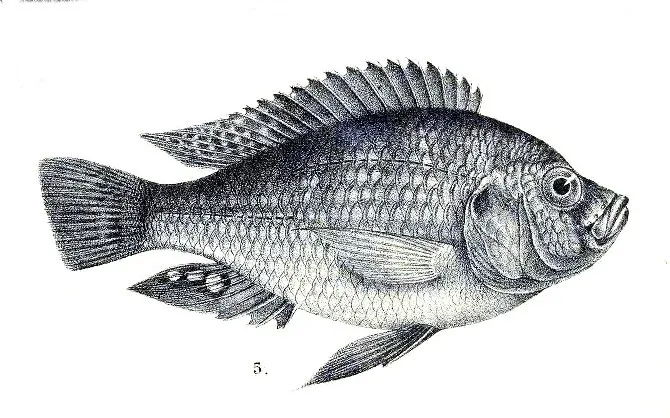
Haplochromis obesus is a cichlid fish of Lake Victoria in East Africa, described in 1906. The IUCN Red List assessed it as Critically Endangered in 2010 and records it as possibly extinct in Uganda and Kenya, with no sighting since 1985. Females are mouthbrooders, and the species eats the eggs and young of other fish.
What it is
This is one of the hundreds of haplochromine cichlids that evolved in Lake Victoria and nearby waters. Boulenger described it in 1906 as Pelmatochromis obesus, with the type locality at Bunjako on the Ugandan shore of Lake Victoria. It has also been placed in the genus Lipochromis, and Paratilapia gestri, named by Boulenger in 1911, is treated as a synonym.
FishBase gives a maximum length of 17 cm (standard length). Females brood their eggs in the mouth.
Where it lives
The Catalog of Fishes and FishBase give its distribution as Lake Victoria and Lake Kwania, part of the Kyoga system in Uganda. The IUCN assessment calls it endemic to Lake Victoria and notes survey records from Kenya and Uganda.
FishBase describes it as living in shallow and mid-depth water, down to about 15 m, mostly over hard bottoms of sand, gravel and rock, and less often over mud. The Red List assessment records one location, an extent of occurrence of about 68,800 square kilometres, and an upper elevation of 1,134 m.
Pins are Wikidata “endemic to” fields. Orange dots, when present, are GBIF occurrence tiles — survey bias included.
How it lives
FishBase lists its diet as fish embryos and larvae, a feeding habit often called paedophagy. Beyond this, its biology is poorly documented in the sources available.
The assessment notes that the fish is taken in the lake's fisheries, though not targeted. It is recorded as used for human food at subsistence level.
Why it is in trouble
The Red List describes it as rare even in the past, with a decline from the 1970s that it links to the introduced Nile perch (Lates niloticus). The species has not been seen since 1985, and the presence records for Uganda and Kenya both read possibly extinct. The population trend is listed as decreasing.
Other ongoing threats in the assessment are sewage, soil erosion and sedimentation, and other pollution of unrecorded type, each scored low impact. Its stresses include habitat degradation, direct mortality and hybridisation.
Many Lake Victoria haplochromines suffered sharp declines after the Nile perch was introduced, and the assessment notes that many have since shown signs of recovery. This species has not.
What is being done
The 2010 assessment lists recommended actions rather than measures in place: site and habitat protection, harvest management, habitat restoration, training, education and awareness. It also calls for research on taxonomy, population size and trends, life history and threats.
Sources
Written for this catalog in our own words from the sources below, checked against them on 12 November 2026. Population figures are estimates and carry the year they were made. Status and assessment year: IUCN. 2026. The IUCN Red List of Threatened Species. Version 2026-1. iucnredlist.org.