Critically Endangered
Haplochromis guiarti
Haplochromis guiarti
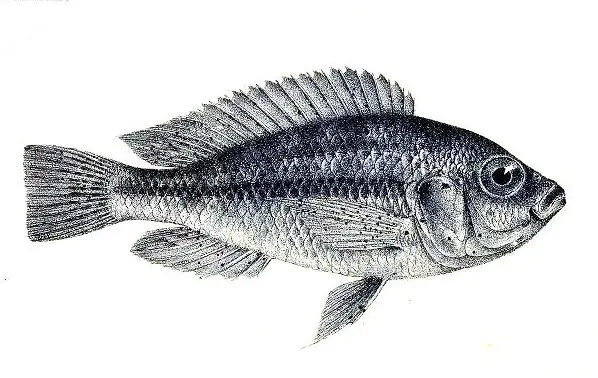
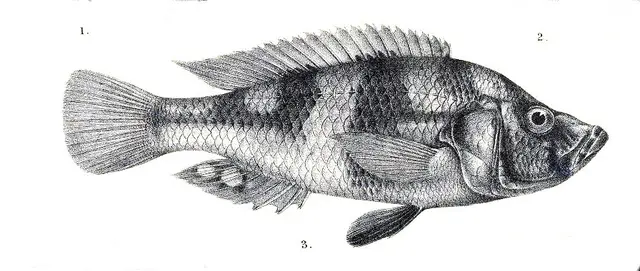
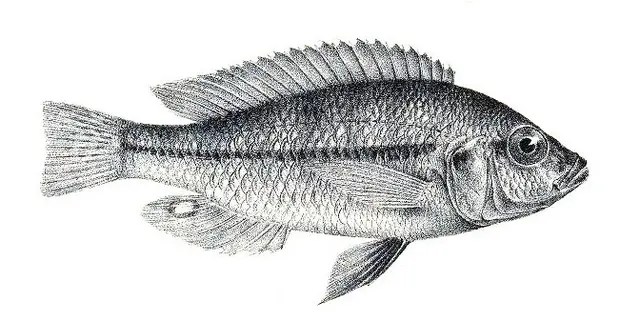
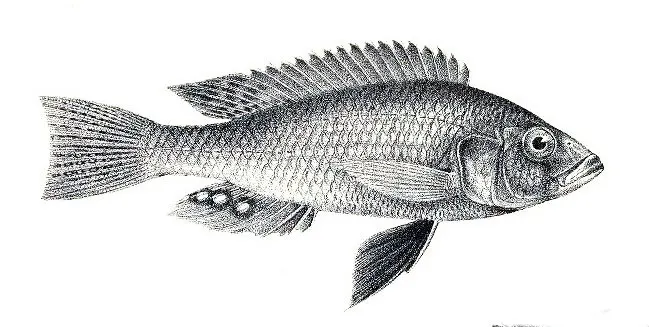
Haplochromis guiarti is a cichlid fish that belongs to Lake Victoria in East Africa and reaches about 17.7 cm in length. The IUCN Red List assessed it as Critically Endangered, possibly extinct, in 2010. Its last firm record dates to 1985, and almost nothing is known about its life.
How to recognise it
It is a mid-sized haplochromine cichlid, reaching a standard length of about 17.7 cm (7 inches). French zoologist Jacques Pellegrin described it in 1904 under the name Tilapia guiarti. The species name honours Jules Guiart, a French parasitologist and a friend of Pellegrin. Another name once used for the fish, Haplochromis nigroventralis, is now treated as a synonym.
Females are mouthbrooders, carrying the eggs in the mouth, as is typical of this group.
Where it lives
The species is endemic to Lake Victoria. The IUCN lists Uganda, Kenya and Tanzania among the countries involved, and gives an extent of occurrence of roughly 68,800 square kilometres, counted as a single location. Its habitat in the assessment is permanent freshwater lake.
FishBase describes it as a fish of the open, benthopelagic zone, recorded from the surface down to 6 metres, and lists fish as its food. That entry rests on limited data, and the biology of the species is poorly documented.
Pins are Wikidata “endemic to” fields. Orange dots, when present, are GBIF occurrence tiles — survey bias included.
Why it is in trouble
The IUCN assessed the population as decreasing under criterion C2a(ii), which applies to very small populations of mature fish that are declining. The threats it records are soil erosion and sedimentation, problem native species or diseases, and small-scale subsistence harvest. The stresses it lists are ecosystem degradation, deaths of fish and hybridisation.
The assessment does not single out one cause, and the fish has been little studied.
Is it still out there?
The 2010 assessment, by Frans Witte and Martien de Zeeuw, treats the fish as possibly extinct, with the last record in 1985. One online catalogue of recently extinct species also relays a hobbyist-database report of a later rediscovery, but it gives no field details and it could not be checked. Until surveys confirm living fish, the species stays on the Red List in its uncertain category.
Sources
Written for this catalog in our own words from the sources below, checked against them on 12 November 2026. Population figures are estimates and carry the year they were made. Status and assessment year: IUCN. 2026. The IUCN Red List of Threatened Species. Version 2026-1. iucnredlist.org.