Endangered
Bythinella viridis
Bythinella viridis
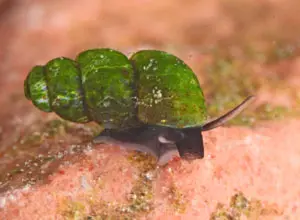
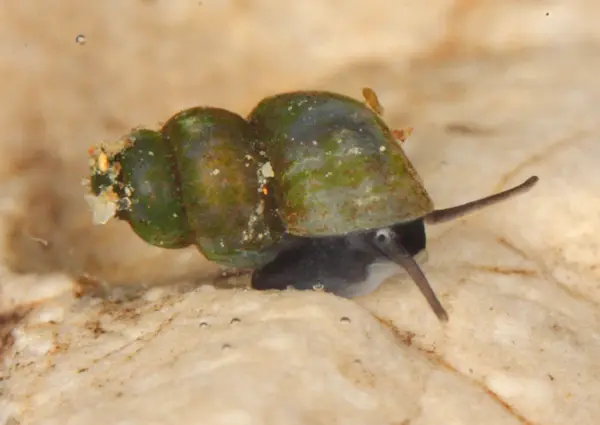
Bythinella viridis is a tiny freshwater snail found only in France, living in springs and the streams that rise from them. The IUCN Red List assessed it as Endangered in 2010. A 2021 genetic study suggests it is far more widespread than that assessment assumed.
How to recognise it
This is a very small snail. Shells in the genus Bythinella are generally 2 to 4 millimetres long, and no figure is recorded for this species alone. Telling the species apart is hard even for specialists. The genus has more than 80 recognised species and subspecies, and it is unclear whether all of them are truly distinct or some are just local forms.
The species was first named Bulimus viridis by Poiret in 1801 and is the type species of its genus. It has about 14 synonyms.
Where it lives
The species is endemic to France. The 2010 Red List assessment counted four locations, an area of occupancy of 16 square kilometres and an overall range of about 2,400 square kilometres.
A 2021 study by Vincent Prié and Xavier Cucherat in Knowledge and Management of Aquatic Ecosystems sampled populations across the ranges of B. viridis and two similar named snails, B. carinulata and B. lancelevei. Genetic data from four genes (COI, 16S, 28S and ITS) could not separate B. lancelevei from B. viridis at the type locality. Some populations formed distinct clades, but these were not closely related to one another, and overall divergence stayed below the roughly 3 percent typical between species in this genus. The two researchers proposed treating all three names as one species, B. viridis. That would greatly enlarge its known range, which they say should be considered in impact studies across a large northeastern part of France.
Pins are Wikidata “endemic to” fields. Orange dots, when present, are GBIF occurrence tiles — survey bias included.
How it lives
Bythinella snails live mainly in springs, sometimes in caves or groundwater. The Red List gives freshwater springs as the habitat of B. viridis.
Why it is in trouble
The 2010 assessment listed eight ongoing threats, each at medium impact across most of the range (50 to 90 percent) with rapid declines. They were pumping of groundwater and surface water for homes and farms, soil erosion and silt, intensive farming and grazing, nutrient runoff, and pesticides and herbicides. A spring that is drained or clogged is simply gone.
The numbers behind the Endangered rating are old, and the 2021 study proposes widening the species to include other named snails. France's own Red List of continental molluscs (July 2021), which lists the species under the common name Bythinelle des moulins, gives it Least Concern nationally. Whether the global status changes depends on a fresh assessment.
What is being done
The 2021 study describes the species as protected in France. The 2010 assessment lists site and area management as the needed action and records no conservation measures in place at that time.
Sources
Written for this catalog in our own words from the sources below, checked against them on 12 November 2026. Population figures are estimates and carry the year they were made. Status and assessment year: IUCN. 2026. The IUCN Red List of Threatened Species. Version 2026-1. iucnredlist.org.