Critically Endangered
Bythinella cylindrica
Bythinella cylindrica
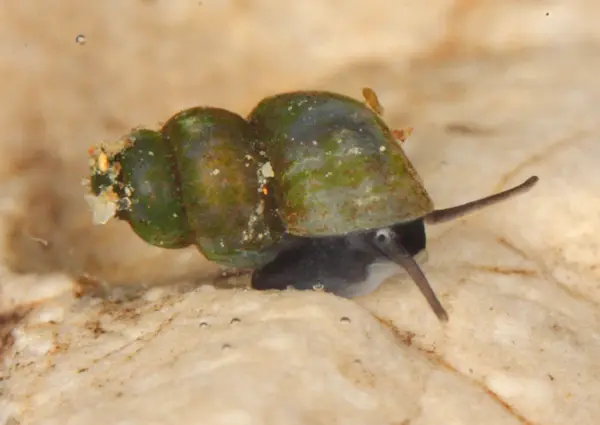
Bythinella cylindrica, known in German as the Zylindrische Quellschnecke, is a tiny freshwater spring snail found only in Austria. The IUCN Red List rated it Critically Endangered in its 2026 assessment, with a decreasing trend. It is known from a single location, in spring water that is running short and warming.
What it is
This is a very small freshwater snail in the family Bythinellidae, order Littorinimorpha. Georg Ritter von Frauenfeld described it, publishing the description in 1857 as Paludina cylindrica.
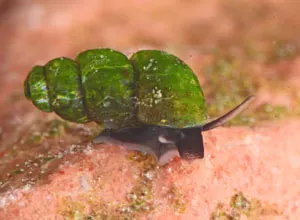
Spring snails of the genus Bythinella all look alike. Their shells reach about 4 mm in height at most, and species can usually be told apart only by anatomy or genetics. The shell often looks black or dark brown because of diatoms growing on it, and sometimes green from algae. Its exact status is still debated, since a 2011 study treated it as possibly the same species as Bythinella austriaca, while later DNA barcoding work found genetic material linked to the name.
Where it lives
The species is endemic to Austria. The Red List describes it from the Triesting valley in Lower Austria, where two springs about 4 km apart are thought to share one groundwater source, so the assessment counts a single location. The estimated area of occupancy is only 8 square km. Its habitats are freshwater springs and karst or other underground water systems.
A genus account by Robert Patzner for Naturschutzbund Austria describes how Bythinella snails in general live almost entirely in springs and the upper reaches of streams in hills and mountains. They need very clean, cool water, tolerate little temperature change, and feed mostly on algae and bacteria scraped from stones, leaves and submerged wood. Near a spring source, several thousand can live on a square metre. The sexes are separate, and eggs are usually laid on stones.
Pins are Wikidata “endemic to” fields. Orange dots, when present, are GBIF occurrence tiles — survey bias included.
Why it is in trouble
The Red List names several ongoing pressures, all affecting the whole population: groundwater abstraction for domestic and unknown uses, changes to the habitat, drought, and temperature extremes. Temperature extremes carry the highest impact score. Work and other human activities are listed as a past pressure that is unlikely to return.
The assessment records that the last known living population shrank from millions of snails to tens after a chapel was rebuilt, based on a personal communication from 2011. A spring snail that depends on cold, steady flow has little room to move if a spring dries up or warms. Patzner also points to nutrient pollution, chemical contamination and the enclosing of springs as threats, and says warming spring water can stop the snails from breeding.
What is being done
The only conservation action listed is protection of the site. Whether the species occurs inside a protected area is recorded as unknown, though the assessment says it may be present in a Natura 2000 site and is strictly protected by law in Lower Austria. There is no recovery plan. The assessors suggest monitoring its habitat and studying population trends. It is not covered by international legislation or trade controls.
Sources
Written for this catalog in our own words from the sources below, checked against them on 12 November 2026. Population figures are estimates and carry the year they were made. Status and assessment year: IUCN. 2026. The IUCN Red List of Threatened Species. Version 2026-1. iucnredlist.org.